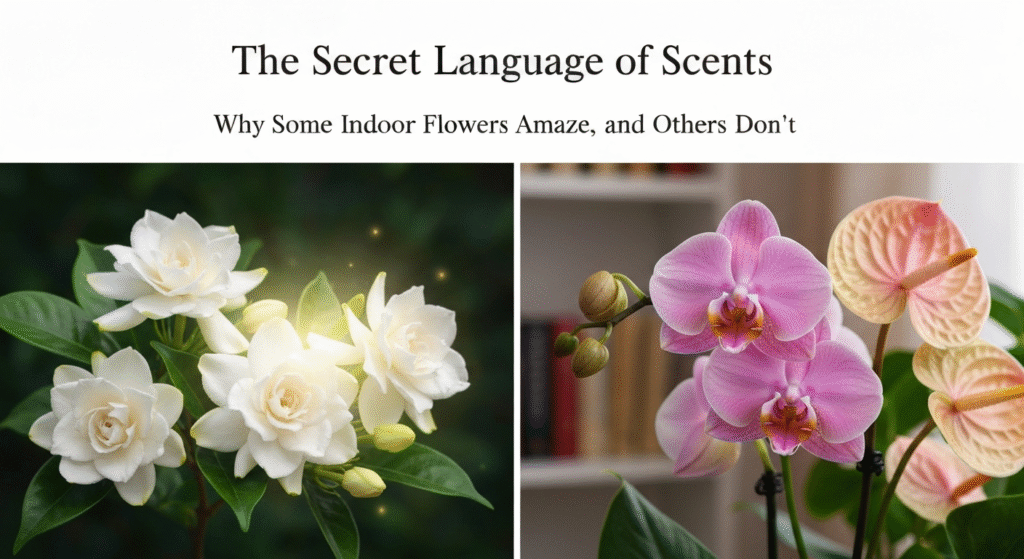

Have you ever walked into a room and been greeted by the sweet perfume of a blooming jasmine or gardenia? That fragrance can transform a space, making it feel more alive and vibrant. But then you might notice your orchid or peace lily, equally beautiful, has no scent at all. It’s a common observation for houseplant enthusiasts: some flowers are incredibly fragrant, while others are completely scentless. This isn’t random; there’s a fascinating biological reason behind this difference, a story that starts millions of years ago in the wild.
My name is Kamil Khan. For years, my passion has been exploring the world of indoor flowers, not just how to grow them, but why they behave the way they do. I’ve spent countless hours observing how different plants respond to their environment, from the subtle shift in a leaf’s position to the powerful release of a flower’s scent. This curiosity has led me to dig into the research behind these behaviors, connecting what I see in my home with the powerful evolutionary forces that shaped these plants. Understanding why some flowers have a strong scent helps us appreciate them on a deeper level.
The Natural Purpose of a Flower’s Scent
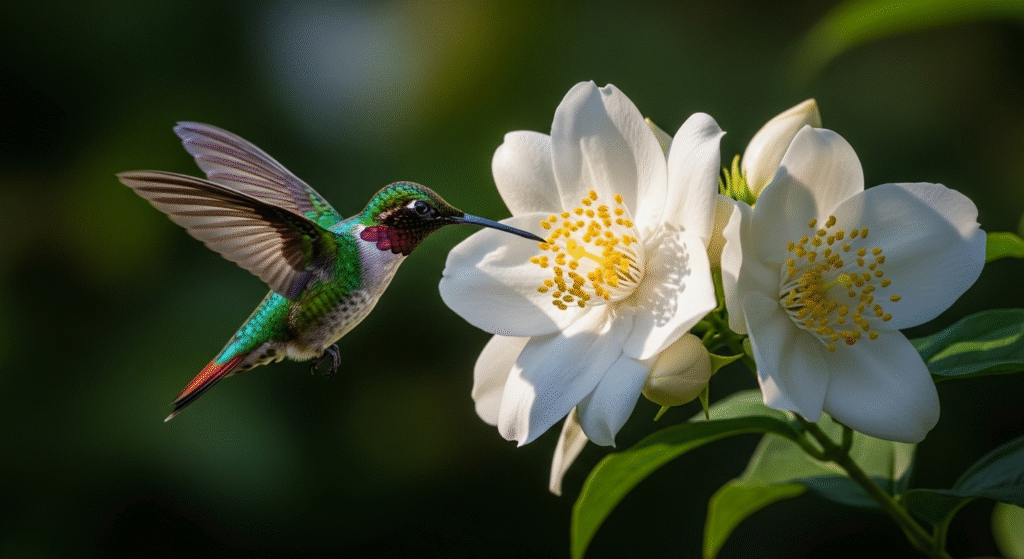
Before a plant was a houseplant, it was a wild plant with one primary goal: to reproduce. For flowering plants, this means getting pollen from one flower to another. Since plants can’t move, they need to hire couriers, which we call pollinators. A flower’s scent is its primary form of advertising, a complex chemical signal designed to attract the right kind of help. It’s a billboard that says, “Nectar and pollen available here!” to bees, moths, bats, and other creatures.
The fragrance is not just a generic “come hither” signal. It’s a highly specialized language. Different chemical compounds create different scents, and these unique fragrance profiles are tailored to attract specific pollinators while sometimes even repelling pests that might harm the flower. Let’s break down what these scent signals are really saying.
Pollination: The Driving Force Behind Fragrance
The core reason for flower fragrance is to ensure survival. A plant that successfully attracts pollinators will create seeds and pass on its genetic material. A plant that fails to do so will die out. Scent is one of the most effective tools in a plant’s pollination toolkit, especially when visual cues aren’t enough.
In a dense jungle or during the dark of night, a strong fragrance can travel much farther than the sight of a colorful petal. It acts as a beacon, guiding pollinators from a distance directly to the flower. This chemical communication is incredibly energy-intensive for the plant. It has to produce and release complex molecules called volatile organic compounds (VOCs). Because it costs so much energy, plants only evolve strong scents when it provides a significant reproductive advantage.
Scent as a Language for Specific Pollinators
Different pollinators are attracted to different types of scents. A plant fine-tunes its fragrance over generations to attract the most efficient pollinator in its native environment.
- Bee-Pollinated Flowers: Bees are drawn to sweet, fresh, and mild scents. Flowers like lavender and many herbs produce fragrances that are pleasant and light, perfect for daytime attraction.
- Moth-Pollinated Flowers: Moths are primarily active at dusk and overnight. To attract them, plants like night-blooming jasmine and some Hoya species produce heavy, sweet perfumes that are most potent after dark. These flowers are also often white or pale, making them more visible in the moonlight.
- Fly-Pollinated Flowers: Not all flower scents are pleasant to us. Some flowers, like the carrion flower (Stapelia), produce scents that mimic rotting meat. This is a brilliant strategy to attract their primary pollinators: flies and beetles.
- Bird-Pollinated Flowers: Birds, such as hummingbirds, have a very poor sense of smell. As a result, flowers that rely on them for pollination, like many hibiscus varieties, are often brightly colored (especially red) but have little to no fragrance. They invest their energy in producing vibrant visual cues and sugary nectar, not scents.
This specialization explains why a gardenia has a powerful, sweet scent (attracting moths) while a hibiscus does not (attracting birds). The plant isn’t making a scent for our enjoyment; it’s broadcasting a very specific message to a very specific audience.
A Tale of Two Houseplants: Fragrant vs. Scentless
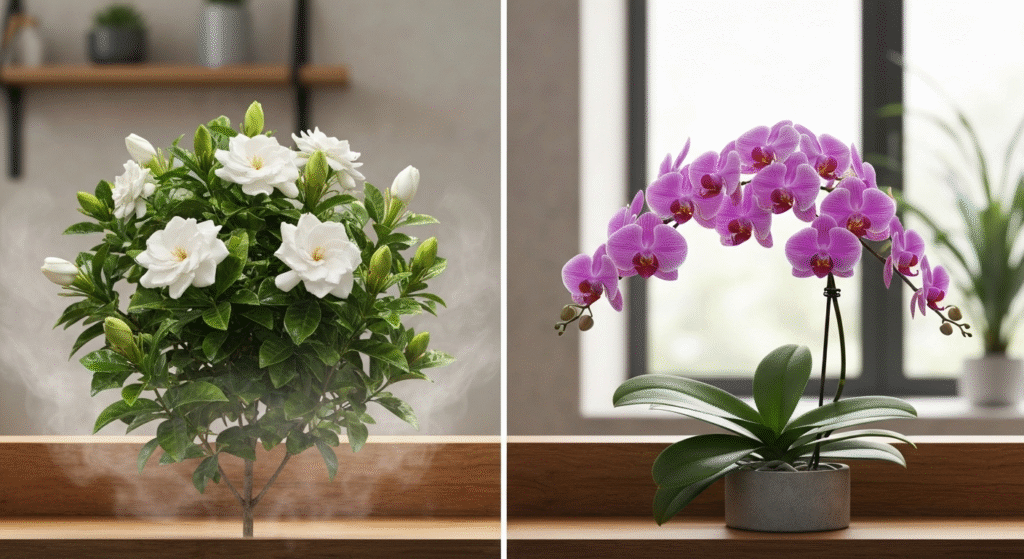
When we bring plants indoors, we are bringing these ancient evolutionary strategies into our living rooms. The fragrant plants are still calling out for pollinators they will never meet, while the scentless ones continue to rely on visual cues that only we get to appreciate. Understanding this difference helps us choose plants that fit our preferences.
The Fragrant Champions of the Indoor World
Some houseplants are famous for their incredible scents. These are often the ones that, in their native habitat, rely on nocturnal pollinators or need to broadcast their signal over long distances. I’ve had the pleasure of growing many of these, and the experience is always rewarding.
- Jasmine (Jasminum spp.): Several types of jasmine are grown indoors, with Jasminum polyanthum being one of the most popular. Its clusters of white flowers release an intense, sweet perfume, especially in the evening. This is a classic sign of a moth-pollinated plant.
- Gardenia (Gardenia jasminoides): Gardenias are known for their creamy white flowers and a rich, intoxicating scent. They require more specific care, but many find the fragrance to be well worth the effort.
- Hoya (Hoya spp.): Many species of Hoya, or wax plants, produce fragrant flowers. Hoya lacunosa has a spicy, floral scent, while Hoya carnosa can smell like chocolate or vanilla. Their fragrance is typically strongest at night.
- Stephanotis (Stephanotis floribunda): Also known as Madagascar Jasmine, this vine produces waxy, star-shaped white flowers with a powerful, sweet scent reminiscent of jasmine and lily.
| Fragrant Houseplant | Scent Profile | Peak Fragrance Time | General Care Level |
| Jasmine | Sweet, intense, floral | Evening and Night | Moderate |
| Gardenia | Rich, complex, perfumed | Day and Evening | Difficult |
| Hoya | Varies (sweet, spicy, chocolate) | Evening and Night | Easy to Moderate |
| Stephanotis | Strong, sweet, jasmine-like | Day and Evening | Moderate |
The Silent Beauties: Why Some Plants Go Unscented
On the other side are the houseplants that produce beautiful flowers with no detectable scent. This isn’t a flaw; it’s simply a different evolutionary strategy. These plants often evolved to attract pollinators that don’t rely on smell.
Why would a plant evolve to be scentless?
- Visual Pollinators: As mentioned, plants pollinated by birds often have no scent. They pour their energy into creating vibrant colors, like bright reds, oranges, and pinks, that birds can see easily.
- Wind Pollination: Some plants, particularly grasses and certain trees, rely on the wind to carry their pollen. They don’t need to attract anything, so they produce no nectar, no bright colors, and no scent. Their flowers are often small and inconspicuous.
- Self-Pollination: Some plants are capable of self-pollination and don’t require an external courier at all. For them, producing a scent would be a waste of precious energy.
- Insignificant Flowers: Many popular houseplants, like Snake Plants (Dracaena trifasciata) and ZZ Plants (Zamioculcas zamiifolia), are grown for their foliage. While they can produce flowers indoors, it’s a rare event. Their flowers are typically small, not showy, and have no scent because the plant’s main appeal in nature is not its bloom.
Common houseplants with scentless (or very faint) flowers include:
- Phalaenopsis Orchid: The “moth orchid” is a bit of a misnomer. While some orchid species are fragrant, the common Phalaenopsis relies on visual mimicry, tricking male bees into thinking the flower is a female bee.
- Peace Lily (Spathiphyllum): Known for its elegant white spathe, the peace lily has a very faint, slightly sweet scent at best, which is often unnoticeable.
- Anthurium: With its glossy, colorful, heart-shaped spathes, the anthurium is a classic example of a plant that uses bold visual cues instead of scent.
- Christmas Cactus (Schlumbergera): These plants produce stunning, brightly colored flowers to attract hummingbirds in their native Brazilian habitat, so they have no need for fragrance.
Timing is Everything: When Scents Are Strongest
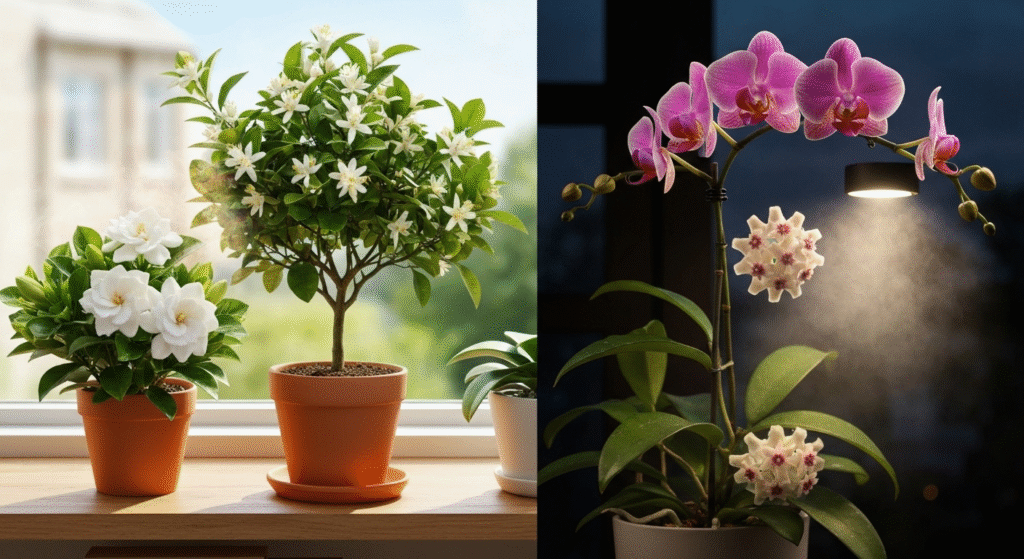
If you have a fragrant houseplant, you may have noticed that its scent isn’t constant. The intensity can change dramatically throughout the day. This is not your imagination. Plants are strategic, releasing their energy-intensive perfume only when their target pollinators are most likely to be active.
Day-Blooming vs. Night-Blooming Fragrances
This timing strategy is one of the clearest indicators of a plant’s target pollinator.
- Day-Scented Plants: Flowers that release their scent during the day are typically targeting daytime pollinators like bees and butterflies. The fragrance often peaks in the warmth and bright light of late morning or midday when these insects are most active. Many citrus plants, like indoor lemon trees, release their sweet scent most strongly during the day.
- Night-Scented Plants: Plants that become fragrant after sunset are signaling to nocturnal creatures like moths and bats. In my experience, this is one of the most dramatic shifts you can observe. A jasmine plant can be barely noticeable at 3 PM, but by 9 PM, its fragrance can fill the entire house. This is a brilliant energy-saving tactic. Why waste perfume on the day shift when you’re waiting for the night crew?
| Plant Example | Target Pollinator (in nature) | Peak Scent Time | Common Scent Notes |
| Night-Blooming Jasmine | Moths | Night | Sweet, Perfumed |
| Orchid Cactus (Epiphyllum) | Moths, Bats | Night | Sweet, Floral |
| Dwarf Lemon Tree | Bees | Day | Fresh, Sweet Citrus |
| Sweet Olive (Osmanthus) | Bees, Butterflies | Day | Fruity, Apricot-like |
The Role of Temperature and Humidity
Environmental conditions also play a huge role in how we perceive a flower’s scent. The volatile compounds that create fragrance evaporate more quickly in warmer temperatures. This is why many flowers seem more fragrant on a warm, sunny day.
Humidity can also enhance a scent. When the air is moist, scent molecules don’t disperse as quickly, allowing them to hang in the air and become more concentrated. This is why a greenhouse or a humid room can feel so rich with floral smells. For your houseplants, providing adequate humidity can sometimes make their natural fragrance seem a little stronger.
The Indoor Context: Evolutionary Holdovers in Your Living Room
So, your night-blooming jasmine is filling your living room with perfume, calling out for a hawk moth that will never arrive. Why does it keep doing it? The answer is that the plant is running on millions of years of genetic programming. It doesn’t “know” it’s in your house. Its internal clock and genetic triggers are still tied to the rhythms of day and night, and the cues of its ancestral home.
This behavior is an evolutionary holdover. The plant is simply following the script it was given. Its purpose is not to please us, but we get to be the lucky audience for this ancient biological performance. Understanding this context changes how we see our plants. They aren’t just decorations; they are living things with a deep history and a complex relationship with the world.
Can you influence a plant’s scent? Directly, no. You can’t make a scentless plant fragrant. However, you can ensure a fragrant plant performs at its best. A healthy, well-cared-for plant that receives the right amount of light, water, and nutrients will have the energy to produce robust, healthy blooms. And healthy blooms will produce the strongest, truest fragrance they are genetically capable of. In my work with various flowering plants, I’ve consistently seen that stressed or unhealthy plants often produce weaker blooms with diminished scents or no scent at all. Proper care is the key to unlocking their full potential.
Frequently Asked Questions
Why does my fragrant plant sometimes produce flowers with no scent?
This is usually a sign of stress or improper care. If the plant isn’t getting enough light, is over or under-watered, or lacks nutrients, it may not have enough energy to produce both flowers and the volatile compounds needed for fragrance. It’s the plant’s way of conserving resources.
Can a flower’s scent change over its short life?
Yes, absolutely. A flower’s fragrance is often strongest when it is newly opened and receptive to pollination. As the flower ages and pollination is either achieved or the window for it closes, the plant will stop investing energy in scent production, and the fragrance will fade.
Are strongly scented plants more likely to cause allergies?
Not necessarily. Allergies are typically triggered by pollen, not by the volatile organic compounds that create scent. However, for individuals with fragrance sensitivities or conditions like asthma, strong scents from any source (flowers, perfumes, candles) can be an irritant.
If I have multiple fragrant plants, will their scents clash?
They can. Combining several powerfully scented plants in a small space can sometimes be overwhelming. It’s often better to have one “star” fragrant plant in a room, or to group plants with lighter, complementary scents.
Conclusion
The fragrance of an indoor flower is more than just a pleasant smell; it is a whisper of its evolutionary past. Whether a plant fills your home with perfume or stands in silent beauty, its strategy has been perfected over millennia for one ultimate purpose: survival. The scented bloom is an open invitation, a carefully crafted message for a pollinator that may be thousands of miles and a different continent away. The unscented flower speaks a different language, one of vibrant color or elegant form, aimed at a different audience.
By understanding the “why” behind fragrance, we can become better plant keepers and deeper admirers. We can appreciate the jasmine’s nightly performance and the hibiscus’s silent, colorful display with equal wonder. Each plant in our home tells a story, and learning to interpret their signals—scented or not—is one of the greatest joys of sharing our lives with them.