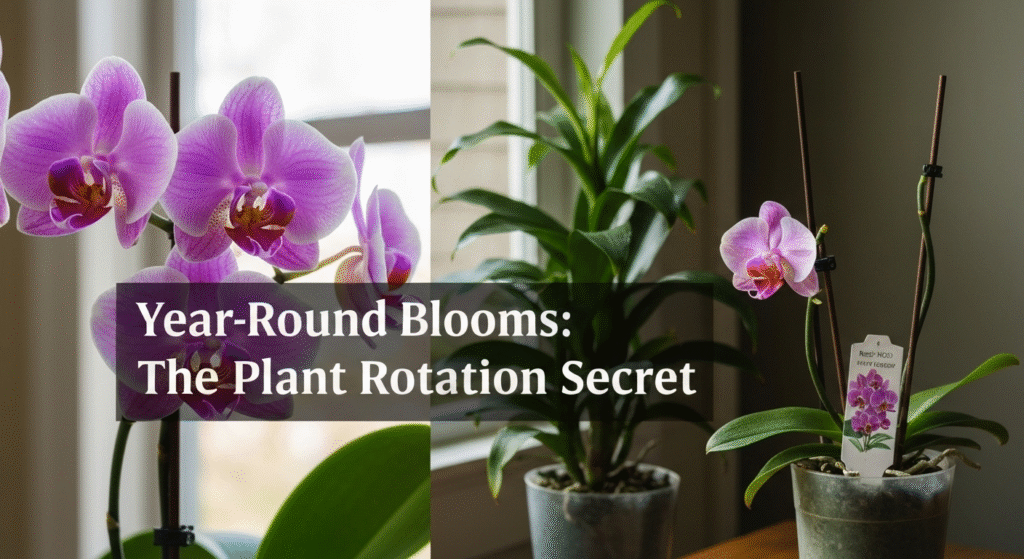

It’s a familiar story for anyone who loves flowering houseplants. An orchid puts on a spectacular show for months, becoming the centerpiece of a room. A Christmas cactus explodes with color just in time for the holidays. But then, the last flower drops. Suddenly, your star performer is just a quiet, green plant, leaving a void in your display. The temptation can be to either discard the plant or just leave it in place, hoping for a swift return. There is, however, a much better way: a seasonal rotation system.
My name is Kamil Khan, and for years, my passion has been understanding the rhythms of indoor flowers. I’m not a formally trained botanist, but my home is a living laboratory where I’ve learned firsthand how to keep my space vibrant through every season. This curiosity has led me to explore not just individual plants, but how they can work together in a dynamic display. I’ve spent countless hours observing bloom cycles, experimenting with different care routines, and developing simple systems to ensure there’s always something beautiful to see. What I’ve learned is that the secret to a perpetually stunning collection isn’t about finding a magic plant that blooms forever; it’s about gracefully managing the natural cycles of all your plants.
Understanding the “Why” Behind a Plant Rotation System
Before we get into the “how,” let’s break down why a rotation system is one of the most effective strategies for an indoor gardener. At its core, it’s about working with your plants’ natural life cycles, not against them. Plants, especially flowering ones, have periods of high performance and periods of rest. A rotation system simply ensures that the plants on display are always the ones in their peak performance phase.
Think of it like a theater. You have your main stage—the prime spots in your living room, on your windowsill, or your office desk—and you have a backstage area. The plants currently blooming are “on-stage,” getting all the attention. Once their show is over, they move “backstage” to rest, recover, and prepare for their next performance. Meanwhile, another plant that has been preparing backstage is ready to move into the spotlight.
The primary benefits of this approach are:
- Continuous Color and Interest: Your main display areas will never look dull or empty. As one plant’s blooms fade, another is ready to take its place, providing a seamless transition of color and life throughout the year.
- Healthier Plants: Forcing a plant to stay in a high-traffic, prime display spot when it needs to rest can be stressful. A designated “backstage” area allows you to give plants the specific care they need during their dormant period, which often differs from their needs during active growth and blooming.
- Prevents Plant Fatigue: You avoid the disappointment of watching a once-vibrant plant slowly decline because you didn’t give it the post-bloom recovery it needed. This system is proactive, not reactive.
- Efficient Care Routine: Grouping plants by their current needs (e.g., all resting plants together) simplifies your watering and feeding schedule. You’re not trying to remember which plant in your main display needs less water this week.
Designing Your Plant Rotation System: The Core Components
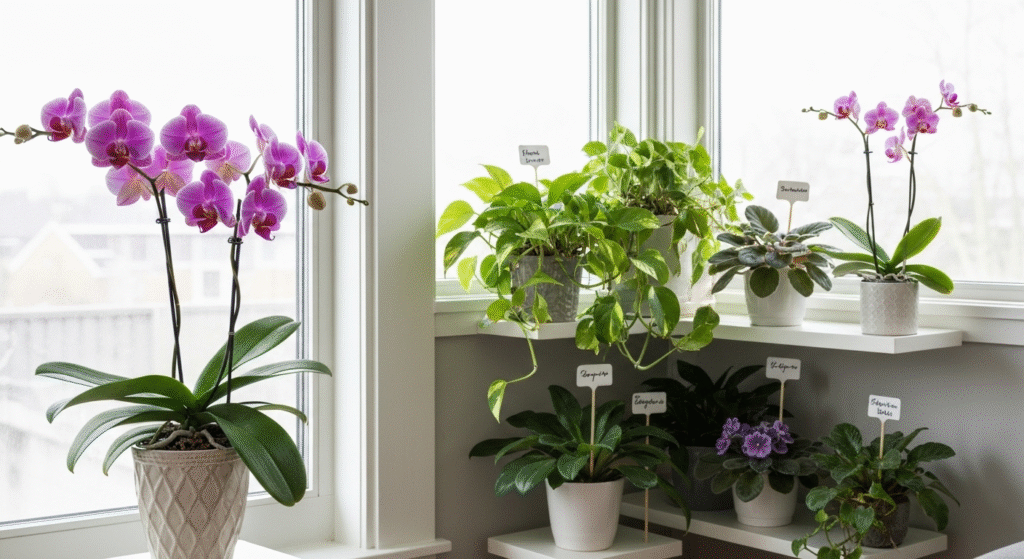
Creating a system might sound complicated, but it can be incredibly simple and tailored to your space and collection. After some trial and error, I’ve found that a successful system boils down to three key steps: inventory, location, and labeling.
Step 1: Taking Inventory of Your Plants and Their Cycles
You can’t manage a rotation if you don’t know your players. The first step is to look at your collection and gather some basic information. You can create a simple spreadsheet or use a dedicated notebook. For each flowering plant, note the following:
- Plant Name: (e.g., Phalaenopsis Orchid, Schlumbergera Cactus)
- Typical Bloom Season: (e.g., Winter, Spring/Summer)
- Bloom Duration: (e.g., 2-3 months)
- Rest Period Needs: (e.g., Lower light, less water, cooler temps)
This initial inventory gives you a bird’s-eye view of your collection’s potential. You might realize that most of your plants are summer bloomers, which tells you that you need to acquire a few winter-blooming options like Cyclamen or Amaryllis to maintain year-round interest. This is the strategic foundation of your entire system.
Step 2: Designating Your “On-Stage” and “Backstage” Areas
This is purely about location.
“On-Stage” Areas: These are your prime display spots. They are the places with the best light, where you and your guests will see them most often. This could be a bright living room window, a collection of shelves, or the center of your dining table. These spots are reserved for plants that are actively blooming or have particularly beautiful foliage that acts as a consistent backdrop.
“Backstage” Areas: This is your recovery zone. It doesn’t have to be a professional greenhouse. A “backstage” area can be any space where a plant can rest without being the center of attention. I’ve successfully used a spare bedroom with a decent window, a corner of my home office, or even a spot on a laundry room windowsill. The key is that this area provides the right conditions for rest, which we’ll cover in more detail shortly.
Step 3: Creating a Simple and Effective Labeling System
Labeling is the step that ties everything together. When you have multiple plants in different stages of their cycles, it’s easy to forget who needs what. A good label prevents you from, for example, overwatering a dormant orchid. I’ve tried a few methods, and the best one is whichever you’ll actually use consistently.
| Labeling Method | Pros | Cons | My Experience |
| Plastic Plant Stakes | Inexpensive, waterproof, easy to write on with a permanent marker. | Can look a bit clinical in a decorative pot; limited space. | Great for the “backstage” area. I write the date the bloom ended so I know how long it’s been resting. |
| Digital App/Spreadsheet | Searchable, can hold lots of information, can set reminders. | Requires you to check your phone/computer; not visible at a glance. | I use this for my main inventory, but I find I need a physical label on the pot for day-to-day care. |
| Color-Coded Dots | Subtle, easy to see at a glance, visually clean. | You have to remember what each color means. | A simple system I’ve used: a red dot means “actively blooming,” a blue dot means “resting/needs less water.” |
| Chalkboard Tags | Reusable, stylish, can be updated easily. | Chalk can smudge easily if brushed against. | These work well for larger pots and look great, especially if you have a rustic or modern farmhouse decor. |
The key is to include essential information on your label, especially for backstage plants. I recommend noting the plant’s name and the date its rest period began. This simple piece of data is invaluable for tracking its progress and knowing when to expect new growth.
The “Backstage” Area: A Recovery Zone for Resting Plants

The success of your entire rotation system hinges on the quality of your “backstage” area. This isn’t a place where plants go to be forgotten; it’s a dedicated space for them to recharge. Providing the right conditions during dormancy is what triggers a healthy new bloom cycle.
What Makes a Good “Backstage” Location?
Your recovery zone doesn’t need to be perfect, but it should meet a few basic requirements. The goal is to gently reduce the resources the plant receives, which signals to it that it’s time to store energy rather than expend it.
A good backstage location typically offers:
- Slightly Lower Light: It should still be bright, but not necessarily the direct, prime-real-estate light of your main display. An east-facing window or a spot a few feet back from a south-facing window often works well.
- Stable Temperature: Avoid locations with drastic temperature swings, like near a heating vent or a drafty door. Many plants, like orchids and clivias, actually benefit from slightly cooler temperatures during their rest period to help initiate new flower spikes.
- Good Air Circulation: Stagnant air can be a breeding ground for pests. A room with decent airflow is always preferable.
- Out of the Way: It should be a place where the non-blooming plant won’t detract from your main decor and where you can provide practical care without worrying about appearances.
Care Requirements for Plants in Their Dormant Phase
This is where many people go wrong. They continue to care for a resting plant the same way they did when it was in full bloom. A dormant plant has different needs, and meeting them is crucial for its long-term health.
Let’s break it down:
- Watering: This is the most significant change. A resting plant is not actively growing, so its water needs are dramatically reduced. I use the “finger test” and only water when the top inch or two of soil is completely dry. For many of my plants, this means cutting my watering frequency in half, or even more. Overwatering a dormant plant is one of the fastest ways to cause root rot.
- Fertilizing: Stop fertilizing completely. A plant in its rest period cannot use the extra nutrients. Feeding it is like trying to force-feed someone who is asleep—it’s not helpful and can actually cause harm by leading to a buildup of mineral salts in the soil. Resume fertilizing only when you see signs of new active growth, like a new leaf or flower spike emerging.
- Pruning and Maintenance: The post-bloom period is the perfect time for a little cleanup. I always snip off the spent flower stalks. For plants like hoyas, it’s important to know not to cut off the peduncle (the little spur the flowers grow from), as they will rebloom from the same spot. This is also a good time to inspect for any pests or yellowing leaves and tidy up the plant’s overall appearance.
Maintaining a Visually Stunning Display Year-Round
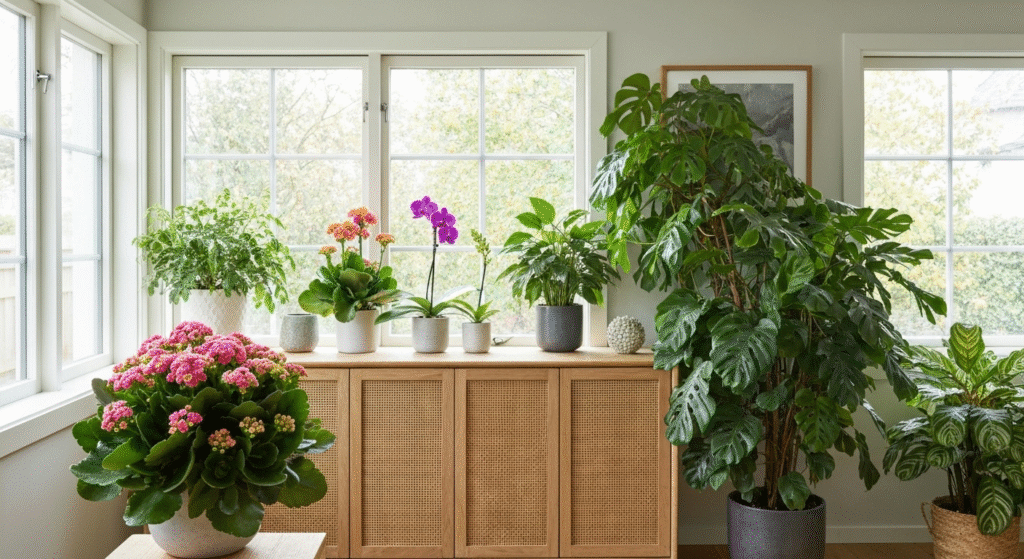
With your system in place, the final piece of the puzzle is the creative side: designing your “on-stage” displays to ensure they always look full and intentional.
The Art of Staggering Blooms
The inventory you created in step one is your guide here. The goal is to have a collection where different plants are hitting their peak at different times of the year. If all your plants bloom in the spring, your display will be amazing for three months and then bare for the other nine.
I intentionally seek out plants that fill the gaps. For example:
- Winter: Christmas Cactus, Cyclamen, Amaryllis, certain Orchids.
- Spring: Tulips/Hyacinths (forced indoors), Clivia, some Hoyas.
- Summer: African Violets, Begonias, Lipstick Plants.
- Autumn: Kalanchoe, some Orchids, Thanksgiving Cactus.
By curating a collection with staggered bloom times, you ensure that as one plant is finishing its show, another is just starting to warm up.
Using Foliage Plants as a Consistent Backdrop
Flowering plants are the stars, but foliage plants are the essential supporting cast. I use plants with interesting leaves—like Calatheas, Monsteras, or Pothos—as the permanent anchors of my displays. They provide a lush, green backdrop that makes the colors of the blooming plants pop. When a flowering plant is moved backstage, the display still looks full and green because the foliage plants remain. This strategy is key to avoiding those “empty” spots in your arrangement.
Frequently Asked Questions
What if I live in a small apartment and don’t have a “backstage” area?
Even in a small space, you can create a micro-recovery zone. It could be a less prominent shelf, a corner on a bookshelf, or a small table in your bedroom. The key is simply moving it out of the prime display spot and reducing its water and fertilizer. The location change is more about a change in care than a change in scenery.
How often should I be rotating my plants?
The rotation is dictated by the plants themselves, not by a strict calendar. The trigger for a plant to move “backstage” is when its last flower fades. The trigger to move it back “on-stage” is when you see a new flower spike or buds beginning to form. This could be a few months or up to a year, depending on the plant.
Can I use a grow light for my backstage area?
Absolutely. If you lack a space with adequate natural light for your resting plants, a simple full-spectrum grow light can be an excellent solution. It ensures the plants get enough energy to stay healthy during their dormancy without needing a prized spot by a window.
Is it okay to rotate plants outside during the summer?
Yes, for many houseplants, a summer vacation outdoors in a shady, protected spot can be incredibly beneficial. This can serve as an excellent “backstage” recovery period. Just be sure to acclimate them to the outdoor conditions gradually and check them for pests before bringing them back inside in the fall.
Conclusion
Creating a seasonal rotation display transforms you from a passive plant owner into a proactive, thoughtful gardener. It’s a system that benefits both you and your plants. You get the reward of constant color and beauty in your home, and your plants get the dedicated care and recovery time they need to thrive year after year. It takes a little planning, but the payoff is a dynamic, living display that evolves with the seasons.
This approach puts an end to the “bloom and bust” cycle that frustrates so many plant lovers. Instead of seeing a fading flower as an ending, you’ll see it as a natural transition—a quiet intermission before the next beautiful performance begins. Your home will feel more alive, your plants will be healthier, and you’ll gain a deeper appreciation for the simple, elegant rhythms of the natural world.