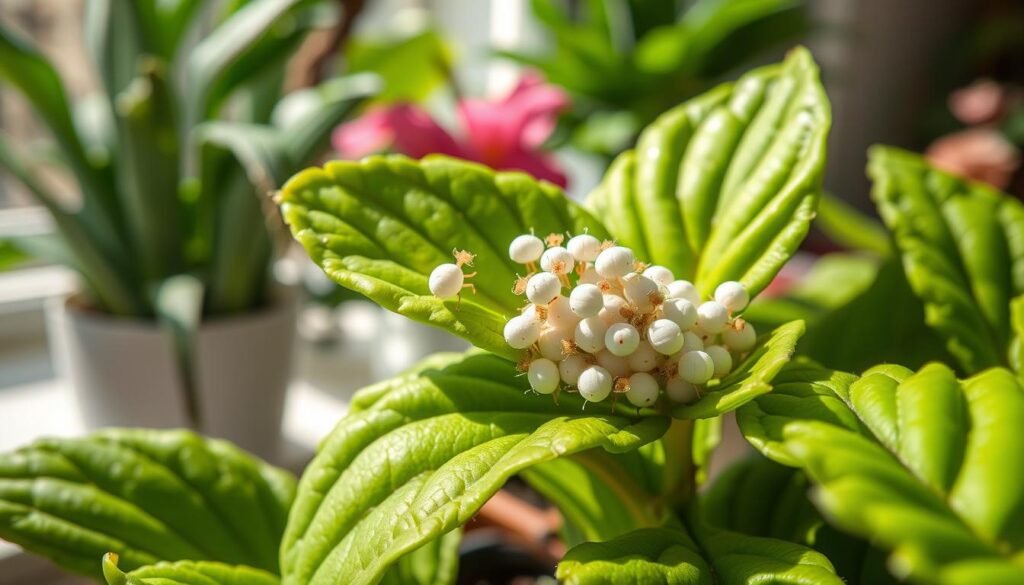

Surprising fact: stressed houseplants are up to three times more likely to attract mealybugs than healthy ones, because pests seek weak hosts.
This guide focuses on the simplest place to start: improving basic watering habits and soil setup so plants stay vigorous and pests have fewer chances to settle in.
There is no single watering calendar that fits every pot. Light levels, pot size and material, soil mix, and seasonal shifts all change needs.
Key idea: aim for consistent, thorough watering with runoff in pots that drain, rather than quick splashes that leave roots thirsty.
We will link common mistakes—soggy soil, dry corners, and salty buildup—to yellowing leaves, slowed growth, and pest flare-ups. Then you’ll get practical apartment-friendly tactics that cut risk fast and keep your flowers healthy.
Key Takeaways
- Healthy plants resist mealybugs better than stressed ones.
- Water fully until runoff in draining pots; avoid shallow splashes.
- Check soil feel and pot weight rather than following a fixed schedule.
- Correct pot and soil choices reduce overwatering risks in small spaces.
- Fixing moisture issues is the first step before direct pest removal.
Why watering mistakes invite problems like mealybugs, root rot, and fungus gnats
Small errors with routine watering often open the door for pests and rot. Too much water cuts oxygen at the roots, slowing growth and creating conditions that lead to root rot. That damage is hard to undo and leaves a plant weak.
Too little water has the opposite effect. Roots shrink and cannot move moisture up the stems. Growth stalls. Stressed plants attract mealybugs and other pests more readily.
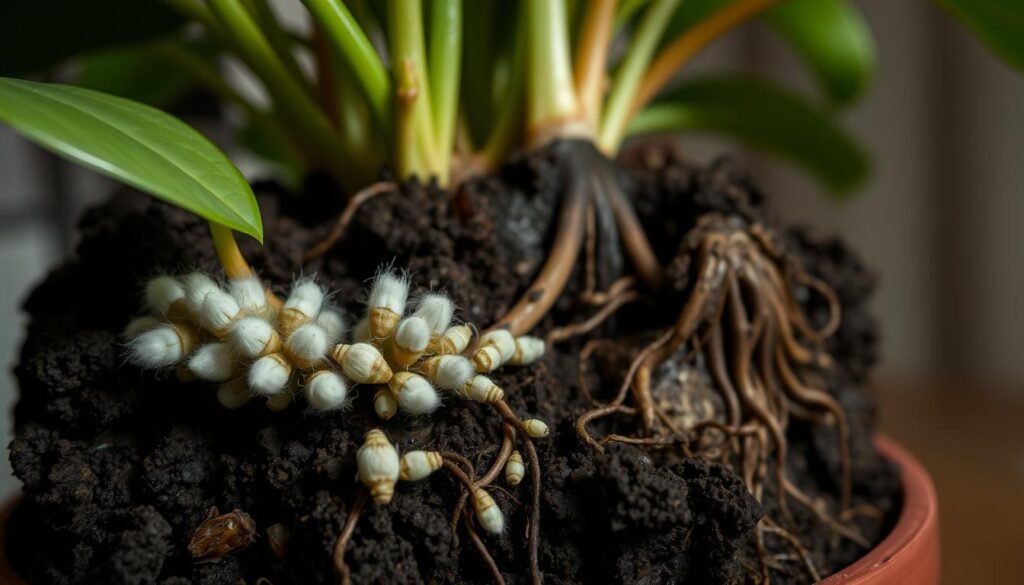
Uneven moisture inside the pot
The surface can look damp while the core stays soil dry. Compact spots, soggy edges, or a dry center are common. Over-dried mix can become hydrophobic and let water race down the sides and out the drain without wetting the root ball.
- Paradox: a full saucer can trick you into thinking there is excess water everywhere, yet the center may stay thirsty.
- Risk: persistently damp top layers feed fungus gnats; long soggy spells invite rot.
Next: learn simple checks that read true moisture and keep the whole soil mass evenly wet around the roots.
How to tell when your houseplants actually need watering
A few quick checks beat guesswork. Use simple senses and tools to read the root zone so your houseplants get water when they truly need it.
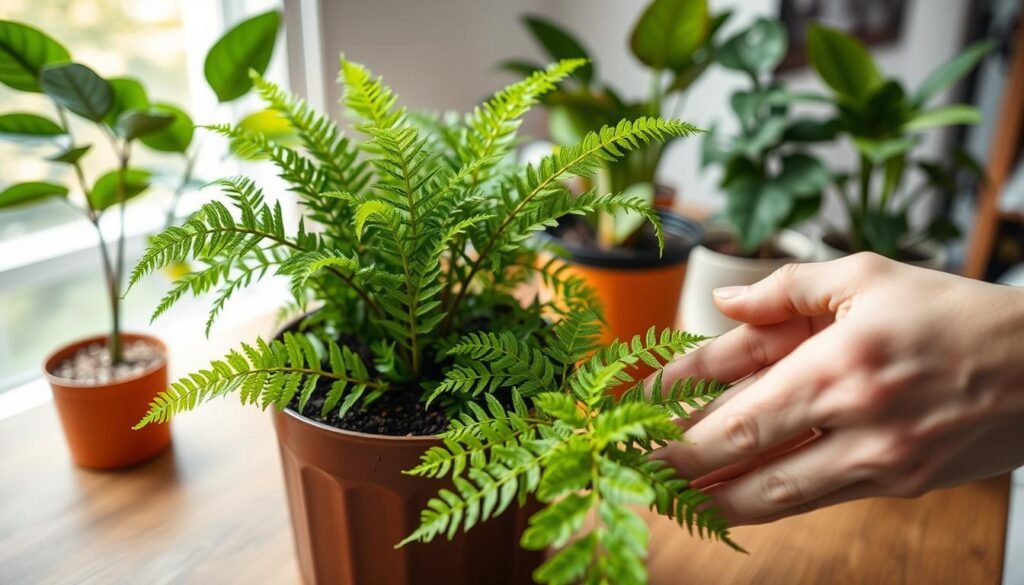
Finger test: feel below the surface
Insert a clean finger about an inch below the top. If the soil there feels cool and slightly dark, hold off.
If it feels dry at depth, the pot likely needs water. Topsoil can lie, so always probe below the surface.
Lift the pot for a fast weight check
Pick up the pot to gauge heft. Heavy pots usually mean moisture remains in the root zone.
Lighter pots often signal it’s time to water houseplants. Make lifting a daily habit for quick feedback.
Moisture meters for large or hidden cases
A meter is a useful confidence booster for large pots, hanging baskets, or plants with thick top dressing.
They cut guesswork and help steady growth by giving a clear read of moisture at depth.
Chopstick or skewer trick
Push a wooden stick toward the bottom, then pull it out. Clean and dry means rehydrate; dark and dirty means there’s still moisture.
Watch plant signals without panic
Wilting can mean thirst, but it can also mean overwatering. Always confirm with soil checks.
Succulents show wrinkling or slight softness when they need water. If soil pulls away from pot sides, slow rewetting is best.
- Rule of thumb: don’t stick to a calendar. Water when checks show the plant truly needs watering.
How to water indoor plants properly for even moisture and stronger roots
Give each pot a slow, steady soak that reaches the inner root zone rather than a quick splash on the surface. This method encourages roots to search the whole container instead of staying shallow.
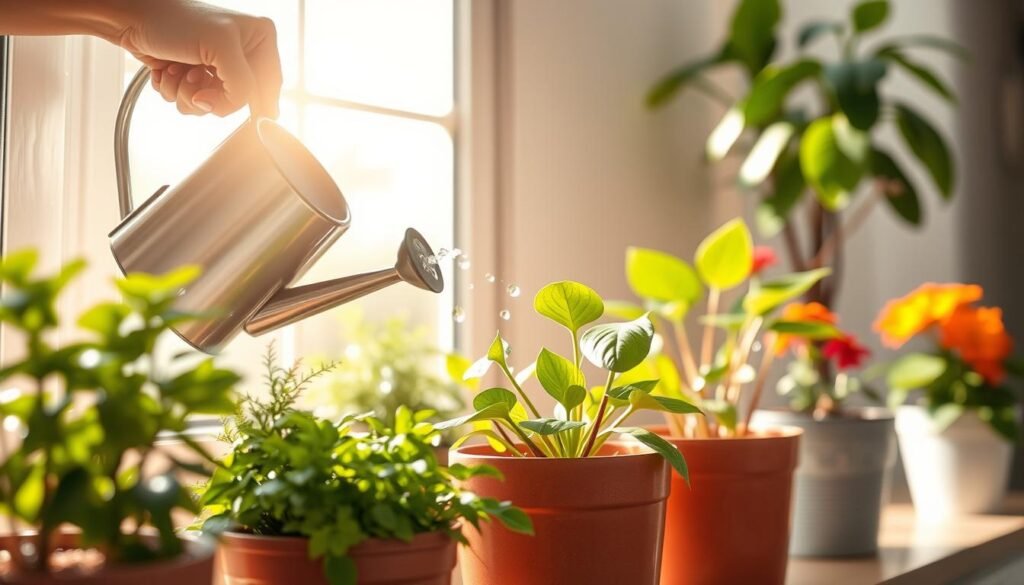
Top-watering the right way
Slow and even: pour in a circle and cover the full surface until runoff appears. Use pots with drainage holes so excess liquid can escape.
The pre-moisten and rotate habit
First add a light ring of water around the edge, wait 30–60 seconds, then continue in quarter turns while rotating the pot. This prevents channeling and dry pockets.
Using a saucer without creating excess water
Stop when water collects in the saucer. Let it sit 10–15 minutes, then empty the saucer so roots do not sit in excess water.
When bottom watering helps, and when it can backfire
Bottom uptake is useful for very dry or hydrophobic mixes and for species that dislike wet foliage. Avoid using it every time; frequent bottom-only routines can leave the top layer too dry and build salts.
Timing and consistency
Morning is convenient and lets foliage dry during the day, but consistency in time and method matters most. Regular checks beat sticking to a strict schedule.
“Even moisture encourages roots to spread through the pot instead of clumping in one wet zone.”
- Water slowly and evenly until runoff appears.
- Pre-moisten and rotate to avoid dry cores.
- Empty saucers within 15 minutes.
- Use bottom watering occasionally, not always.
| Method | Best for | Risk if misused |
|---|---|---|
| Top-watering (slow soak) | Most flowering houseplants | Overwatering if no drainage holes |
| Pre-moisten & rotate | Pots with uneven mix or compacted zones | Requires a little extra time |
| Bottom watering | Hydrophobic soil, sensitive leaves | Mineral buildup, dry upper soil |
| Saucer use | Short catch for runoff | Roots sitting in excess water if not emptied |
Set up your pots and soil to prevent waterlogging and pests
Choosing the right pot and mix cuts the chance that the bottom of a container becomes a soggy trap for roots and pests. A well-matched setup makes watering predictable and reduces stress on the plant.
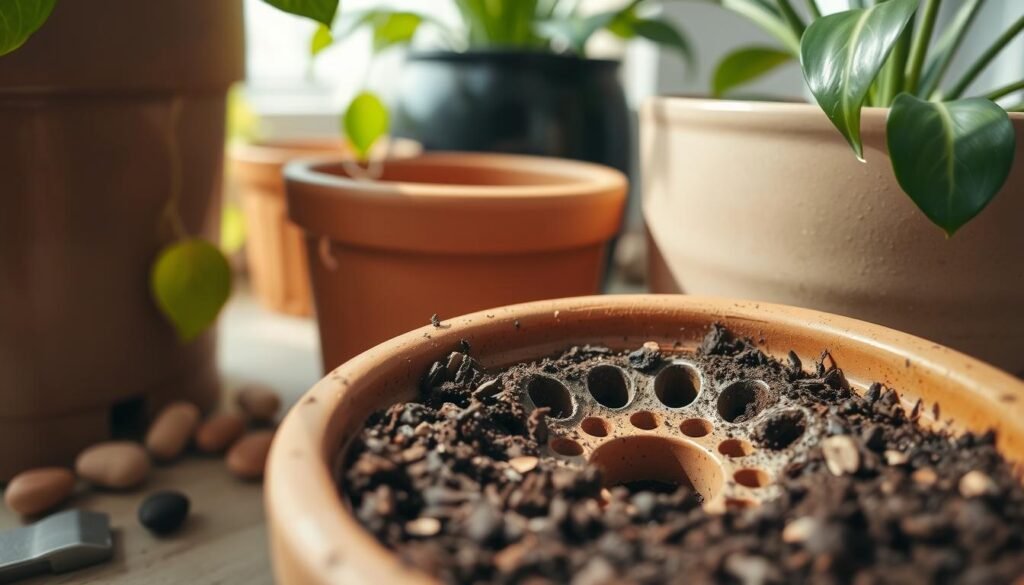
Why drainage holes matter and what happens when a pot can’t drain
Drainage holes are non-negotiable for most houseplants. They let excess water escape so the base of the pot does not turn into a swamp.
When a container has no holes, water collects, oxygen drops, and roots suffocate. That wet zone invites rot and pests like fungus gnats and mealybugs.
Pot size and material: terra cotta, plastic, ceramic
Oversized pots hold moisture far longer; small pots dry quickly and need closer attention to size choices.
Terra cotta and unglazed clay breathe and dry fast. Plastic keeps moisture longer. Glazed ceramic and heavy resin fall in between depending on thickness.
Soil mix basics and top-dressing effects
Heavier potting soil holds more water—useful for thirstier species in bright spots. Airy, chunky mixes drain faster and cut waterlogging risk.
Top dressings like moss, bark, or rock slow surface evaporation. They can hide wetness below, so check deeper before adding more water or following a strict watering schedule.
Simple setup rule: match soil type + pot type + plant size so moisture behavior becomes predictable and pest-friendly damp spots are minimized.
Adjust your watering schedule for light, temperature, humidity, and winter
Sunlight, room heat, and moisture in the air each change drying time and a plant’s needs.
Light levels and frequency
Bright windows and grow lamps speed evaporation. In strong light, expect more frequent checks and slightly quicker watering cycles.
Low-light corners dry slowly. Resist a fixed schedule and test the soil before adding more water.
Temperature and indoor heating
Warm rooms and heaters raise drying rates and can shorten the interval between refreshes. But the deeper soil may still hold moisture.
Tip: use the pot-weight or finger test rather than guessing by room heat alone.
Humidity and leaf loss
Dry air causes faster moisture loss from leaves and may show as brown tips. Still, the soil surface can be misleading—always confirm depth moisture first.
Winter: slow growth, less frequent care
Shorter days cut growth. Most houseplants need less water in winter.
Back off and rely on checks every few days instead of watering on a set day for every pot.
| Factor | Effect | Quick action |
|---|---|---|
| Light | Higher light = faster drying | Check soil weekly in bright spots |
| Temperature | Warm air speeds surface drying | Use weight test before adding water |
| Humidity | Low humidity increases leaf loss | Raise humidity or check depth moisture |
| Winter | Slower growth reduces needs | Space out checks and reduce frequency |
Troubleshooting common watering problems that keep indoor flowers unhealthy
Subtle moisture issues often show up as drooping leaves or tiny flying pests. A quick soil check will usually separate a thirsty specimen from one that’s been kept too wet.
Signs of overwatering
Look for: soggy soil that stays wet, mushy stems, dark or brown patches, and recurring fungus gnats near the pot.
Signs of underwatering
Look for: wrinkled leaves (succulents show this first), limp growth that perks after an drink, and soil that pulls away and won’t re-wet easily.
Fixing an overwatered plant
Stop regular watering and raise airflow and light if the species tolerates it. Let the mix dry until the pot lightens.
If the medium stays saturated, repot: gently shake off wet soil, trim soft or blackened roots, and replant in a fresh, airy mix in a pot with drainage to reduce root rot risk.
Rehydrating hydrophobic soil
Pre-moisten in a ring, pause, rotate the pot while adding more, and repeat until the core absorbs evenly. A single bottom soak can help severely dry, water-repellent mixes—sit briefly, then let the pot drain fully.
Water quality and temperature
Hard tap water can leave mineral buildup and brown leaf tips. Use room-temperature water and consider filtered water if you see salt crusts.
Adjusting seasonal schedules can also prevent repeat problems by matching watering to light and growth cycles.
Conclusion
Treat each pot as its own microclimate; small changes add up fast.
Keep one core habit: soak the mix so roots get even moisture, then let the top reach near dryness before the next soak. This cycle builds stronger roots and steadier growth.
Use quick checks — the finger test, lifting the pot, a moisture meter, or a chopstick — so your routine matches what the soil actually needs. These checks cut guesswork and save time.
Healthy roots mean fewer pest problems. Small, repeatable moves like pre-moistening and rotating while pouring prevent dry cores and uneven wetting.
Observe light, pot type, soil, and season for each plant and your indoor garden will feel easier, not harder.