
Have you ever placed a beautiful flowering plant on your kitchen counter, only to watch it struggle a few weeks later? The kitchen, with its sudden bursts of oven heat, drafts from an open window, and steam from boiling pots, can be a tough place for many houseplants. It’s a space of constant change, and most plants crave stability. This often leads people to believe that vibrant, blooming plants just aren’t meant for the heart of the home. But that’s not the whole story.
The secret isn’t to give up on the idea but to choose the right kind of plant—one that sees the kitchen’s dynamic environment not as a threat, but as a place it can thrive. It’s about finding resilient bloomers that can handle the heat and still look great. With the right selection, your kitchen can be a year-round garden, adding a splash of color and life where you least expect it.
My name is Kamil Khan, and for years, I’ve been helping people find the perfect indoor flowers for every room in their house. The kitchen is one of the most rewarding yet challenging spaces to get right. My passion lies in understanding how a plant’s natural habitat influences its ability to adapt to our home environments. Through countless trials and observations in my own home and those of others, I’ve learned which plants are tough enough for the kitchen. My goal is to share this hands-on knowledge, moving beyond generic advice to give you practical, clear explanations that work.
Understanding the Unique Kitchen Environment
Before we get to the plants, let’s break down what makes the kitchen such a unique challenge. Unlike a stable living room or bedroom, a kitchen is a place of extremes. Recognizing these specific conditions is the first step in choosing a plant that will flourish instead of fail.
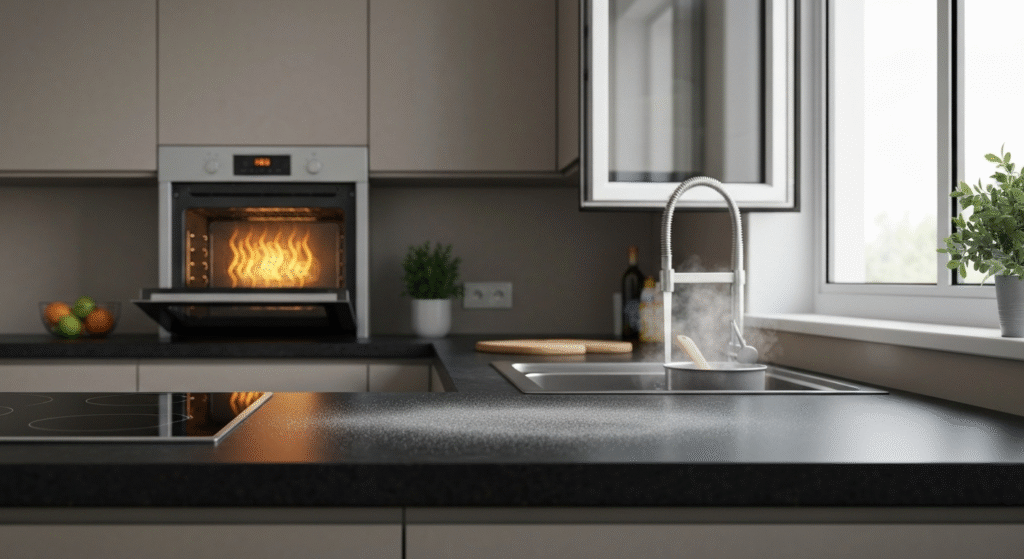
The main issue is temperature fluctuation. When you preheat your oven to 400°F, the ambient temperature in the room can spike several degrees. A few hours later, opening a window to air out cooking smells can create a cool draft. Most tropical houseplants, which make up the bulk of what we buy, evolved in environments where the temperature is relatively constant. Sudden changes can stress them, causing them to drop leaves or buds.
Here’s a quick rundown of the environmental hurdles:
- Heat Bursts: Ovens, stovetops, and even toasters release blasts of hot, dry air. A plant placed too close will quickly scorch or dehydrate.
- Cold Drafts: Windows and back doors are common in kitchens. In colder months, these can be a source of chilly air that shocks sensitive plants.
- Humidity Spikes: Boiling water, running the dishwasher, or using a sink sprayer can create pockets of high humidity. While some plants love this, the humidity is often temporary, followed by drier conditions.
- Airborne Particles: Cooking can release grease and other particles into the air. Over time, these can settle on plant leaves, clogging their pores (stomata) and making it harder for them to “breathe.”
- Variable Light: Kitchens can have great natural light, but countertops are often shaded by cabinets, and the best spots might be far from a window. The light is often indirect or inconsistent.
A successful kitchen plant doesn’t just survive these things; it tolerates them. It’s about resilience.
Hallmarks of a Kitchen-Tough Flowering Plant
So, what traits make a plant suited for this environment? When I’m looking for a kitchen-friendly flower, I focus on a few key characteristics that signal it can handle the stress. These are plants that are forgiving by nature.
First and foremost is temperature tolerance. I look for plants that aren’t fussy about a few degrees here or there. Plants native to regions with variable day-night temperatures often have this built-in resilience. They don’t panic when things get a little warm or a little cool.
Second is compact size. Kitchen counters and windowsills don’t have a lot of spare room. A plant that grows out instead of up, or one that stays relatively small, is ideal. You don’t want foliage dipping into your sink or getting singed by a toaster.
Third, I consider ease of care. A kitchen is a busy place. A plant that needs constant, specific attention is likely to be forgotten on a busy weeknight. I favor plants that can handle a slightly irregular watering schedule and don’t need perfect conditions to bloom.
Finally, a smooth leaf texture can be a bonus. While not essential, plants with smooth, waxy leaves are easier to wipe clean of any kitchen grime or grease buildup, keeping them healthy and looking their best.
Top Flowering Plants That Thrive Amidst Kitchen Chaos
Now for the fun part. Based on years of observation, here are my top picks for flowering plants that meet the criteria and bring beauty to the most functional room in the house.
African Violet (Saintpaulia)
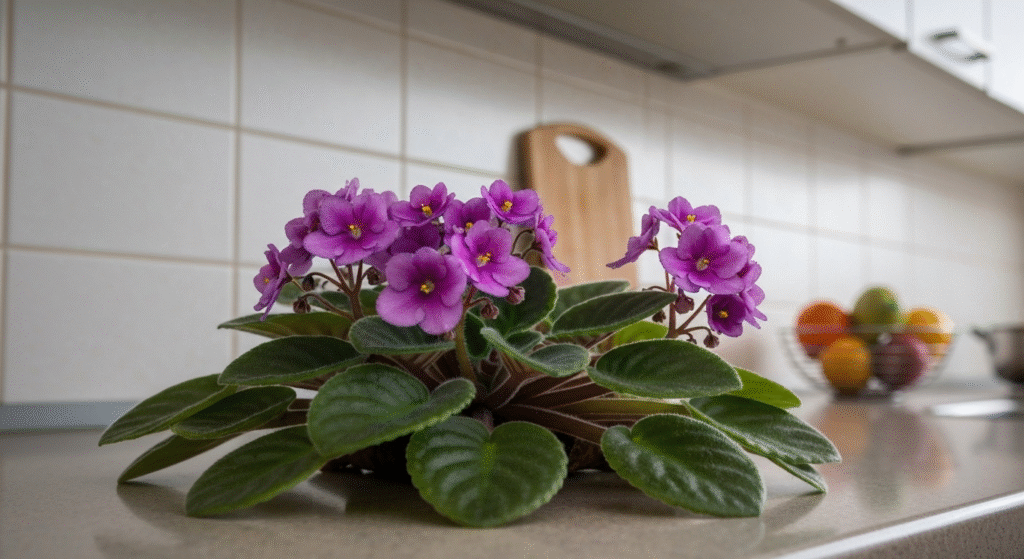
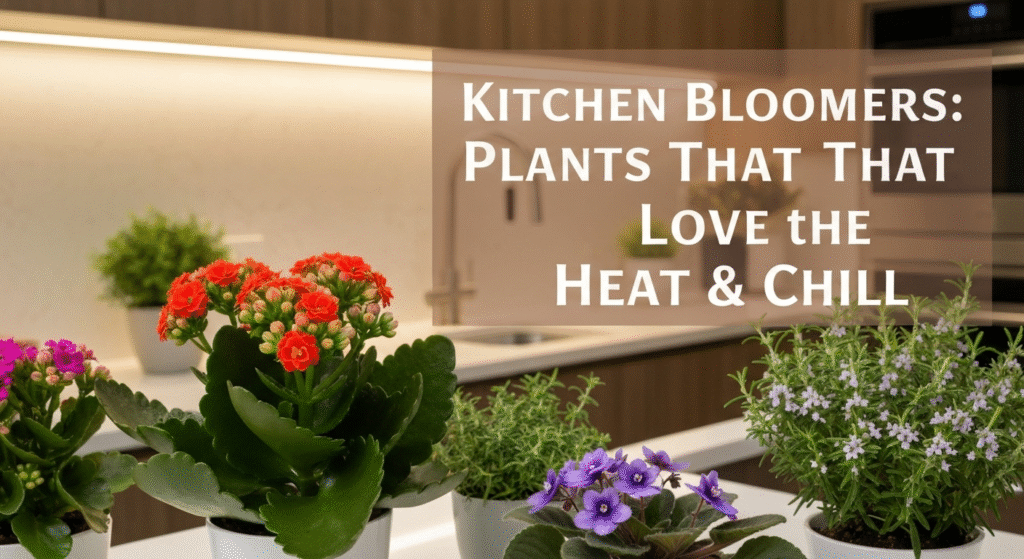
The African Violet is a classic for a reason. People often think of it as a delicate plant, but I’ve found it to be surprisingly tough in the right kitchen spot. It doesn’t want to be blasted by oven heat, but its small size and love for indirect light make it perfect for a countertop shaded by upper cabinets or a north-facing windowsill.
What makes it work in a kitchen is its dislike of direct, hot sun, which many kitchens lack anyway. It prefers the consistent moisture that a humid kitchen can help provide, and its fuzzy leaves seem to handle the air without much complaint. Since they are small, you can easily move them if you know you’ll be doing a lot of cooking.
| Care Aspect | Recommendation | Why it Works for Kitchens |
| Light | Bright, indirect light | Perfect for spots away from direct sun, like under cabinets. |
| Water | Keep soil moist but not soggy; water from the bottom | The kitchen sink is right there for easy bottom watering. |
| Temperature | 65-80°F (18-27°C) | Tolerates typical indoor temperature ranges well. |
| Pros | Compact size, blooms year-round, many color varieties | Fits on crowded counters and provides constant color. |
| Cons | Hates cold drafts, leaves can get damaged by water spots | Must be placed away from drafty windows or doors. |
Kalanchoe (Kalanchoe blossfeldiana)
If you want a nearly indestructible flowering plant, Kalanchoe is it. As a succulent, it stores water in its thick, waxy leaves, making it incredibly drought-tolerant. This is the plant for you if you sometimes forget to water. I’ve seen these plants bounce back from serious neglect.
Its succulent nature also means it’s unfazed by the dry heat that comes from a running oven. The waxy leaves are also super easy to wipe down to remove any kitchen dust or grease. Kalanchoes produce dense clusters of flowers that last for weeks, sometimes months, in shades of red, orange, pink, and yellow. They are compact and bring a powerful punch of color to a small space.
| Care Aspect | Recommendation | Why it Works for Kitchens |
| Light | Bright, indirect light | Happy on a bright counter or near an east-facing window. |
| Water | Water thoroughly, then let soil dry out completely | Forgiving of inconsistent watering schedules. |
| Temperature | 60-85°F (15-29°C) | Handles temperature swings better than most houseplants. |
| Pros | Very low maintenance, long-lasting blooms, drought-tolerant | Ideal for busy households and beginner plant owners. |
| Cons | Can become leggy without enough light | Needs a reasonably bright spot to stay compact. |
Peace Lily (Spathiphyllum)
While often grown for its foliage, the Peace Lily produces elegant white flowers (spathes) and is one of the most resilient plants you can own. It is famous for its ability to tolerate lower light conditions, making it a great choice for a darker kitchen corner. One of its best features is its dramatic “tell”—it wilts noticeably when it’s thirsty, taking all the guesswork out of watering. Give it a drink, and it perks back up within hours.
In the kitchen, a Peace Lily appreciates the higher humidity from cooking and dishwashing. It’s also an excellent air purifier, which is a fantastic bonus in a room that can have lingering food odors. Its large, smooth leaves are simple to wipe clean. Just keep it away from direct drafts, as it is still a tropical plant at heart.
Flowering Herbs: The Double-Duty Champions
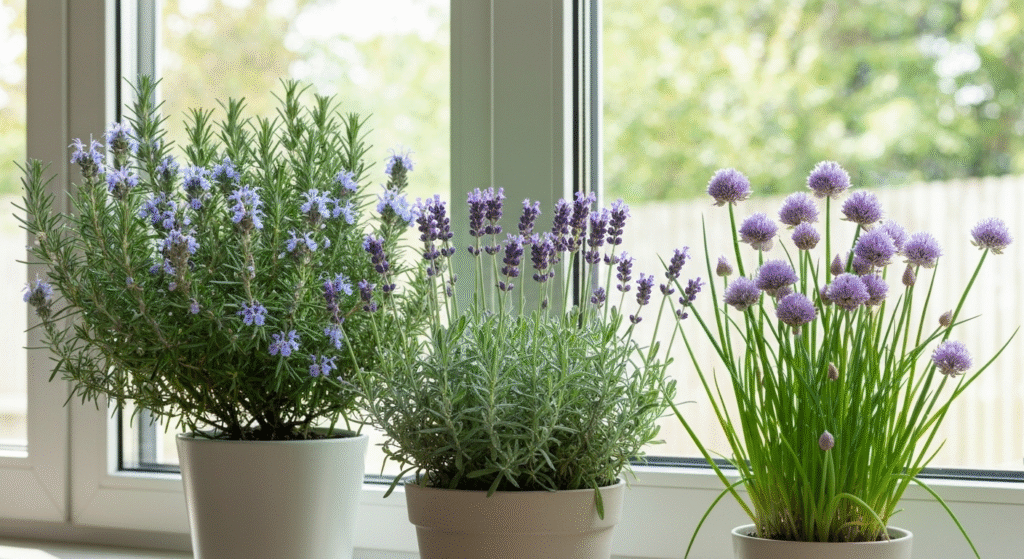
Why not choose a plant that is both beautiful and useful? Many common herbs produce lovely flowers and are naturally tough. They are often native to Mediterranean climates, so they are accustomed to sun, heat, and drier conditions, making them great candidates for a sunny kitchen window.
- Rosemary: This woody herb has delicate blue or purple flowers and a wonderful pine-like scent that can help neutralize cooking odors. It loves sun and hates being overwatered. A pot on a sunny windowsill is perfect.
- Lavender: Known for its calming scent and purple flower spikes, Lavender can be grown indoors with enough light. It’s another sun-lover that is very drought-tolerant. Its fragrance is a welcome addition to any kitchen.
- Chives: If you let them, chives will produce beautiful, globe-like purple flowers. You can snip the green stems for cooking and still enjoy the blooms. They are very easy to grow and don’t ask for much.
Comparison of Flowering Herbs for the Kitchen
| Herb | Flower Color | Light Needs | Water Needs | Kitchen Benefit |
| Rosemary | Blue/Purple | Full Sun | Low (Drought-tolerant) | Aromatic, culinary use |
| Lavender | Purple | Full Sun | Low (Drought-tolerant) | Calming fragrance |
| Chives | Purple | Full to Partial Sun | Moderate | Edible stems and flowers |
| Thyme | Pink/White | Full Sun | Low (Drought-tolerant) | Culinary use, compact size |
Smart Placement and Care in the Kitchen
Choosing the right plant is half the battle; the other half is placement. Even the toughest plant will suffer if you put it right next to the stove. Here are a few strategies I’ve learned for keeping kitchen plants happy.
- The “Safe Zone” Rule: A good rule of thumb is to keep plants at least three to four feet away from the oven and stovetop. This protects them from the most intense heat blasts.
- Leverage the Sink: The area around the kitchen sink is often a great spot. It typically has decent light and benefits from the residual humidity. Plus, watering is incredibly convenient.
- Countertop Islands: A kitchen island is often the perfect home for a plant. It’s usually far enough from major heat sources and drafts, and it makes a beautiful, living centerpiece.
- Wipe-Down Wednesdays: I recommend a weekly routine to gently wipe your plant’s leaves with a damp cloth. This small task prevents grease and dust from building up, allowing the plant to photosynthesize efficiently. It only takes a minute and makes a huge difference.
Plants to Avoid in the Kitchen
Just as important as knowing what works is knowing what doesn’t. To save you some frustration, here are a few types of flowering plants that I’ve found consistently struggle with the kitchen’s fluctuating environment.
- Fussy Orchids (like Phalaenopsis): While some orchids love humidity, many are very sensitive to sudden temperature changes and drafts, which can cause them to drop all their buds overnight.
- Gardenias: These are famous for their fragrant white blossoms but are notoriously picky. They demand high humidity, stable temperatures, and specific watering—the exact opposite of a kitchen environment.
- Calathea: While some are grown for their flowers, most Calathea are prized for their foliage. They are extremely sensitive to drafts, dry air, and temperature swings, making the kitchen one of the worst rooms for them.
Frequently Asked Questions
How can I protect my kitchen plants from cooking steam?
A little steam is usually fine and even beneficial for humidity-loving plants like Peace Lilies. However, direct, hot steam from a kettle or pot can scald leaves. Simply place plants away from the direct line of fire—not directly above a kettle or on a shelf over the stove.
Is light from a kitchen’s fluorescent fixture enough for these plants?
For lower-light tolerant plants like a Peace Lily, it might be sufficient to supplement poor natural light. However, for bloomers like Kalanchoe and flowering herbs, it’s usually not enough. They need several hours of bright, indirect natural light to produce flowers.
My kitchen has no windows. Can I still have a flowering plant?
It’s very difficult to get a plant to flower without any natural light. In this case, your best option is to use a full-spectrum grow light. You could also rotate plants: keep a flowering plant under a grow light in another room, and bring it into the kitchen for a week or two to enjoy the blooms before swapping it back out.
Will the smell of my flowering plants interfere with cooking aromas?
It depends on the plant. A strongly scented plant like Lavender will certainly add its fragrance to the air. A Kalanchoe or African Violet, however, has no scent at all. If you are sensitive to smells, choose a non-fragrant bloomer.
A Blooming Heart for Your Home
Your kitchen doesn’t have to be a plant-free zone. By moving past the delicate, fussy flowers and embracing the resilient, tolerant ones, you can easily add life and color to your cooking space. It’s not about finding a plant that can barely survive; it’s about choosing one whose innate toughness makes it a natural fit for the dynamic environment of a kitchen.
Plants like Kalanchoe and Peace Lily, or useful herbs like Rosemary, don’t just tolerate the temperature swings and humidity spikes—they thrive in a way that proves nature is far more adaptable than we often give it credit for. With a little thoughtful placement and the right plant choice, your kitchen can be as beautiful and vibrant as any other room in your home.