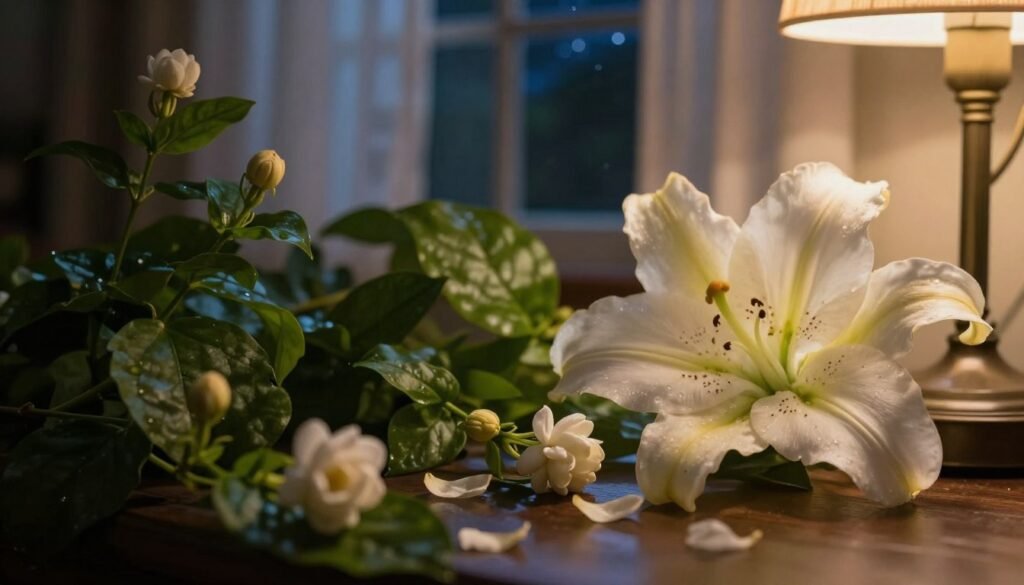

Surprising fact: up to 20% of common house species fold their petals after dusk due to a built-in clock called nyctinasty.
If you notice blooms tucking in after sunset, you are seeing a natural rhythm. This is the plant’s way of keeping pollen dry, saving energy, and lowering freeze risk — ideas even Charles Darwin explored.
Most of the time, this behavior is normal and harmless in a home setting. Light and room temperature can shift the exact time when a bud shuts or reopens, but the internal clock drives the pattern.
This article will explain what is routine and what should raise concern. We will compare day-bloomers that seal up at dusk with night-bloomers that open later. You’ll also get a practical list of indoor-friendly picks, a moon garden idea for evening windows, and quick troubleshooting steps for light, watering, drafts, and pot limits.
Safety note: consider pets, scent strength, and growth habit when choosing plants for your space.
Key Takeaways
- Nyctinasty makes many house blooms fold after dusk to protect pollen and conserve energy.
- Room light and temperature can change the exact time petals move.
- We cover day-bloomers that close and night-bloomers that open after dark.
- You’ll find an indoor-friendly list and a moon garden idea for evening enjoyment.
- Troubleshoot with checks for light levels, watering, drafts, and pot size.
What it means when indoor flowers close at night
A built-in timer in many species prompts petals and leaves to shift as daylight fades. This is a common, active rhythm called nyctinasty — an easy-to-see sleep response that many house plants keep even on a windowsill.

Nyctinasty and the plant “sleep” response
Nyctinasty is a circadian response to darkness. Think of it as the plant’s internal clock that anticipates evening and morning rather than only reacting to immediate light.
Those clocks cue growth changes so petals and stems move in step with the day. You may notice whole branches shift, not just blooms.
Why folding helps: pollen, energy, and cold risk
Keeping pollen dry matters. Dry pollen transfers better via insects, so closing protects reproductive parts from dew-like moisture.
Plants also cut exposure to conserve resources and stay more “showy” when pollinators are active in the morning or day. Charles Darwin suggested another simple benefit: in cooler air after sunset, folding can lower freeze risk by reducing exposed surface.
- Protects pollen for better transfer.
- Conserves energy when pollinators are absent.
- Reduces chill risk if temperatures drop.
This coordinated movement of petals, stems, and leaves often follows the same family-level patterns, so similar species behave alike. Indoor light cycles mimic sunset and sunrise well enough to trigger these cues — next we’ll look at how room light and temperature set the schedule.
Why flowers close at night indoors even without outdoor weather
Indoor blooms often follow cues from light and airflow, so they may fold up even when weather stays mild.
Light cues matter: Sun through a window, moving shade, and lights that switch off at the same time each evening create a clear day-night cycle. Many plants treat low afternoon light or heavy cloud cover as the start of evening and respond by tucking petals inward.

Temperature dips and hidden drafts
Thermostat setbacks, cooler nights near windows, and A/C cycles can lower room temperature after dusk.
Drafts from vents, doors, or thin panes often trigger an earlier fold. If a pot sits near a drafty spot, blooms may behave differently than the same plant across the room.
Humidity swings that mimic dew
Humidity rises from showers, cooking, or humidifiers. Nighttime cooling can condense moisture on petals like outdoor dew.
This moisture can reinforce the pollen-protection response many species evolved to use in the garden, even when they live in a living room plant pot.
- If a bloom shuts earlier in one space, check light and airflow first — it’s rarely a disease.
- Consistent, predictable timing is normal; random or prolonged shutting can indicate setup problems.
| Trigger | What to check | Quick fix |
|---|---|---|
| Low light in late afternoon | Window exposure, curtains, seasonal sun angle | Move to a brighter spot or add a timed lamp |
| Evening temperature dip | Thermostat schedule, window chill, A/C timing | Adjust setback range or relocate away from cold glass |
| Drafts and vents | Doors, HVAC vents, leaky windows | Seal gaps, reposition pot, use a draft guard |
| Humidity spikes | Shower, cooking area, humidifier cycles | Improve ventilation or move plant to drier room |
Flowers close at night indoors: normal patterns vs signs of stress
Many house species follow a steady daily rhythm: petals fold in the evening and reopen by morning. Timing can shift with shorter days in winter or brighter light in spring.
Normal timing
Expect evening shut, morning reopen, and seasonal shifts. A healthy plant may still have short-lived blooms; consistent reopening is usually a good sign.
When to worry
Look for buds that stay shut for several days, drooping stems that do not perk up, or leaves that yellow and fall. These are clear warning signs that a plant is stressed.
Quick at-home checks
- Light: Is the pot near the brightest window? Does it get direct sun or only dim ambient light?
- Water: Is soil soggy or drying too fast? Both affect bloom quality and can cause droop.
- Pot size: Root crowding can reduce flowering; some species tolerate snug pots, others do not.
- Airflow: Check vents, drafty doors, and cold glass zones that stress blooms overnight.
“Most daytime-blooming plants that reopen each morning are following their natural clock; persistent failure to open signals a care issue.”

| Check | What to look for | Action |
|---|---|---|
| Light | Far from window or blocked mornings | Move closer or open blinds for morning sun |
| Water | Soggy soil or bone-dry pots | Adjust watering schedule and drainage |
| Pot size | Roots circling the pot | Repot into a slightly larger container |
| Airflow | Near vents or cold windows | Relocate away from drafts |
Night-blooming indoor flowers that open after dark (and often smell stronger at night)
For evening gardeners who love scent and drama, certain house specimens put on their best show after dusk. These picks tend to release their strongest fragrance in the evening and often display bold white blooms that read like a moonlit spotlight.

Queen of the Night cactus (Epiphyllum oxypetalum)
The famous queen night cactus opens large, fragrant white flowers for a single evening. It prefers bright, gentle light, higher humidity, and careful watering—overwatering is the top mistake for this cactus.
Night-blooming cereus
“Cereus” can mean several species that bloom in the evening. Young specimens may only flower once a year; maturity brings more frequent displays. Expect dramatic, short-lived blooms open after dusk.
Gardenia
Gardenia gives powerful scent that peaks around dusk. Handle petals with gloves—finger oils can brown the pure white blooms as they age to buttery yellow.
Night-blooming jasmine and moonflower
Night-blooming jasmine perfumes a room despite tiny, inconspicuous blooms; remove berries— they can be poisonous. Moonflower vine offers large white blooms for night pollinators but needs bright warmth and a trellis to thrive.
“Place these near a bright window with stable temps and away from vents so the night show lasts.”
Day-bloomers that close up at night (and can still be grown in the right indoor setup)
Many daytime bloomers tuck their petals away by evening, even when kept in a sunny room. These classic garden types are useful examples for learning how light and humidity shape petal behavior.
Hibiscus
Hibiscus typically opens in the morning and folds by night. Most single flowers last a single day, though some hybrids extend to two or three days.
Give strong sun, regular feeding, and rotation for even growth. Better light usually improves bloom size and frequency.
African daisy (Osteospermum)
Osteospermum responds simply to sun: open when light is bright, shut when it dims. This cue helps you tell normal behavior from stress.
Place near a bright window or use supplemental lighting for steady daytime displays.
California poppy and dandelion
Both species are reactive to light and humidity. California poppies and dandelion structures may fail to open in low light or when air is muggy.
They can be grown as experimental pots in very bright rooms, but expect them to be more temperamental than long-term house plants.
- Setup tips: brightest window, rotate pots, and monitor actual sun hours across the day.
- Realism note: not every day-bloomer thrives long-term indoors; choose sunrooms or use grow lights.
- Troubleshooting cue: if a day-bloomer never opens fully, suspect insufficient light first.
“Give true daytime light and you’ll usually see these varieties perform as expected.”
Indoor-friendly “moon garden” ideas for evening blooms, white flowers, and fragrance
Turn a single bright window into a nightly stage for plants that glow and perfume the room after dusk.
Design basics: white blooms and reflective foliage
Pick pale, white flowers to catch scarce light; they seem to glow in moonlight. Add silver or variegated leaves to reflect any ambient glow.
Placement: group your display near a large window so evening air and moonlight lend atmosphere.
Choosing varieties by space: vine, shrub, or cactus
Match form to room size. A vine like moonflower climbs a trellis and suits tall windows.
A shrub (gardenia or night-blooming jasmine) gives steady structure and strong scent. A cactus such as Queen of the Night makes a bold, low-maintenance focal point.
Fragrance planning for evenings
Plan by bloom schedule. Choose at least one specimen whose scent peaks at dusk so fragrance fills the living area when you want it.
For small rooms, place the most fragrant plant in the living room rather than a bedroom, and rotate seasonal stars so the moon garden stays fresh.
“A simple hero plant plus one texture partner creates more impact than crowding a sill.”
| Form | Best for | Care note |
|---|---|---|
| Vine (moonflower) | Tall windows, trellis | Needs warmth and regular watering during growth |
| Shrub (gardenia, jasmine) | Medium rooms, scent focus | Stable temps, higher humidity, bright indirect light |
| Cactus (Queen of the Night) | Compact spaces, dramatic one-night bloom | Bright light, careful watering, good drainage |
Care tips to help blooms open on time and last longer
Good timing and a few simple tweaks help blooms open when you expect them and stay fresh longer. Start with clear priorities so fixes are fast and effective.
Getting light right
Priority stack: light first, then watering, then temperature and drafts.
Place pots where morning sun and steady day length are predictable. Bright windows or a timed grow lamp help buds open on schedule.
Inconsistent light shifts opening and closing time. Keep curtains and lamps on a regular schedule to maintain a steady rhythm.
Watering without overwatering
Let soil dry slightly for most house types. Overwatering is the top issue for cactus and succulents; constantly wet soil reduces bloom count and invites rot.
Use pots with good drainage and check moisture an inch below the surface before watering.
Cool rooms and avoiding drafts
Drafts and warm vents make blooms “sweat” and shorten life. Move displays away from HVAC outlets and drafty windows.
Cool, stable conditions extend vase and potted bloom life. For cut stems, a cooler room will keep petals firmer longer.
Supporting better blooming on stems
For stemmed varieties like the Casa Blanca lily, gently remove anthers to cut pollen mess. Trim fully open blooms to shift energy to unopened buds on the same stems.
Light pruning and selective deadheading often increase the number of flowers that open per stem.
- Quick checklist: soil moisture, draft exposure, and yesterday’s light.
- Keep cactus watering conservative and use well draining mix.
- Protect cut and potted displays from vents and heat sources.
| Issue | What to check | Fast fix |
|---|---|---|
| Irregular opening times | Light schedule and lamp timing | Move to bright window or set a timer for consistent light |
| Drooping or fewer blooms | Soil moisture and root health | Adjust watering, repot if root-bound |
| Short-lived petals | Drafts, vents, and room temperature | Relocate away from vents; use cooler room for cut stems |
Safety and indoor practicality to know before you bring these plants home
Think beyond scent and color: safety, growth habit, and maintenance all decide whether a specimen will fit your home.
Pet toxicity and placement: lilies and other risky varieties
Lily species such as Casa Blanca are highly toxic to cats and can cause kidney failure. Keep them out of reach or skip them if you share space with pets.
Night-blooming jasmine (Cestrum nocturnum) can set poisonous berries; remove any fruit and keep the shrub where pets cannot access it.
Growth habit realities: vines, shrubs, and pot-bound limits
Vines like moonflower need vertical room and a support to climb. Without a trellis, a vine will underperform and get messy.
Shrub-form plants demand steady light and more root space to bloom reliably. Cacti need bright light and lean soil, not frequent repotting.
- Pot-bound roots often reduce blossoms; repot or refresh soil once a year.
- Place highly fragrant specimens where airflow is gentle to avoid overwhelming small rooms.
- Match the variety to your routine: low-maintenance cactus for busy schedules, shrub for steady care, vine for gardeners ready to train growth.
“Safety and habit matter as much as show—choose with pets, space, and care in mind.”
| Risk or habit | What this means | Practical tip |
|---|---|---|
| Toxic blooms (lily) | High pet risk, severe reactions in cats | Keep in pet-free rooms or select a non-toxic alternative |
| Poisonous berries (jasmine) | Berries attract pets and children | Pinch off fruit and locate shrub out of reach |
| Vine growth | Needs trellis and vertical space | Provide support and regular pruning |
| Pot-bound roots | Reduced flowering and vigor | Repot or upsize container yearly as needed |
Conclusion
A plant’s evening behavior usually reflects its internal clock and the care it receives. Nyctinasty explains why many flowers bloom, then fold with low light. This is normal when blooms reopen with morning sun.
Think biology plus room cues — light, temperature, and humidity — rather than disease. Watch for trouble signs: buds that stay shut, weak stems, or declining leaves after care changes.
Choose from the list: pick night bloomers for evening fragrance and pale moon appeal, or day varieties if you have strong sun. A small moon garden with a cactus or gardenia can brighten spring and summer evenings in your home.
One last note: check toxicity (especially lily) and match growth habit to your space so specimens thrive year after year.