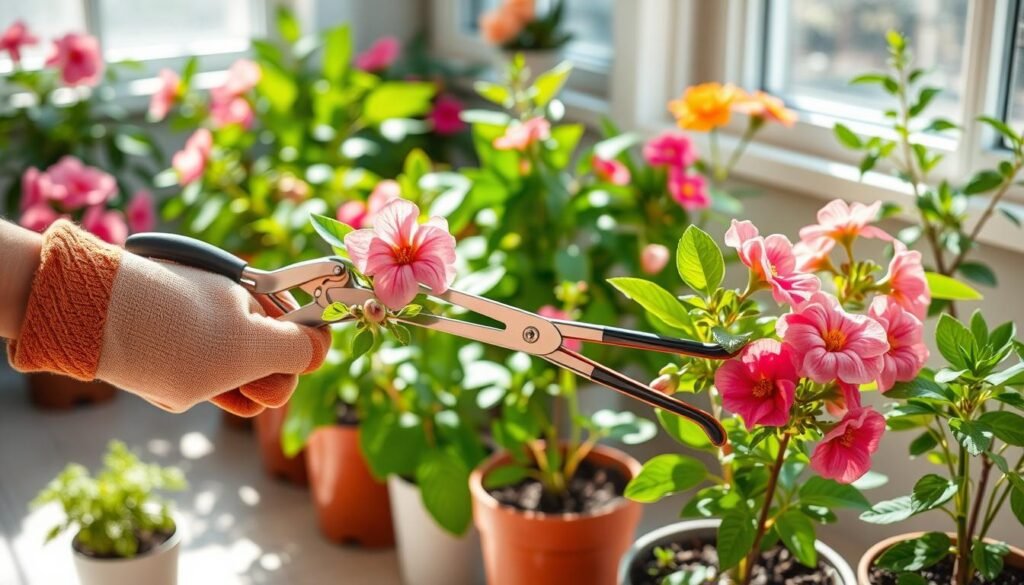

Surprising fact: over 70% of U.S. houseplants show stunted blooms because owners miss one key step that links pruning and feeding.
This short guide explains the two biggest growth levers for healthy blooms: smart pruning — where to cut — and smart feeding — when to fertilize indoor flowers. Both actions must work together for strong, compact growth.
We’ll set clear, practical steps for common plants found in many homes. You’ll learn why trimming alone can’t fix nutrient gaps, and why adding fertilizer alone won’t correct leggy stems.
The article previews core questions: what fertilizer does, what NPK means, which types to pick, seasonal timing, safe feeding frequency, and how to apply without burning roots. Advice adapts to light and room warmth, so it fits different setups rather than one-size-fits-all.
Note: more fertilizer is not better. Preventing overfeeding is a main theme to protect root health.
Key Takeaways
- Pruning and feeding work together to boost blooms and vigor.
- Learn basic NPK and pick the right fertilizer type for your plant.
- Timing varies by light, plant heat, and home conditions.
- Follow safe feeding rates to avoid root burn and buildup.
- Simple trims fix shape; nutrients fuel stronger, lasting blooms.
Why indoor flowers need fertilizer indoors
Potted plants use up the minerals in their mix faster than a garden bed can replace them. In a closed container, there is no steady input of decomposing matter or natural cycling, so added nutrition fills that gap.
“Indoors you don’t get the full natural nutrient-replenishing cycle like decomposing organic matter, so fertilizer fills the gaps.”
How nutrients get depleted in pots and soil over time
Container reality: plants live in pots with limited soil. Roots absorb nutrients and regular watering can wash minerals out through drainage.
- Watering gradually leaches salts and minerals from potting mix.
- Potting mix has finite nutrients and will weaken over months.
What fertilizer supports: new growth, flowering, and pest resistance
Fertilizer is targeted nutrition, not a cure-all. Given good light and steady water, it promotes greener leaves, stronger stems, new growth, and more reliable flowering.
| Benefit | Visible sign | Result |
|---|---|---|
| Leaf vigor | Deeper green | Better overall health |
| Stem strength | Firmer stems | Less breakage, better support |
| Flower set | More buds | Consistent bloom |
Well-fed houseplants resist pests and disease better. A quick warning: too much fertilizer can burn roots and cause browning or wilting, so follow product directions in later sections.
Understanding plant nutrients and the NPK ratio for houseplants
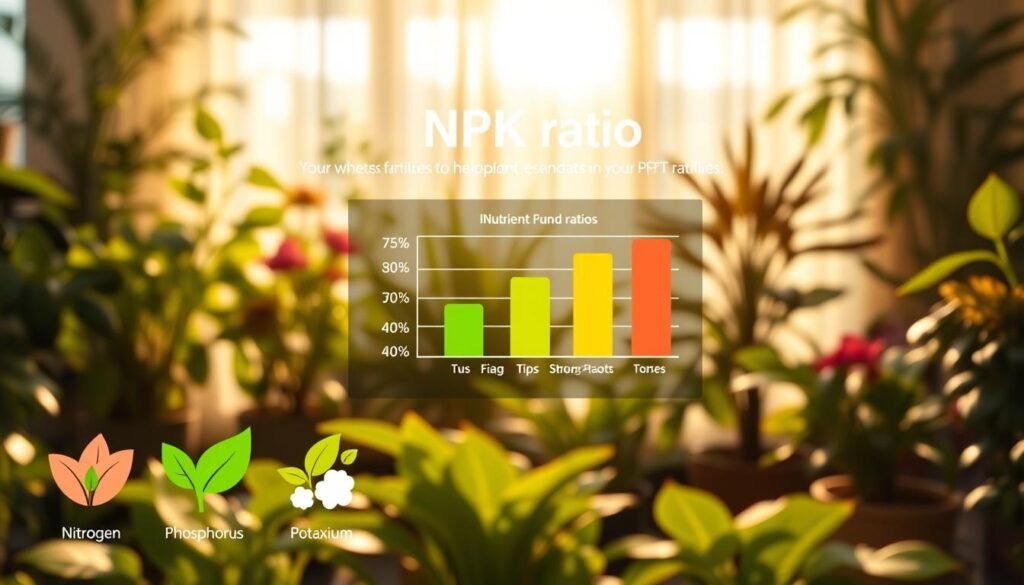
A clear grasp of NPK turns a confusing label into a simple plan for stronger growth. The three numbers are the ratio of macronutrients: nitrogen, phosphorus, and potassium. Read them left-to-right on the package to know the concentration in the product.
Nitrogen fuels foliage and leaves — think greener, fuller growth. Phosphorus focuses on roots and flower and fruit formation; it helps buds form and roots develop. Potassium supports overall vigor and stress resistance.
A balanced option such as 10-10-10 suits mixed houseplants well. Bloom-focused formulas often show higher phosphorus during active blooming cycles.
- Ratio explained: three numbers = percent of N, P, K by weight.
- Higher numbers ≠ better: they show content strength, so follow dilution rates.
- Rule of thumb: foliage-first plants like slightly more nitrogen; bloom-first plants benefit from extra phosphorus.
“Tailoring a feed plan around NPK helps plants use light and water more efficiently.”
Micronutrients are the supporting cast. Look for iron, magnesium, zinc, copper, boron, and manganese on labels. A complete formula prevents subtle deficiencies that stunt root and leaf health.
Fertilizer types for indoor plants and how to choose the right one
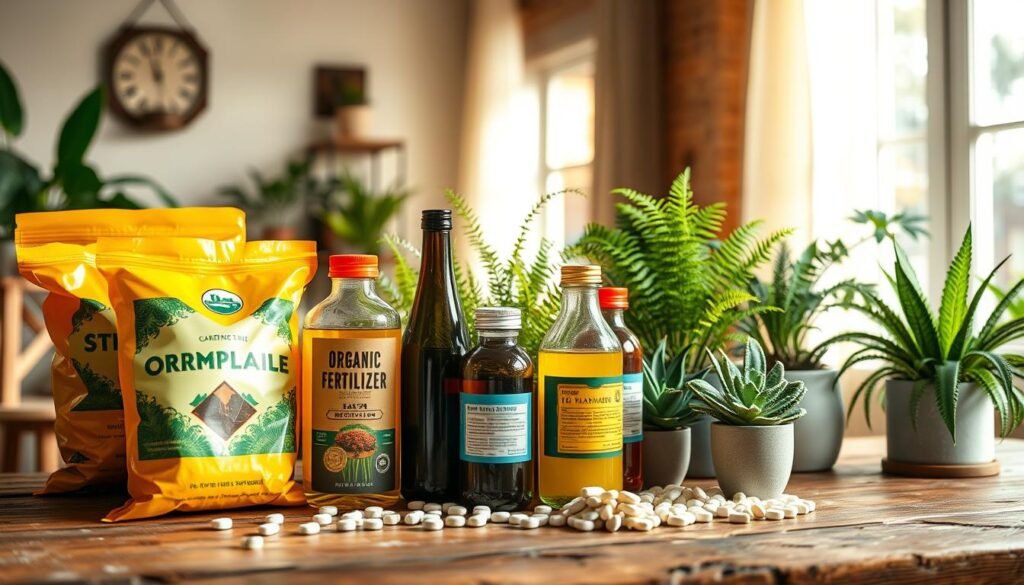
Choosing the right feed style makes caring for houseplants simpler and more reliable. Below are the main options you’ll find in U.S. stores and online, with pros and cons so you can match a product to your schedule and pot count.
Slow-release granules, spikes, and pellets
Steady, low-effort feeding. These granules release nutrients over weeks and lower the risk of accidental over-fertilization, as Justin Hancock notes.
They work well for many pots and busy households. Apply at potting or sprinkle on top per label instructions.
Water-soluble powders and concentrates
This style mixes with water so you control strength and timing. It offers flexibility but needs careful measuring.
Use it if you like tweaking doses for different plant needs and schedules.
Liquid fertilizers and foliar feeding
Liquids can be ready-to-use or concentrated. Some apply to soil; others support foliar application if the label allows.
Foliar feeding is a supplement, not a replacement for root feeding, and only makes sense when instructions recommend it.
| Type | How it feeds | Best for | Risk |
|---|---|---|---|
| Slow-release granules/spikes | Steady release over weeks | Busy people, many pots | Low risk if applied correctly |
| Water-soluble powders | Mixed and applied regularly | Detail-oriented growers | Easy to overmix or overapply |
| Liquid concentrates & RTU | Fast-acting, weekly options | Quick corrections, regular routines | Follow product directions closely |
| Foliar feeds | Leaf surface absorption | Supplemental during deficiency | Not a full replacement for root feeding |
Quick choose this if: busy = slow-release; detail-oriented = water-soluble; weekly routine or fast fix = liquid.
When to fertilize indoor flowers during the growing season
Match feeding with active growth and light, and plants repay you with stronger shoots and more buds.
Spring start: Many growers restart feeding in March because days lengthen and light increases. More light means faster growth, so nutrient demand rises. Watch for new shoots, fresh leaves, or bud swelling as clear signals that the growing season has truly begun.
Summer feeding: Treat summer as the peak performance window. During these months plants use the most nutrients while producing foliage and blooms. Use a steady schedule and follow product dilution rates so roots get a consistent supply without overload.
Late summer and early fall: Begin tapering frequency and strength as growth slows. Reduce dose or space out applications to avoid salt buildup and prevent soft, leggy stems that struggle later.
Winter care: Many houseplants enter semi-dormancy in low-light months. Pause feeding in late fall and winter unless plants show active growth under bright lighting. Pausing prevents root burn and wasted product.
Exceptions: Plants under grow lights, in bright southern or western windows, or in warmly heated rooms may keep growing past standard months. In those cases extend the feeding season while watching growth signals rather than calendar dates.
How often to fertilize houseplants without overdoing it
A steady, modest schedule beats heavy doses for most potted plants.
Starter rhythms: slow-release products: apply once or twice yearly at repotting or early spring. Water-soluble powders: every 3–4 weeks during active growth. Liquid concentrates at half strength: every 2 weeks if growth is strong.
Follow product instructions first, then adjust for your plants. Too much fertilizer is a common indoor problem because salts can build up in closed pots. That buildup stresses roots and shows as leaf browning or slowed growth.
Adjust for plant type
Heavy feeders and bloom-focused houseplants often need more regular feeds. Succulents and cacti are light feeders; most need one light spring feed or none at all.
| Product type | Frequency | Best for |
|---|---|---|
| Slow-release granules | 1–2 times per year | Many pots, low effort |
| Water-soluble | Every 3–4 weeks | Active growers, flexible dosing |
| Liquid (diluted) | Biweekly at half strength | Fast response, regular care |
When growth is active and leaves look healthy, keep a modest schedule. If light is low and growth slows, cut back. Consistency beats intensity: small, correct amounts over time are the safest way to care for houseplants.
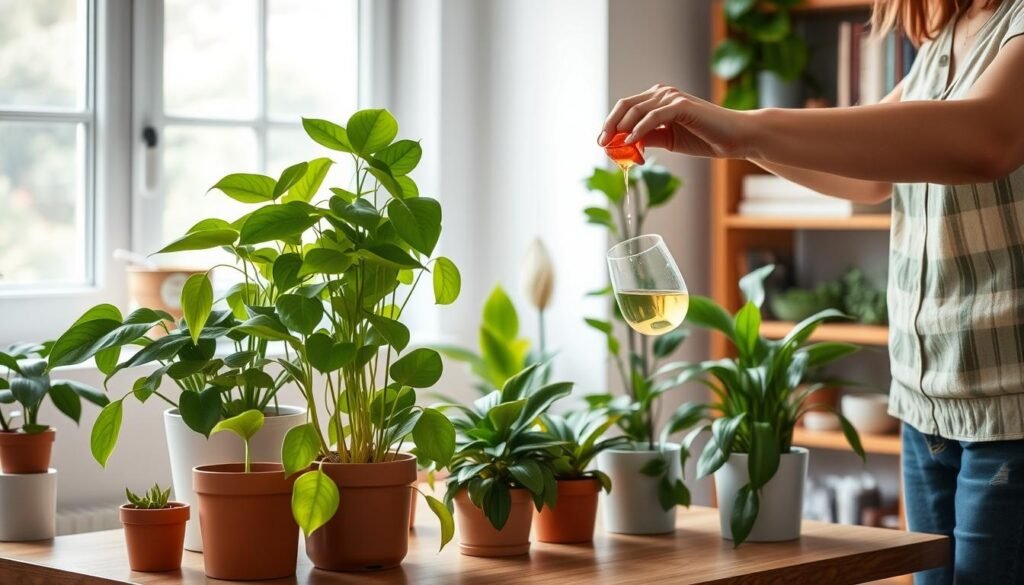
How to fertilize indoor flowers the right way
Start with a checklist. Read the label, match product rates to your pot size, and follow mix ratios and reapplication instructions before any application. This small habit prevents common mistakes and protects roots.
Read the label first
Make sure you use the product’s pot-size rates and dilution directions. Justin Hancock warns that products vary, so labels are the reliable source for safe feeding.
Best time of day
“Morning feeds reduce stress and give plants time to absorb nutrients.”
Feed in the morning so leaf surfaces and roots can use nutrients before the hottest part of the day.
Water and soil strategy
Make sure the potting mix is slightly moist, not bone dry. Adding fertilizer to damp soil lowers the chance of fertilizer burn and keeps roots healthy.
Drainage, leaching, and when to hold off
Use pots with drainage holes so excess water and minerals can exit. A couple times per year, run water through the pot until it pours out the bottom to flush salts.
Hold off feeding newly purchased or just-repotted plants, and skip any plant that looks stressed. Watch for brown leaf edges or wilting; if those appear, pause feeding and flush the soil.
Conclusion
, Good plant health comes from steady routines, not big one-off fixes.
Use this guide as a simple map: replenish nutrients, match dose with light and growth, and avoid the strongest product as a quick fix.
Feed mostly in spring and summer, taper in fall, and pause for winter dormancy unless bright light keeps growth active.
For a low-effort plan, pick slow-release; for control, choose water-soluble; for quick results, use diluted liquid. Follow label rates, dilute when unsure, apply over slightly moist soil, and keep drainage clear.
Watch plants closely. New shoots signal success. Crispy edges or wilt mean back off and flush salts. Consistent, moderate feeding plus smart pruning is the best way for indoor plants to thrive, even without a green thumb.