how to propagate string of hearts

How to Propagate String of Hearts from a Single Vine

Surprising fact: many hobby growers turn one vine into a shelf full of plants in a single season by using simple techniques that work indoors.

Ceropegia woodii wins fans in the United States for its trailing ropes of heart-shaped leaves that shine in hanging planters and on shelves.

This guide sets clear expectations: you can make multiple plants from one vine using three reliable propagation options—rooting cuttings in water, rooting cuttings in soil, or using tuber and layering methods. Pick the method that fits your comfort and mess tolerance.

Success looks like visible roots, fresh growth, and firmer stems. Common slowdowns include cool temps, low light, and overly wet soil. The real key is the node; clean cuts and the right environment make the biggest difference.

Table of Contents

Key Takeaways

  • One vine can become many with simple, repeatable steps.
  • Three main approaches: water, soil, and tuber/layering methods.
  • Look for roots, new growth, and stronger stems as signs of success.
  • Nodes, clean cuts, and proper conditions are crucial.
  • A friendly, step-by-step method will suit beginners and veterans alike.

Before You Start: Timing, Tools, and What Makes Cuttings Root

Before you cut a vine, get a quick plan for timing, supplies, and the small steps that help roots form.

Best season: Aim for spring and summer when active growth speeds rooting. You can try any time indoors, but cooler months often slow progress and raise risk.

Gather supplies

  • Clean scissors or pruning shears — reduce rot and infection.
  • Clear glass or jar for water rooting and a small pot for soil rooting.
  • A gritty, well-draining potting mix and a clear plastic bag for humidity.
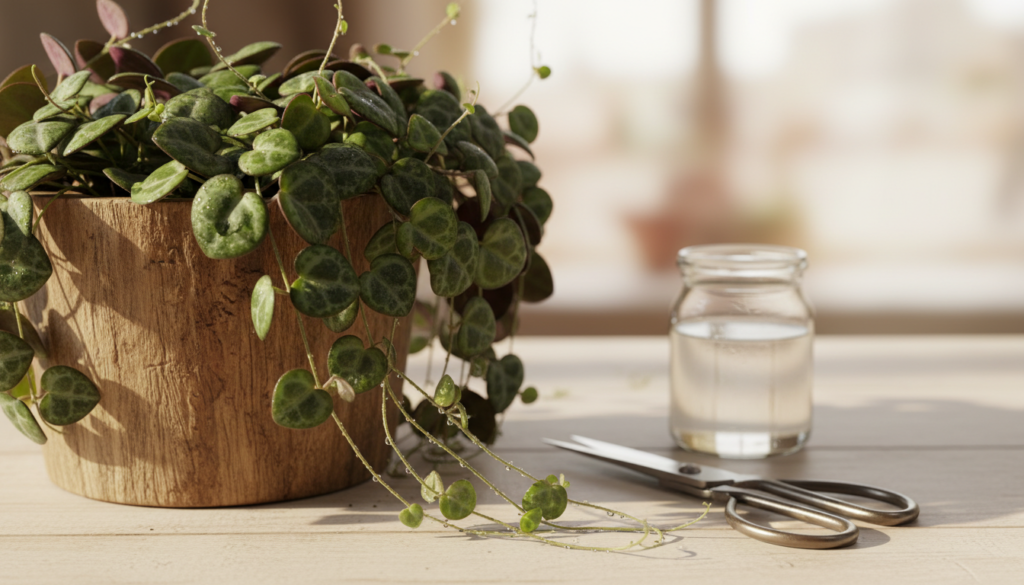
A close-up view of a thriving "String of Hearts" plant, showcasing its cascading heart-shaped leaves with vibrant shades of green and hints of purple. In the foreground, intricate tendrils are delicately coiling and hanging down, glistening with morning dew to emphasize freshness. The middle ground features a rustic wooden pot nestled on a light-colored wooden surface, surrounded by a pair of sharp, clean scissors and a small glass jar filled with clear water, ready for propagation. The background is softly blurred, hinting at a warm, sunlit room with light streaming through a window, creating a peaceful and inviting atmosphere. The lighting is soft and natural, casting gentle shadows and highlighting the plant's unique texture. The overall mood is tranquil and inspiring, perfect for gardening enthusiasts and plant lovers.

Find the node and prep the stem

Look for nodes where leaves meet the stem. Nodes are non-negotiable — roots form there.

Take sections with about three to four nodes. Remove lower leaves so nothing sits in water or gets buried in wet soil. This avoids rot and improves success.

Set the right environment

  1. Warm indoor spot with bright, indirect light — near a window but not in harsh midday sun.
  2. Have containers ready so cuttings do not sit out long after cutting from the mother plant.
  3. Choose firm, healthy vines and avoid damaged sections.

“Clean tools and the right node placement are the two simplest things that change results overnight.”

Item Why it matters Quick tip
Spring/Summer Active growth speeds rooting Start during warm time for faster results
Clean cutters Prevents rot and bacteria Wipe with alcohol before each cut
3–4 nodes Nodes are root origin points Strip lower leaves for safety
Gritty mix Drains well around tender nodes Use perlite or pumice for aeration

How to Propagate String of Hearts in Water (Stem Cuttings Method)

Begin by trimming a strong section of vine and preparing a bright, warm spot for rooting. Use clean shears and take a stem cutting with about three to four nodes. Remove lower leaves so nothing sits in the water.
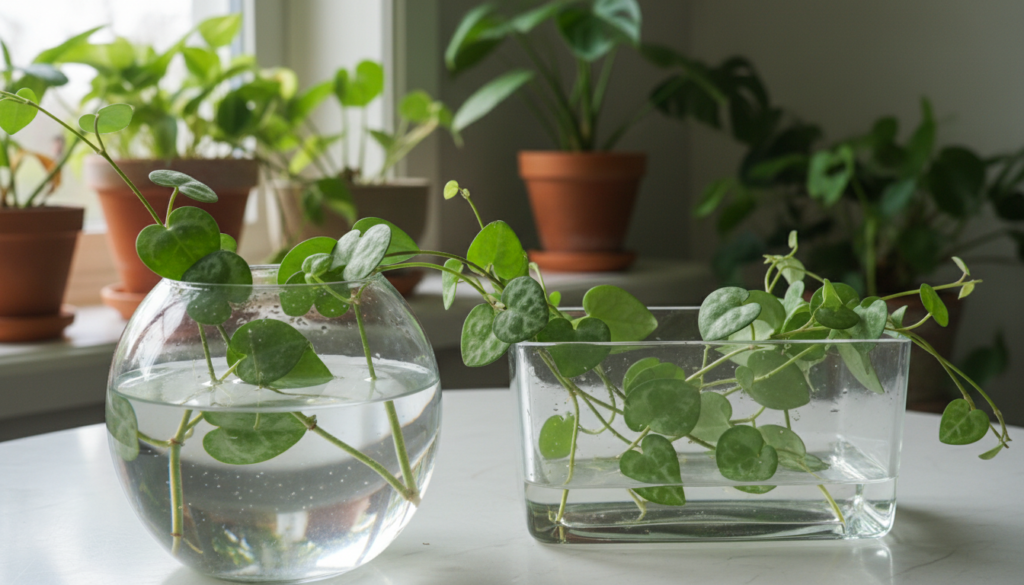
A serene tabletop scene showcasing vibrant String of Hearts cuttings submerged in clear water. In the foreground, several stem cuttings with lush green leaves and delicate heart-shaped foliage float gracefully in a glass vase. The water is beautifully illuminated by soft, natural light filtering through a nearby window, creating gentle ripples that enhance the tranquility of the composition. In the middle, additional cuttings are artistically arranged, with roots just beginning to form, demonstrating the propagation process. The background features a softly blurred indoor garden setting, adorned with other houseplants, providing a lush atmosphere. The overall mood is calm and nurturing, inviting viewers to appreciate the beauty of plant propagation. The image is captured from a slightly elevated angle to fully display the cuttings, enhancing their visual appeal.

Take a healthy cutting and set it correctly

Fill a clean glass container with room-temperature water. Position the cutting so at least two nodes are submerged while leaves stay above the surface. This prevents rot and encourages nodes to form roots.

Jar setup and maintenance

Place the jar in bright, indirect light in a warm room. Refresh the water weekly (every 5–7 days) or sooner if it looks cloudy. Clear water keeps oxygen levels up and reduces bacterial growth.

When to pot up and aftercare

Most cuttings show visible roots within a couple of weeks. Transplant once roots reach about a half-inch long. Move the cutting into a small pot with well-draining soil, water thoroughly, and keep the mix evenly moist for the first couple of weeks.

“If stems turn mushy, reduce submersion depth, improve cleanliness, and avoid hot direct sun.”

Propagate String of Hearts in Soil for an Easy, Low-Mess Setup

Soil is a low-mess choice that turns cuttings into ready-to-grow pots with minimal fuss. It skips a jar and often means less handling when roots form.
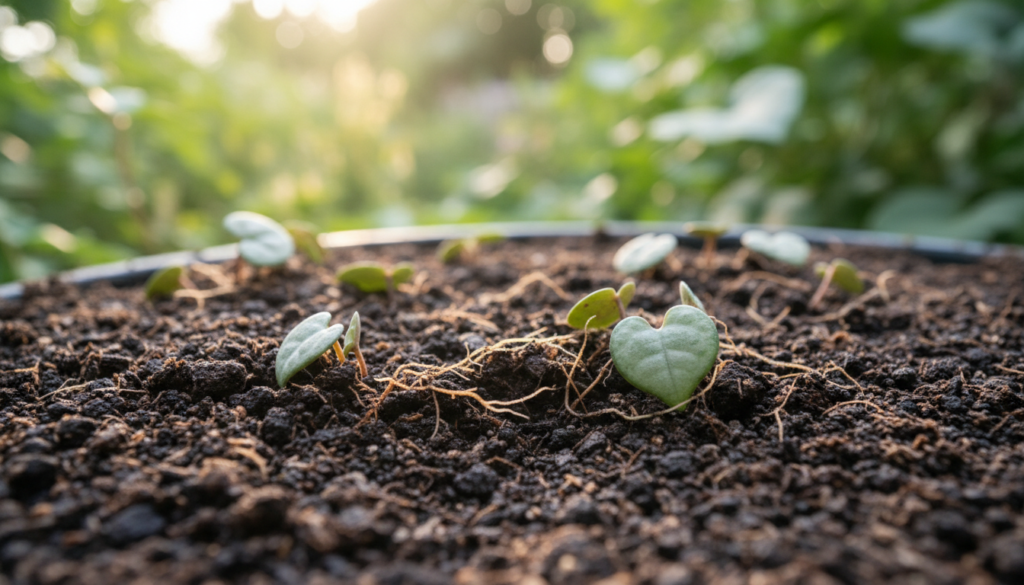
A close-up view of rich, dark soil cuttings, showcasing various textures and characteristics of the soil. The foreground features small clumps of soil with fine roots intertwined, emphasizing the natural intricacies of propagation. In the middle, delicate String of Hearts vines with heart-shaped leaves are partially buried in the soil, with a few leaves peeking out, indicating the propagation process. The background is softly blurred, simulating a gentle garden environment with hints of green foliage and sunlight filtering through leaves, creating a warm and inviting atmosphere. The lighting is natural and diffuse, reminiscent of a sunny day, enhancing the lushness of the scene. The angle is slightly tilted for depth, focusing on the soil and the plant, conveying a sense of simplicity and connection to nature.

Plant cuttings correctly

Use a small pot or container with a gritty, well-draining mix. Take cuttings of three to four nodes and strip the lower leaves.

Insert each cutting so at least two nodes sit buried and the remaining leaves stay above the soil line. This encourages steady rooting without rot.

Moisture and humidity boost

Moisten the soil lightly with a spray bottle; keep it damp but not soaking. Mist every few days if the surface dries quickly.

Cover the pot with a clear plastic bag to raise humidity. Vent the bag once a week for 10–15 minutes to refresh air and cut mold risk.

Alternative: lay stems on the surface

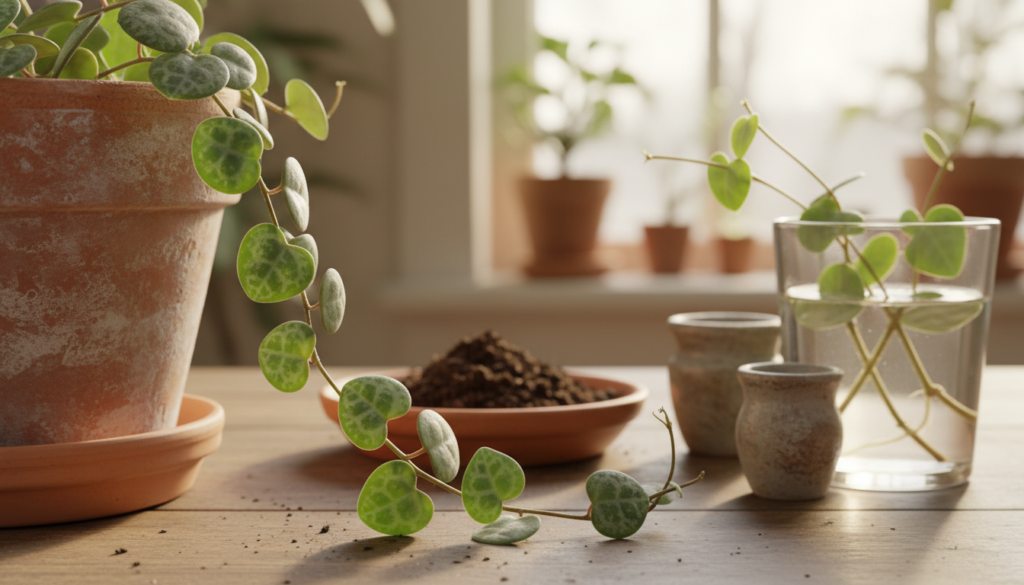
Lay a stem along the surface so nodes and any small tubers touch the mix. This often yields multiple rooting points and a fuller-looking plant.

Tip: Warm temps and bright, indirect light speed progress. Avoid direct sun that overheats covered cuttings.

Layering and Tuber Propagation for Fuller String of Hearts Plants

Layering is an easy way to get a fuller pot quickly. This method uses natural aerial tubers along the stem that form roots when given steady contact with soil.
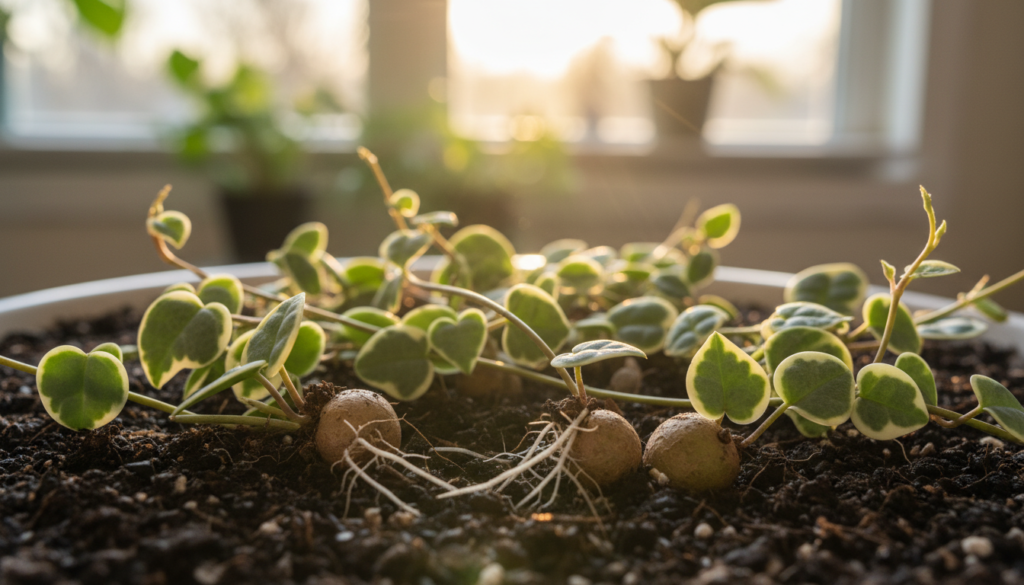
A close-up view of a vibrant String of Hearts plant, showcasing delicate green and variegated heart-shaped leaves twining along thin, cascading vines. In the foreground, several tubers nestled in rich, dark soil reveal their potential for propagation, forming a gentle contrast against the plant's cascading foliage. The middle ground features new roots emerging from the tubers, symbolizing growth and life. The background consists of a soft-focus, sun-drenched room filled with natural light, highlighting the lush greenery of the plant. The atmosphere is warm and inviting, evoking a sense of nurturing and growth. The shot is taken with a macro lens to capture intricate details, with soft bokeh enhancing the overall appeal.

Set the pot and lay the vine

Place a small pot filled with well-draining mix next to the mother plant. Drape a healthy stem so the tubers sit on the soil surface.

Secure and encourage rooting

Lightly press or bury each tuber so it keeps contact with the mix. Coil the stem around the inside rim of the pot and pin it down with a bent paperclip if it lifts.

Keep the soil evenly moist but not soggy. Under warm, bright conditions tubers usually form visible roots within a few weeks.

When to separate from the mother plant

Wait until you see established roots—many growers cut the connecting stem once roots reach about two inches. Then pot the new plant and resume regular care.

  • Why this way: multiple rooting points create bushier string hearts plants in one method.
  • Quick tip: root several tubers around the rim for spread-out trails rather than one central shoot.

“Layering is often the simplest, most reliable method for producing fuller pots.”

Conclusion

Wrap up: one vine can become many using three reliable ways—water cuttings, soil cuttings, or tubers and layering. This short recap covers the essentials and gives a quick choice guide for busy gardeners.

Key rule: always include nodes or tubers and keep leaves out of standing water or constantly wet soil. That avoids rot and helps visible roots form faster in spring and summer.

Pick water if you like watching roots, pick soil for low mess, and pick layering for a fuller plant fast. Once established, treat Ceropegia woodii like a succulent: bright indirect light, well-draining mix, and let the pot dry between waterings.

Trim regularly—those cuttings become new plants and a simple way to expand your houseplant collection. Happy gardening!

FAQ

When is the best time to take cuttings from a Ceropegia woodii vine?

Spring and summer are ideal. Warmer temperatures and longer daylight speed root development and reduce stress on the mother plant.

What tools and supplies should I have ready before starting?

Use clean scissors or pruning shears, a clear glass or jar for water rooting, a pot with well-draining soil, and a clear plastic bag to increase humidity when needed.

Where should I make the cut on the stem and how many nodes do I need?

Cut just below a node and include at least two nodes per cutting. Remove any lower leaves so nodes sit cleanly in water or soil for reliable rooting.

Can I root cuttings directly in water, and what is the method?

Yes. Submerge the nodes in a glass jar of fresh water, keep leaves above the surface, place in bright indirect light, and change the water weekly until roots reach about 1/2 inch.

When should I pot water-rooted cuttings into soil?

Transfer once roots are roughly a half-inch long. Plant in a well-draining potting mix and keep the soil slightly moist for the first two weeks to help the transition.

How do I plant cuttings directly in soil for a low-mess approach?

Bury at least two nodes in a light, airy mix and water lightly. Covering the pot with a clear plastic bag will raise humidity; vent it weekly to prevent mold.

What is the surface-laying method and when should I use it?

Lay stems across the soil surface so nodes and aerial tubers touch the mix. This encourages tuber and root formation and works well when you want multiple new shoots from one vine.

How do I use layering and tuber attachment to create fuller plants?

Drape the vine over a nearby pot so aerial tubers rest on soil. Lightly secure or press tubers into the mix; once they develop roots, cut the connecting stem from the mother plant.

How long until I see roots form and new growth appear?

Roots can appear in 2–4 weeks in warm, bright conditions. Tubers may take a bit longer. Expect new shoots a few weeks after roots establish, depending on temperature and light.

What light and temperature conditions encourage fast rooting?

Provide bright, indirect light and keep temperatures warm (around 65–75°F). Avoid direct afternoon sun, which can scorch delicate cuttings.

How often should I change the water or check soil moisture?

Refresh water weekly for jar-rooted cuttings. For soil-rooted starts, check the top inch daily at first and water lightly when it begins to dry—keeping it slightly moist speeds rooting.

Can I use rooting hormone or potting mixes to improve success?

Rooting hormone can help speed root formation but isn’t required. Use a fast-draining mix with perlite or pumice for best results when planting in containers.

What mistakes should I avoid when starting new plants?

Don’t overwater, bury too many leaves, or expose cuttings to direct harsh sun. Also avoid sealing humidity without venting; trapped moisture can cause rot or fungal issues.

How do I care for newly potted young plants after transplanting?

Keep them in bright, indirect light and moderate humidity. Gradually reduce extra moisture over two to three weeks so roots adapt, then resume normal light watering based on the potting mix drying.

When is it safe to repot a young Ceropegia into a larger container?

Wait until the plant shows steady new growth and roots begin to fill the small container. Late spring or early summer is the best season for repotting to reduce stress.

Comments

No comments yet. Why don’t you start the discussion?

Leave a Reply

Your email address will not be published. Required fields are marked *