phalaenopsis orchid keiki propagation

How to Propagate Phalaenopsis Orchid: Keiki Basics for Beginners

Surprising fact: some baby plantlets that form on a mother plant can take two to three years to bloom, yet they still give you a perfect clone of the parent.

Keiki (pronounced “KAY-kee”) are small plantlets that appear on a mature plant. They let you multiply your collection without seeds, and that makes this method very beginner-friendly.

This guide shows two paths: leave a natural baby to mature, or gently encourage growth with keiki paste. Results vary, so we explain both simply.

You’ll learn how to judge mom plant health, when to remove a baby, safe cutting and potting steps, and the basic aftercare that prevents rot and disease. Good orchid care matters more than tricks, because a keiki draws energy from its parent as it develops.

Table of Contents

Key Takeaways

  • Keikis are baby plantlets that clone the mother plant and can bloom in 1–3 years.
  • Two approaches: let a natural keiki grow or use keiki paste to encourage one.
  • Check parent health before removing a baby to avoid stressing the plant.
  • Sterile tools, clean cuts, and simple aftercare reduce disease risk.
  • Propagation is an affordable way to expand a houseplants collection in the U.S.
  • Patience and steady orchid care beat shortcuts for long-term success.

Keikis on Phalaenopsis Orchids: What They Are and Why They Happen

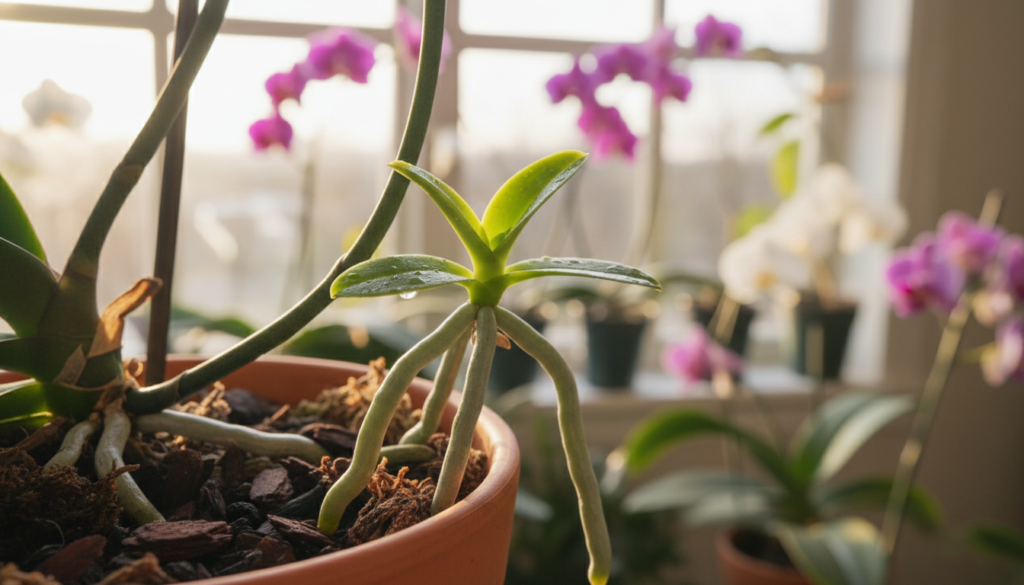
Sometimes a tiny growth on a flower stalk is the first sign of a baby plantlet. At first, that growth may look like a new spike or bud. Soon, tiny leaves begin to appear and aerial roots follow.
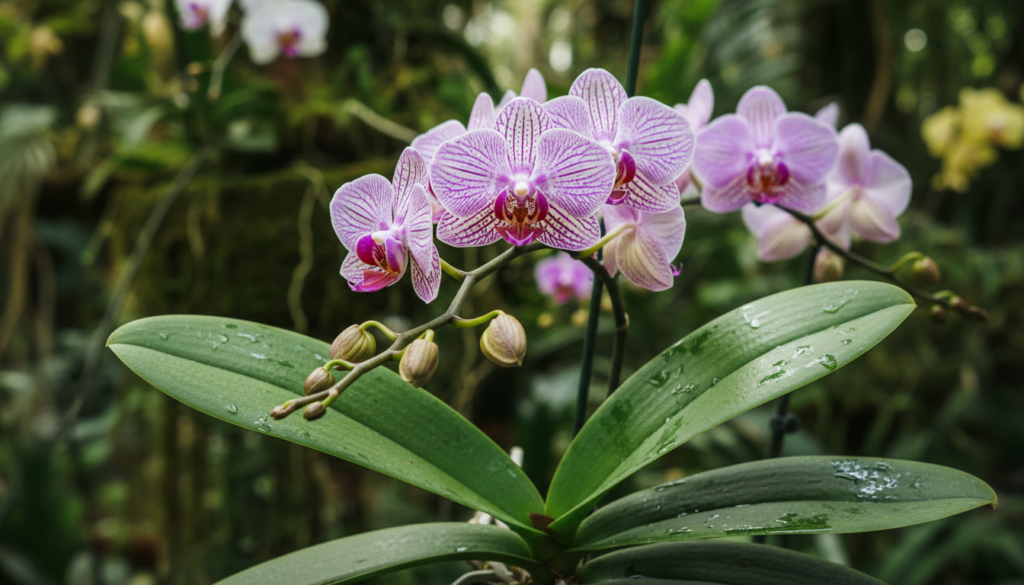
A close-up view of a vibrant Phalaenopsis orchid flower spike, showcasing several healthy keikis (baby orchids) emerging from the spike. The foreground features the luminous green leaves and the delicate purple and white flowers, displaying intricate patterns and a glossy sheen. In the middle, the keikis are depicted in various stages of growth, some with roots beginning to develop. The background includes a soft-focus of lush greenery and hints of other orchids, creating a tropical atmosphere. The lighting is soft and natural, with gentle highlights accentuating the textures of the flowers and leaves. The camera angle is slightly above eye level, providing a clear view of the keikis while evoking a sense of wonder and tranquility in this serene botanical setting.

How early growth can look

Visual cues: a small green nub on the flower spike that initially resembles a spike. If leaves form instead of buds, you are seeing a plantlet starting to develop.

Natural vs. triggered growth

Natural growth can appear without intervention when the mother plant’s nodes activate. Cutting back a spent flower spike can also wake dormant nodes and sometimes prompts a new growth or branching.

Why the baby is a clone

Clonal explanation: this growth develops from the parent tissue, not from seed. That means the baby carries the same genetics and will match the mother’s bloom pattern and color.

Feature Plantlet New Spike Aerial Root
First sign Green nub → leaves Green nub → buds Thin smooth tip
What forms next Leaves then roots Buds then flowers Roots only
Origin Activated node on stalk Activated node or tip Adventitious growth
Why it matters Produces a clone Extends blooming Helps anchoring and uptake

Is Your Mother Plant Healthy Enough to Support a Keiki?

Before you cheer for a new baby, check whether the mother plant can spare the energy. A small growth can be a healthy sign or a stress response. Do a quick health check before deciding to leave it attached.
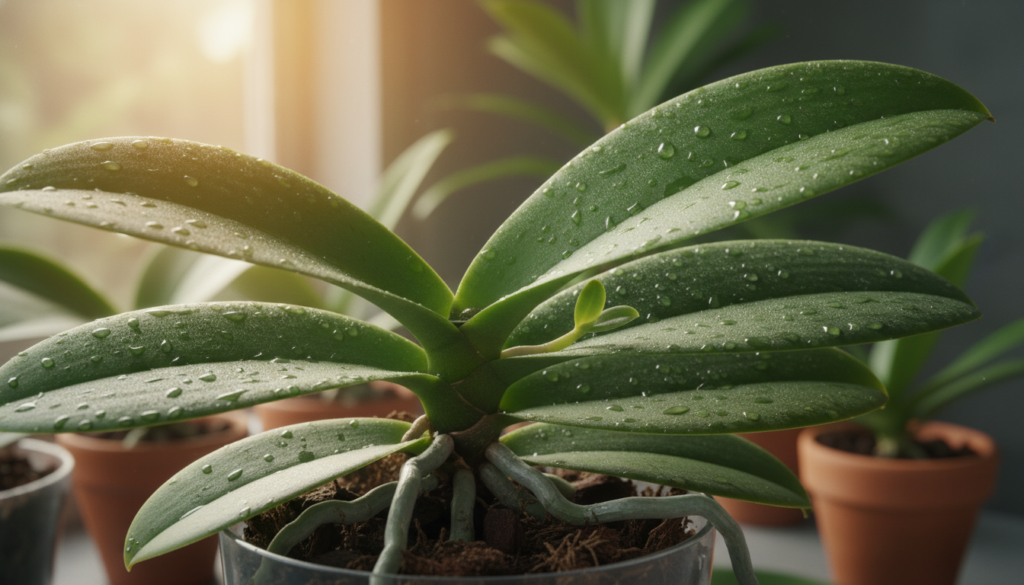
A close-up view of a healthy Phalaenopsis orchid mother plant, showcasing its vibrant green leaves and sturdy roots. In the foreground, the intricate details of the large, textured leaves, glistening with morning dew, create a lush appearance. The middle ground features a prominent keiki, or baby orchid, beginning to emerge from a leaf, symbolizing the propagation process. The background includes soft-focus elements of an indoor garden, with gentle sunlight filtering through a window, casting a warm glow on the scene. Use natural lighting to enhance the colors and textures, capturing a serene and nurturing atmosphere that emphasizes the vitality of the mother plant. Ensure the composition is balanced, with a slight upward angle to highlight the keiki’s development.

When a baby signals stress

Stress-linked growth often comes from overwatering or failing roots. The mother may try to make a backup if its root system declines.

Home signs the mother is taxed

  • Limp or yellowing leaves and soft, rotten roots.
  • Stalled growth or roots that look dehydrated instead of plump.
  • During flowering: unopened buds dropping (bud blast) or a spike that won’t mature.

Decide: remove now or wait

If the mother is clearly struggling, removing the baby can free resources and improve recovery. If the parent is healthy and still blooming, letting the baby stay usually helps the baby build leaves and roots.

Monitor closely: adjust watering and light, and watch the roots and flower spike for any new signs of decline.

phalaenopsis orchid keiki propagation: When to Remove a Keiki (and When to Wait)

A careful readiness check helps you decide whether to wait or remove a baby plantlet. Use clear, measurable signs instead of guessing; that lowers the risk for both the parent and the new plant.
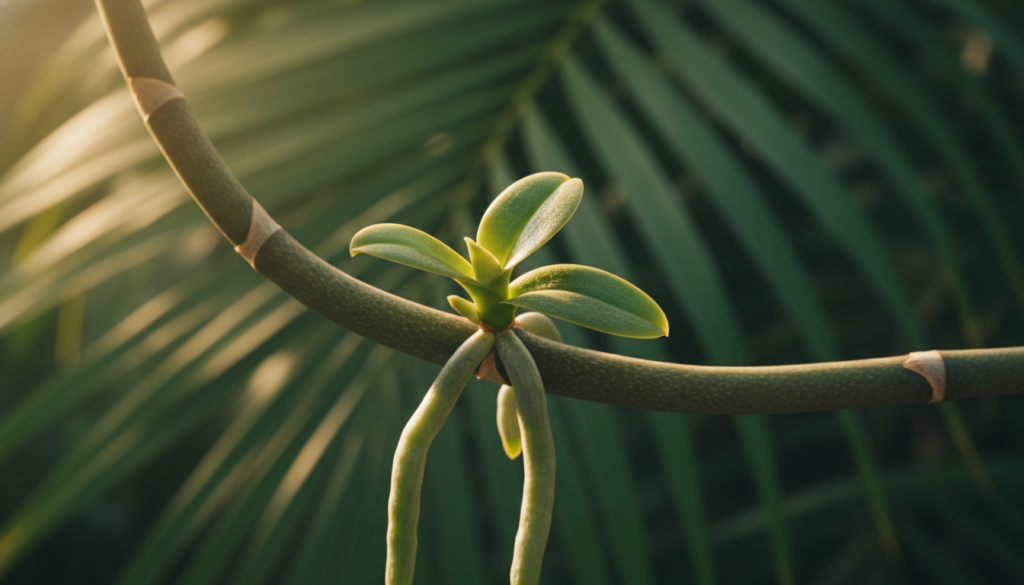
A close-up of a vibrant Phalaenopsis orchid keiki, showcasing its green roots and delicate, budding leaves. Set against a softly blurred background of lush, dark green foliage, the image highlights the keiki attached to the parent orchid stem. Warm, natural lighting illuminates the scene, casting gentle shadows that enhance the texture of the leaves and roots. The photograph is taken from a low angle, emphasizing the keiki’s growth and vitality, while a shallow depth of field draws the viewer's attention directly to the keiki. The overall atmosphere is serene and nurturing, reflecting the beauty and care involved in orchid propagation.

The readiness checklist

  • Leaves: at least three healthy leaves.
  • Roots: several roots that reach about 2–3 inches.
  • Firm base: the baby should sit stable when gently moved.

How long it takes

Initial swelling or leaf formation can show within a few weeks. Expect several months before a plantlet is stout enough to separate safely.

Plan for years before the new plant reaches its first flowering. Smaller baby plants need more time after potting to build reserves.

Leave or remove: trade-offs

Leaving a baby on the parent helps root and leaf development, but it also draws energy from the parent. That can slow the mother’s growth or shift her bloom timing.

Remove a plantlet sooner if the parent shows stress, or if the baby already meets the checklist. If the mother is healthy and still flowering, it’s usually smart to wait until flowering ends.

How to Remove and Repot a Baby Orchid Keiki Step-by-Step

Before you make any cut, gather your supplies and set a clean workspace to protect both plants.

Supplies to gather

  • Sterilized razor blade or shears (wipe with alcohol).
  • Small clear plastic cups or pots for monitoring roots and moisture.
  • Orchid potting mix and a small stake.
  • Cinnamon or a ready orchid fungicide for wound care.
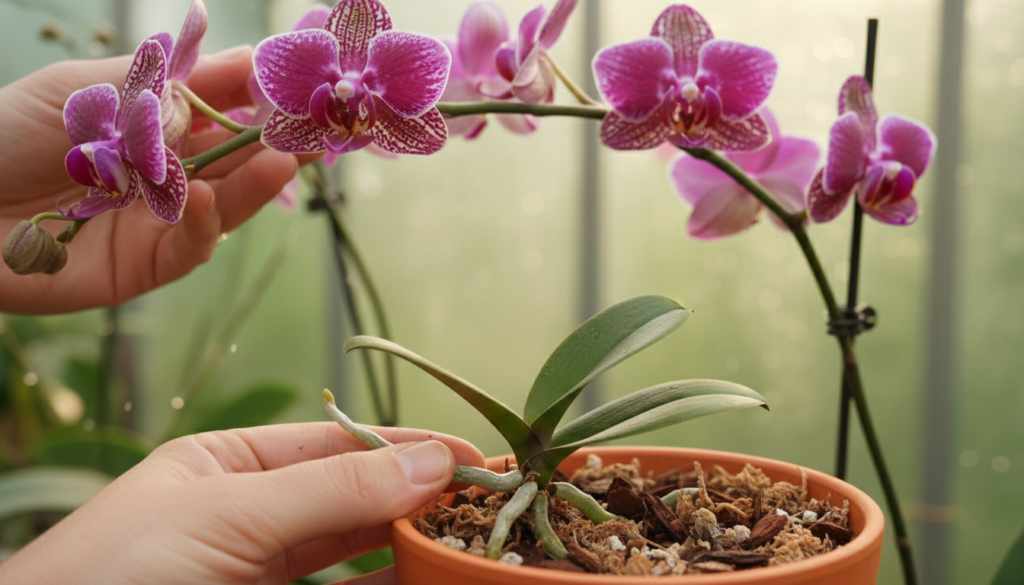
A close-up view of a gardener's hands gently removing a baby orchid keiki from its parent plant, showcasing the delicate roots and green leaves. The foreground features a small pot filled with fresh orchid potting medium, ready for the keiki. In the middle ground, the parent Phalaenopsis orchid stands with vibrant, colorful blooms, emphasizing its healthy condition. The background is softly blurred, suggesting a bright and airy greenhouse environment with natural light filtering through glass panels, creating a warm and inviting atmosphere. The image is taken with a macro lens, capturing intricate details, and is well-lit to highlight the textures of the plant and potting materials, conveying a sense of careful nurturing in the propagation process.

Making the cut safely

Identify where the plantlet attaches to the flower stalk. Stabilize the stem so you don’t crush leaves or snap roots.

Make a clean slice through the stem at the base of the plantlet. If aerial roots wrap the stem, cut up to 2 inches below the base to preserve them.

Wound care and potting

Treat both cut surfaces with cinnamon or fungicide to reduce rot risk.

Place roots downward in a clear pot, backfill gently with potting mix, and water well. Stake the plantlet if it wobbles.

Keep the new plantlet in low, indirect light. Mist daily or use a pebble tray and water about weekly while monitoring moisture. Hold off on fertilizer until new growth and firm roots appear, then use a diluted orchid fertilizer.

Alternate option

You can repot the baby and mother together in a slightly larger clear pot to reduce stress and let both share environment and light.

Step Action Why it matters
Prepare Sterilize tools; gather clear pots, mix, cinnamon Prevents infection and lets you watch roots
Cut Stabilize stem; cut at base or 2″ below Protects aerial roots and reduces damage
Treat Apply cinnamon or fungicide Helps wounds dry and lowers rot risk
Pot Roots down, backfill, stake, water Offers support and the right moisture for growth

Encouraging Keikis with Keiki Paste: Safe Timing, Node Selection, and What to Expect

A small dab at the right spot can nudge a dormant bud, but results are never guaranteed.

What the paste does

Keiki paste is a sticky lanolin-based mix that carries a cytokinin growth hormone. It encourages cell division at a dormant site on the flower stalk, aiming to wake a bud or node.

When and where to apply

Apply after flowering, when the plant shows active leaf growth and warmer conditions favor new shoots. Choose a mature, healthy plant that has bloomed before.

Pick a dormant node on the stalk, peel back the sheath, and make a shallow nick if you follow common grower methods. Use a tiny dab—a little goes a long way.

How much and what to expect

Treat one node at a time; treating many can stress the mother plant. In a few weeks a bud may swell. Leaves suggest a baby forming, while a developing spike can mean more flowers instead. Both are valid outcomes.

Note: Results vary, so try paste only on plants you can spare and monitor moisture and light closely.

Conclusion

In closing, the right timing and clean technique give the best chance for a baby to thrive.

First, spot keikis and confirm the mother plant is healthy before you act. Wait until the baby has at least three leaves and roots about 2–3 inches long.

When you separate, use sterile tools, treat cuts, and pot the baby gently. Keep the new plant in low, indirect light and give steady moisture—never soggy—and watch root and leaf development.

Remember: if the mother shows stress, prioritize her recovery to protect both plants. Most keikis need patience; many take two to three years to flower.

Observe, adapt, and log changes—small adjustments improve your experience. For tips on light, watering, and restarting blooms see restart blooms.

FAQ

What does a baby plantlet look like when it forms on a flower stalk?

You’ll see a small green bump along the spike that develops into tiny leaves and short aerial roots. At first it’s the size of a pea; over weeks it unfurls a few paddle-shaped leaves and thin white or green roots. The plantlet often appears near a node where a flower once was or could have been.

Are natural plantlets different from those that appear after cutting back a spent spike?

Yes. Natural plantlets often form on an older, intact stalk during strong growth periods. Plantlets triggered after cutting a spent spike usually grow from a dormant node left on the shortened stalk. Both come from the parent and can look very similar once established, but timing and frequency can differ.

Why are these baby plants identical to the mother plant?

The plantlets are genetic clones produced from the parent’s meristem tissue. That means leaf shape, flower color, and growth habits match the mother because no cross-pollination or seed formation is involved.

Can a stressed mother plant form a baby as a survival response?

Yes. If the parent is stressed by overwatering, root rot, or pest damage, it may divert energy to produce a plantlet to preserve its genetics. Watch for drooping leaves, soft roots, or dropped buds—these signs can coincide with a survival-driven baby forming.

What signs show the parent is being taxed during bloom?

Look for unopened buds that fall, a spike that stops extending, yellowing leaves, or reduced vigor. Those signs mean the plant is using reserves to try to flower and may struggle to support additional growth like a plantlet.

When should I leave the baby attached until after the parent finishes flowering?

If the parent is still blooming or shows stress, keep the plantlet attached. Leaving it on until the spike naturally ages gives the baby more energy and reduces the risk of harming the mother during active flowering.

How do I know the baby is ready to be removed?

Use the readiness checklist: the plantlet should have at least three healthy leaves and roots that are about 2–3 inches long. Firm, white-tipped roots signal readiness to be potted separately.

How long does it usually take for a plantlet to grow enough to pot up?

Expect weeks to months. Initial leaf and root formation appears in weeks, but reaching pot-ready size commonly takes several months, depending on light, temperature, and nutrition.

If I leave the baby on the mother, how will that affect flowering and growth?

Keeping the plantlet attached can delay the parent’s recovery after bloom because both compete for nutrients. However, if the parent is healthy, it often supports both without major issues and the baby can develop more robustly.

What supplies do I need to remove and repot a baby safely?

Gather sterilized razor blades or sharp shears, clear plastic pots or cups, a chunky bark mix, and a wound treatment like powdered cinnamon or a recommended fungicide. A small stake or clip and diluted fertilizer for later are helpful too.

How do I make a clean cut without damaging aerial roots?

Sterilize tools, then cut the spike about 1–2 inches below the plantlet base if removing the whole section, or snip as close to the mother’s stem as safe. Avoid tugging; support the roots and leaves as you cut to prevent tearing.

How should I treat cuts on both plants after removal?

Dust fresh cuts with cinnamon or a recommended orchid fungicide to reduce infection risk. Keep both plants in bright, indirect light and avoid heavy watering for a week to let wounds callus.

What’s the proper way to pot the plantlet?

Use a clear plastic pot and a chunky bark mix so roots get light and airflow. Position roots gently, backfill so the base is stable, and secure with a stake if it’s floppy. Water sparingly until roots anchor and new growth appears.

Can I repot the baby and mother together instead?

Yes. If they both fit comfortably and the potting mix and container suit the combined root systems, keeping them together reduces transplant shock and lets the baby continue drawing support from the parent.

What is a growth paste that encourages plantlets and how does it work?

Growth paste contains cytokinin, a plant hormone in a sticky base. Applied to a dormant node, it can stimulate a bud to develop into a plantlet. Results vary based on timing, plant health, and node condition.

When is the best time to apply growth paste?

Apply after flowering, during active vegetative growth, when the plant has strong leaves and a healthy root system. Avoid use during severe stress or just after repotting to prevent overtaxing the parent.

Which node should I choose and how do I prepare it?

Pick a dormant node on the old flower stalk. Remove any papery sheaths, clean the area, and dab a small amount of paste directly onto the node. Don’t smear along the entire spike—target a single node to reduce stress.

How much paste is safe to use and how many nodes can I treat?

Use a pea-sized amount per node. Treat only one or two nodes at a time on a mature, vigorous plant. Treating many nodes increases stress and can reduce overall plant health.

What else might happen after applying paste besides a baby forming?

Instead of a plantlet, the node may produce a flower spike or additional blooms. Hormone response is unpredictable—sometimes you get flowers, sometimes a plantlet, and sometimes little change.

Comments

No comments yet. Why don’t you start the discussion?

Leave a Reply

Your email address will not be published. Required fields are marked *