
Surprising fact: you can root many cuttings during cold months and still see success rates above 40% with basic tweaks.
Winter brings short days, cooler rooms, and dry heated air that slow growth. Expect slower results than spring, but don’t write the season off.
This guide shows what winter propagation looks like for U.S. homes and sets realistic goals. You’ll learn low-risk methods—stem cuttings, leaf cuttings, and division—that work best when you tweak light, warmth, and humidity.
Why try it now? Most people do it to save a snapped vine or to multiply a favorite houseplant while stuck inside. Small setups can cut failures and speed rooting.
Quick wins: boost light, raise temperature a little, add humidity, keep tools clean, and water carefully. Timelines stretch, and preventing rot is a main theme, so the steps that follow focus on safety and steady progress.
Key Takeaways
- Winter rooting is slower but possible with simple environmental tweaks.
- Focus on low-risk methods: stem and leaf cuttings, plus division.
- Control light, heat, humidity, cleanliness, and watering to improve success.
- Primary reasons: salvage broken stems and multiply favorites while home.
- Preventing rot and patience with timelines are essential.
Why Winter Propagation Is Tricky and What Still Makes It Work
Colder air and weak light slow growth, turning a quick spring job into a longer, gentler task. Many houseplants move toward a dormant-ish phase: metabolism drops, new shoots pause, and cuttings need more time to switch into root formation mode.
Three constraints matter most. Lower light reduces energy for root development. Cooler room temps slow cell activity and delay root growth. Slower overall growth means tissues stay wet longer, which raises rot risk.
So when is it worth trying now? If a pothos or philodendron vine snaps, it often makes more sense to save that section rather than toss it. Turning a break into a new plant is a top reason people try this during cold months.
Expect timelines to stretch: spring attempts can take days to show roots, while cold-season attempts often take weeks. That extra time is why rot shows up more often—cutting tissues sit damp before roots form, and cold plus moisture speeds breakdown.
Good news: success usually comes from simple fixes rather than complex methods. Add bright light, gentle warmth, and steady humidity to shorten the process and lower rot risk. Many hobbyists work year-round; choosing the easiest species and a small warm station is the best way to improve results.
How to Propagate Indoor Plants in Winter Using the Right Method
Match the technique to the species and you’ll get steady results despite low light and cool rooms. Focus on reliability over experiments when time and heat are limited.
Why stem cuttings are usually the safest bet
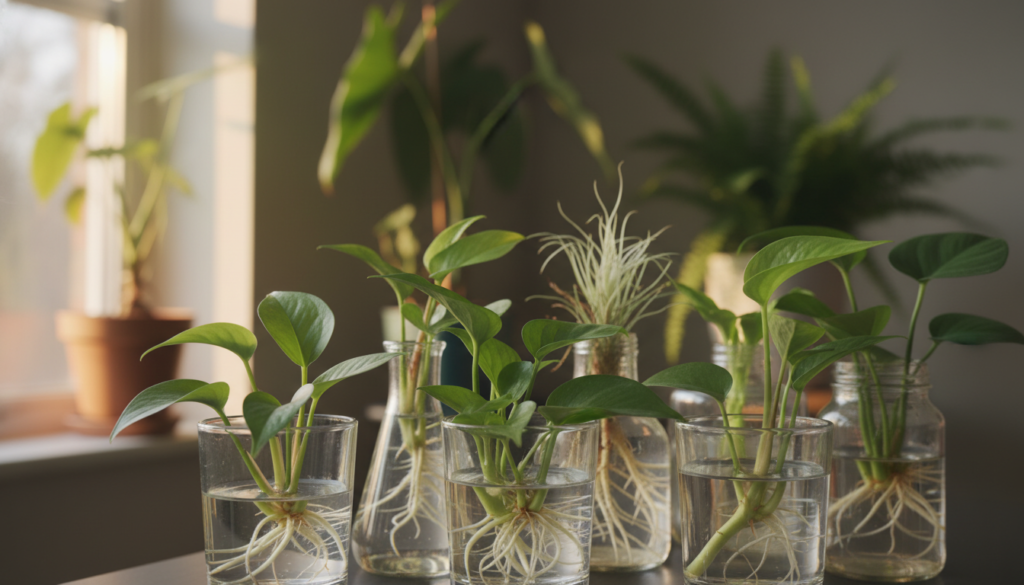
Stem cuttings remove little material and keep nodes that readily form roots. They let you control moisture closely, which lowers rot risk and makes rooting cuttings more consistent for many vining houseplants.
Water versus soil: speed versus strength
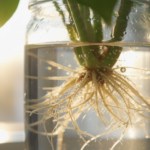
Water often shows roots faster and makes monitoring easy. That helps when patience runs thin.
Soil propagation builds firmer root systems that handle transplanting better. Some species do poorly with water roots, so choose based on the specific plant.
When leaf cuttings make sense
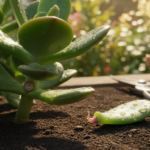
Leaf cuttings work for many succulents and a few common houseplants, but they take longer to form a full plant. Expect slow progress and plan for extra weeks when using this method.
Division and offshoots: use what the plant already offers
Clumping species, spider plant pups, and monstera offshoots often root with almost no fuss. Division or potting a pup usually beats taking a cutting for these types.
“Pick the least invasive route that still gives a node or shoot—your success rate will climb.”
| Plant Type | Best Winter Method | Speed | Transplant Ease |
|---|---|---|---|
| Vining (pothos, philodendron) | Stem cuttings (water or soil) | Fast in water | Good from soil |
| Succulents (jade, echeveria) | Leaf cuttings with callous | Slow | Moderate |
| Clumping (spider plant, monstera) | Division or pups | Fast | Excellent |
| Fussy species | Try small stem cuttings in warm, bright spot | Variable | Variable |
Quick decision rules: vining → stem; succulents → leaf with callousing; clumping → division or offshoots. Pick the method that fits the plant and your setup.
Taking Healthy Cuttings That Root Faster
Choosing the right parent stock and a clean cut sets you up for faster rooting and fewer failures. Pick a healthy, non-flowering specimen—unstressed foliage has more energy to form roots during colder months.
Find the node and make a clean stem cut
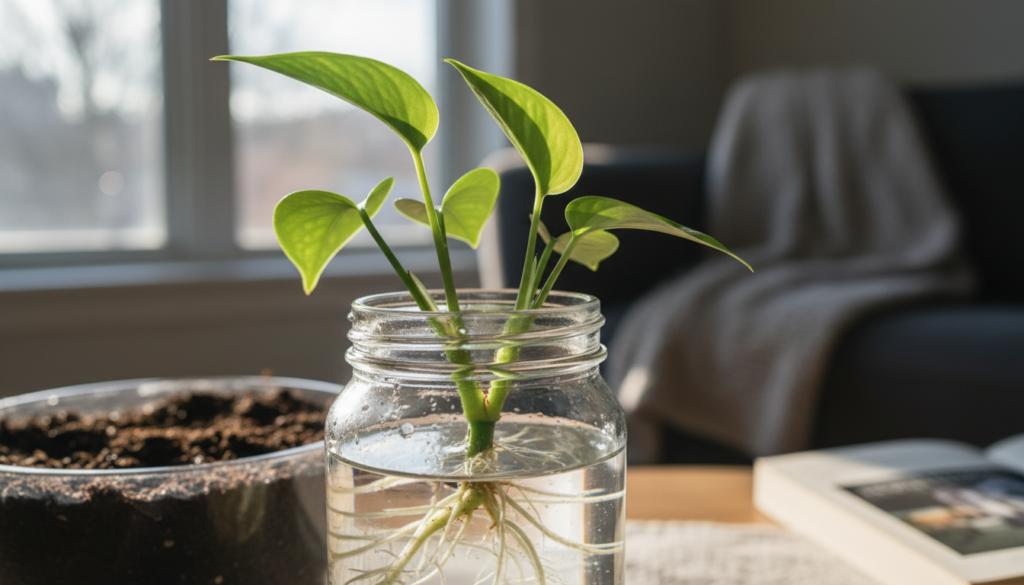
Locate the node where a leaf attaches; that spot is where new roots form. Use sharp, sterilized scissors or pruners and make a single clean cut just below the node.
Size, leaf prep, and handling
Aim for about 2–6 inches of stem with a few healthy leaves left at the top. Strip lower leaves that would sit at the bottom of the water or soil to reduce rot risk.
Clean tools and container choices
Sterilize scissors and any pots or trays. High humidity setups spread disease fast, so cleanliness matters.
- Use single small pots for one cutting or a wider shallow pot to root several together.
- Don’t tug test fragile roots—gently lift from the side with a spoon or knife if you must inspect.
Setting Up a Winter Propagation Station Indoors
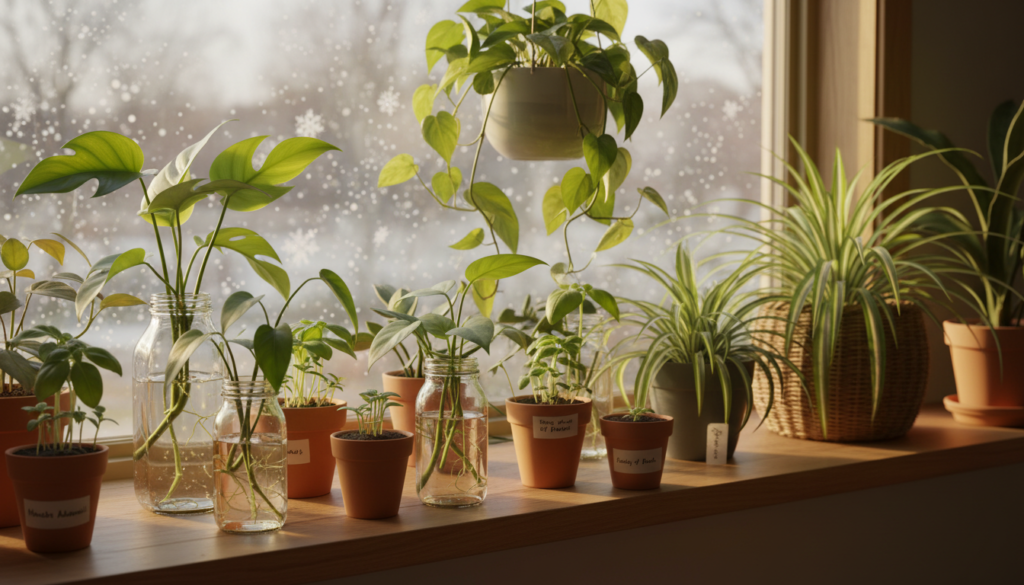
A tidy work area with steady warmth and moisture makes the biggest difference when roots take longer to form. Keep the station simple: a small table, a lamp, and a tray of pots will do.
Best potting mix for soil propagation
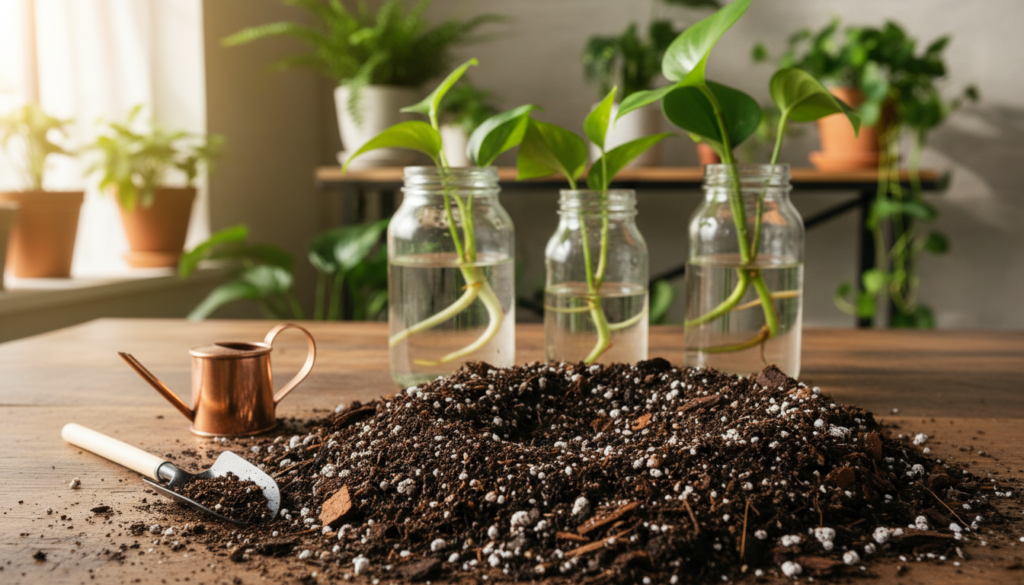
Use a commercial seed-starting mix or a DIY blend: 2 parts coconut coir, 1 part compost, 1 part perlite/vermiculite. This mix stays airy and drains well, which cuts rot risk.
Light choices
Bright, indirect window light helps, but a consistent grow light speeds rooting and reduces stretch. Position the light for even coverage, 12–14 hours daily if possible.
Warmth and humidity
A seedling heating mat nudges temperatures into a root-friendly range without overheating the room. Boost humidity with a clear dome or plastic bag, but poke small airflow holes to prevent mold.
Watering and extras
Keep soil evenly moist—not soggy—and refresh water for cuttings every 1–2 days when using jars. Use rooting hormone for soil work; pour a small amount into a separate dish to avoid contaminating the bottle. Sprinkle cinnamon on cut ends as a mild anti-rot measure, but remember environment control matters most for successful gardening.
Best Houseplants to Propagate in Winter (Fast, Forgiving Picks)
A few hardy houseplants will reward small efforts and give you new growth despite slow seasons. Pick species that root fast or offer offshoots so you get wins while waiting for slower growers.
Pothos
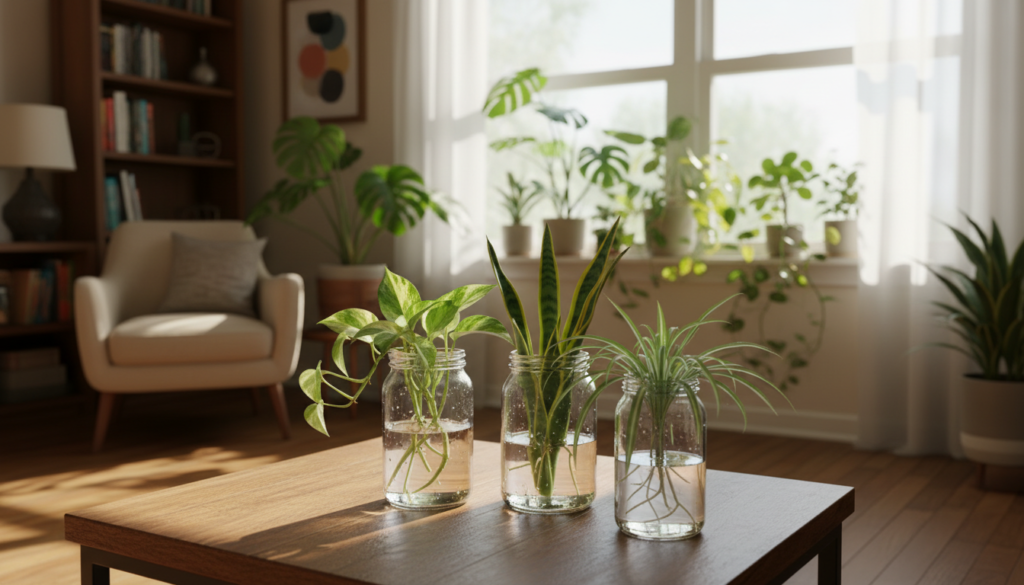
Pothos tops the list for easy propagate. Stem cuttings form roots quickly, especially when started in water. Expect visible rooting in a few weeks.
Philodendron
Take a cutting with a visible node and place it in a jar or a light mix. Philodendron tolerates lower light and still shows steady rooting over time.
Spider plant & Tradescantia
Spider plant pups can be cut and potted once small roots appear. Tradescantia roots almost instantly and fills pots fast—great for quick new plants.
Succulents, Swedish ivy, Monstera, and Herbs
Let succulent leaves callous a few days before planting and avoid excess humidity. Plant multiple Swedish ivy cuttings per pot for a fuller look.
Clip Monstera offshoots or divide mature clumps, and try basil or mint from fleshy stems for edible rewards.
Tip: watch for soft, wet tissue; learn signs and treatment for rot here.
Conclusion
Success comes down to three simple controls: warmth, moisture management, and good light.
Use clean stem cuttings and focus on visible nodes. That reliable approach beats trying every method at once. Pick a small, steady setup and tend a few cuttings carefully.
Expect slower timelines during cold months. Wait longer before testing roots, avoid overhandling, and stop overwatering to cut rot risk. Start with forgiving choices like pothos, philodendron, tradescantia, or spider plant pups to build confidence.
Treat this as seasonal gardening: a calm, low-stress project that keeps your collection healthy and multiplying until the warmer season returns. Happy rooting and steady growth.