
Nine out of ten houseplants that look limp are actually suffering from too much water. That single fact flips how we plan care before a trip.
Drooping usually shows as limp leaves or sagging stems. It signals stress but often isn’t fatal if the foliage is not brown and crispy yet.
This short guide will help you stabilize water, light, and humidity while you are away. You’ll learn to diagnose wet-versus-dry problems and spot environmental issues like low humidity or pests.
Most emergencies happen when routines change, trays overflow, or a sitter waters “just in case.” The aim is not to water more, but to keep roots fed with both moisture and oxygen so turgor holds leaves upright.
Follow a quick checklist, set up travel-proof drainage, steady light and humidity, and use simple tools like moisture meters. With small fixes, most plants bounce back fast and travel becomes less stressful for you and your green companions at home.
Key Takeaways
- Overwatering causes most houseplant limpness; check soil moisture first.
- Drooping shows as limp leaves or sagging stems and can be reversible.
- Problems fall into watering vs environmental causes—treat each differently.
- Travel disrupts routines; set clear drainage and sitter instructions.
- Keep roots supplied with moisture and oxygen, not just extra water.
- Use simple tools like moisture meters and realistic fixes available in the US.
Why my indoor plant is drooping: quick diagnosis before you leave
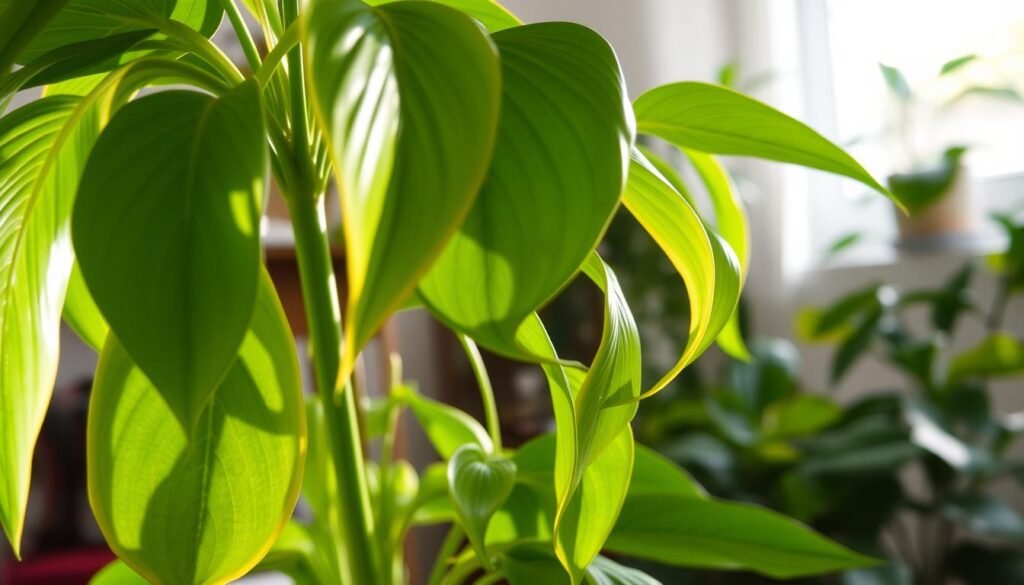
Spend 10–15 minutes now to run a fast pre-trip check. A short scan helps you spot the most common causes of limp leaves and stem stress before they get worse.
Check the soil surface for moisture
Feel the top inch of soil. If it pulls away from the pot and feels dry, the issue is likely lack of water.
Constantly damp or swampy surface usually means too much water and poor drainage.
Look for oxygen-starved roots
When soil stays saturated, roots lose access to oxygen and stop absorbing nutrients. That makes foliage wilt even when the pot looks wet.
Inspect for root rot signs
Gently ease the plant from its pot if you can. Black, mushy roots and a foul odor are clear signs of root rot; healthy roots are firm and pale.
Confirm pot size and light checks
Rootbound plants often show tight circling roots, very fast drying, or stunted growth. A too-small pot can limit water uptake and cause stress.
Also scan placement near a window. Too much direct sunlight or too little light can make leaves sag. Wipe dust from both upper and lower leaf surfaces so transpiration and photosynthesis work properly.
Scan for pests
Flip a few leaves and check undersides for aphids, spider mites, or scale. Sap-suckers drain fluids and can cause wilting and other signs of stress.
Decision logic: fix watering first. If that looks correct, check drainage and root health, then light, humidity, and pests. For seasonal watering tips see adjusting watering schedules.
Set up travel-proof watering and drainage so flowers don’t wilt
Treat this setup as your travel insurance: aim for steady moisture without soggy soil. The goal is consistent moisture while letting roots keep access to oxygen. That balance prevents the most common problem—overwatering—yet protects against drought.
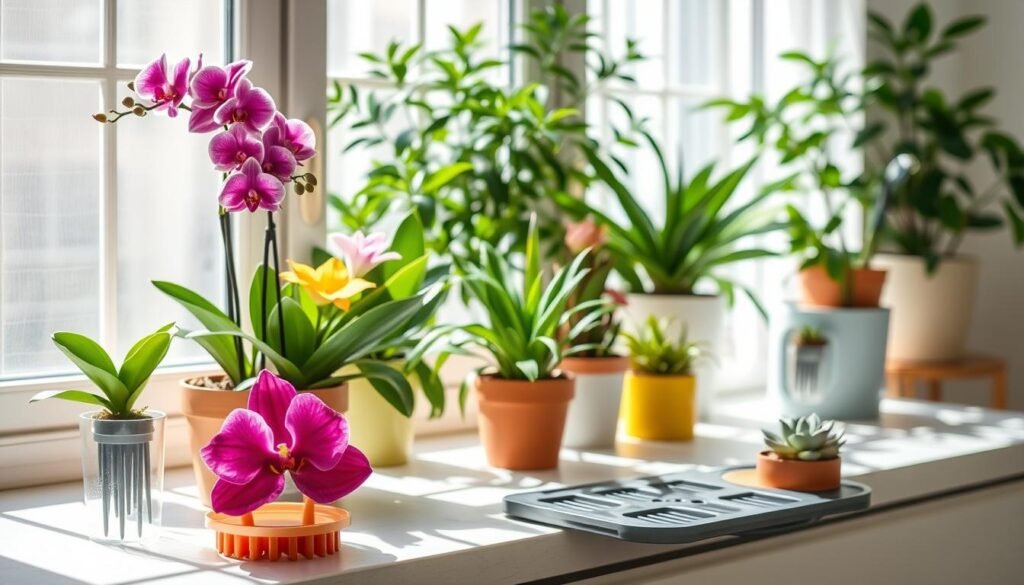
Choose the right pot and ensure holes drain
Confirm the plant pot has working drain holes and clear any blockages. Empty saucers so the pot never sits in pooled water for days.
Use a moisture meter or watering indicator
Use a device like the Gro-Sure Houseplant Watering Indicator to remove guesswork. Check moisture at the proper soil depth before you water. This prevents adding much water when it isn’t needed.
| Task | Action | Benefit |
|---|---|---|
| Check holes | Clear blockages; confirm flow | Prevents excess water and root oxygen loss |
| Pre-trip watering | Water only if soil is dry; let drain fully | Stable moisture without soggy bottoms |
| Fast-dry pots | Group on a tray that allows airflow | Catches drips; avoids soggy tray buildup |
Quick tip: For very dry or root-repellent soil, bottom-watering in a tray rehydrates evenly—then return the pot only after it drains fully. That simple solution stops panic-watering by sitters and keeps roots healthy while you travel.
Keep moisture and humidity steady while you’re away
Travel often dries home air fast, which can make leaves lose firmness while you’re away. HVAC, winter heating, and summer AC all cut humidity. That raises transpiration and can outpace root water uptake.
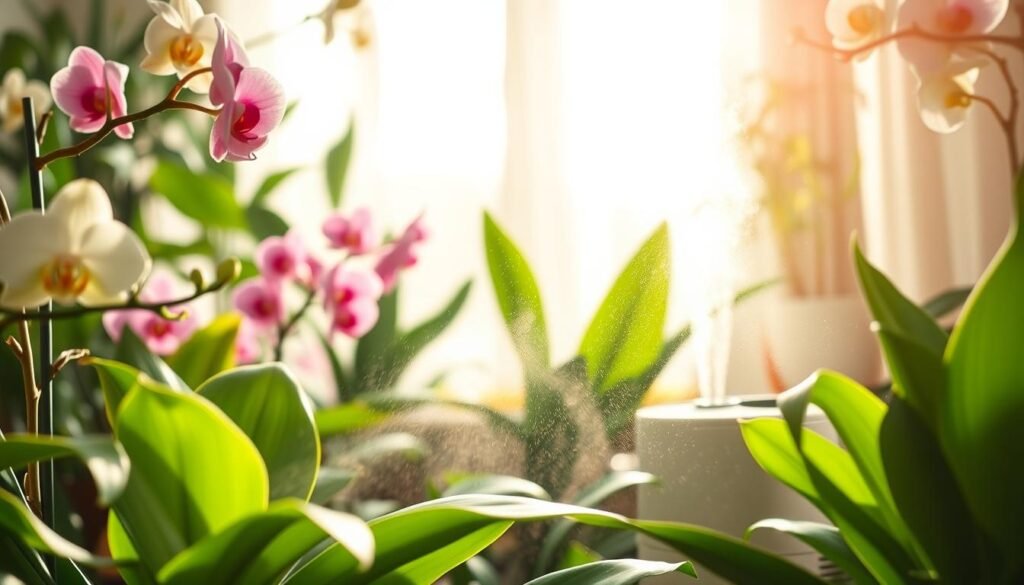
Build a pebble tray correctly
Use a shallow tray filled with pebbles. Add water until it reaches just below the top of the stones. Set the pot on the pebbles so the pot rim stays above the waterline. This keeps roots above standing water and still raises local moisture.
Boost humidity and safe misting
Group plants together to form a small humid zone. Keep them away from vents, radiators, and direct AC airflow.
Light misting helps humidity-loving species. Avoid soaking foliage late in the day if ventilation is poor to reduce disease risk.
Adjust light exposure
Pull sensitive specimens back from harsh direct sun. Many flowering species prefer bright, indirect light for steady photosynthesis.
Too little light reduces energy and can lead to drooping. Match placement to each species to cut stress and keep leaves turgid.
“Steady humidity plus correct light are the simplest ways to avoid coming home to limp leaves.”
| Problem | Quick fix | Benefit |
|---|---|---|
| Dry air from HVAC | Pebble tray + group on shelf | Raises local humidity without wet soil |
| Low moisture at leaf level | Light misting in morning | Temporary humidity boost, less stress |
| Too much direct sun | Move to bright, indirect spot | Prevents leaf scorch and drooping |
How to revive drooping houseplants when you get home
A quick triage on arrival can save a wilting houseplant before damage spreads. Start by matching the fix to the cause: dry mix, soggy soil, or rot.
Rehydrate a very dry root ball
Place the pot in a shallow tray or bucket of water for several hours so the root ball soaks from below. Remove the pot and let it drain fully; this works because extremely dry mixes can repel surface watering.
Aerate compacted soil
Poke several holes across the soil surface with a chopstick or skewer to improve penetration. That helps water and nutrients reach deeper roots faster.
Repot and improve drainage
If the mix stays soggy, repot into an airy, well-draining medium and check drain holes. Better drainage restores oxygen to roots and prevents future rot.
Treat rot with surgery and peroxide
Remove the plant, trim black or mushy roots, and rinse. For a rescue soak, mix 1 quart lukewarm water with 1 oz horticultural hydrogen peroxide and soak roots ~1 hour. Alternatively, water with 2½ tsp of 3% peroxide per gallon while the plant recovers.
Reset care
After recovery, follow a realistic watering schedule based on soil dryness, not dates. Use a balanced fertilizer to support new growth and consider a moisture meter to avoid repeating the problem.
Conclusion
Good travel prep focuses on steady moisture, clear drainage, proper light, and humidity control. That simple framework keeps most plants healthy while you’re away and limits common stress.
When you diagnose problems, check soil moisture first, then drainage and roots, then light and humidity, and finally pests and leaf cleanliness. Avoid the biggest don’t: overwatering suffocates roots, so never let pots sit in pooled water.
Use small tools and habits: moisture indicators, clear drain holes, and quick leaf wipes. These steps help care routines hold steady and keep leaves functioning well.
Set pots in the right spot with the right moisture before departure and you’ll likely return to upright foliage at home. If a plant still looks stressed, adjust light and humidity slowly over time rather than all at once.