
Surprising fact: studies suggest many house owners overwater and lose up to 50% of their common potted blooms within a year from too much moisture. That makes a simple check routine worth learning.
Don’t follow a strict calendar. The real rule is to match watering to your home’s conditions. Light, heat, airflow, pot size, and mix change how fast soil dries.
The easiest daily habit is a quick feel just below the surface. When the top inch of soil feels dry, give water slowly until it drains, then discard any collected runoff to cut salt build-up and standing-water issues.
This section promises a practical schedule: a repeatable daily check plus a short decision checklist (touch test, depth check, and visual signals). You’ll also get tips on technique, drainage, seasonal shifts, and shortcuts for common varieties.
Key Takeaways
- Skip the rigid routine—check soil daily rather than water on a set day.
- Use the touch test: feel below the surface before you water.
- Water thoroughly until drainage, then discard runoff.
- Adjust frequency with light, temperature, and pot size changes.
- This practical schedule fits common home flowering houseplants across seasons.
Why indoor flowering plants don’t follow a set watering calendar
A fixed watering timetable often fails because indoor conditions shift from day to day.
Light, heat, drafts, and where you move a pot change how fast soil loses moisture. A plant in bright window light will sip much faster than one in a cool corner. Pots made of clay dry quicker than plastic, and a root-bound container can pull water faster than an oversized one.
Blooming and foliage matter. When a plant is actively blooming it uses more water. During slow growth it becomes a slow sipper, even if it stays in the same spot.
Think of your calendar as a prompt, not a rule. Use a daily look and the touch test to decide whether to water. That short check saves overwatering and keeps each plant on the real schedule it needs for health and blooms.
What actually changes watering frequency in your home
Sunlight, temperature, humidity, and drafts control how fast a potting mix dries. A quick check of each factor helps you predict when to water rather than guessing.
Light levels and window placement
Bright spots near south or southwest windows use more water because brighter light boosts photosynthesis. A pot in bright indirect light sits near the window but avoids harsh rays. In contrast, direct sunlight or direct sun hits leaves and speeds thirst.
Temperature swings
Warm daytime temperature raises evaporation and plant transpiration. Cool nights slow drying, so a run of lower temperatures can cut water needs.
Humidity, HVAC, and dry air
Heating and air conditioning lower humidity and dry the soil faster than you expect. Aim for about 50–60% humidity to help blooms last longer.
Drafts and airflow
Vents, fans, doors, and radiators create drafts that pull moisture from leaves and soil. Map your home into watering zones — bright window zone, mid-room zone, and low-light zone — so each spot gets the right schedule.
How to check if your indoor plant needs water
A fast fingertip check below the surface tells you more than a calendar ever will. This quick routine prevents both drying out and overwatering.
Use the touch test just below the soil surface
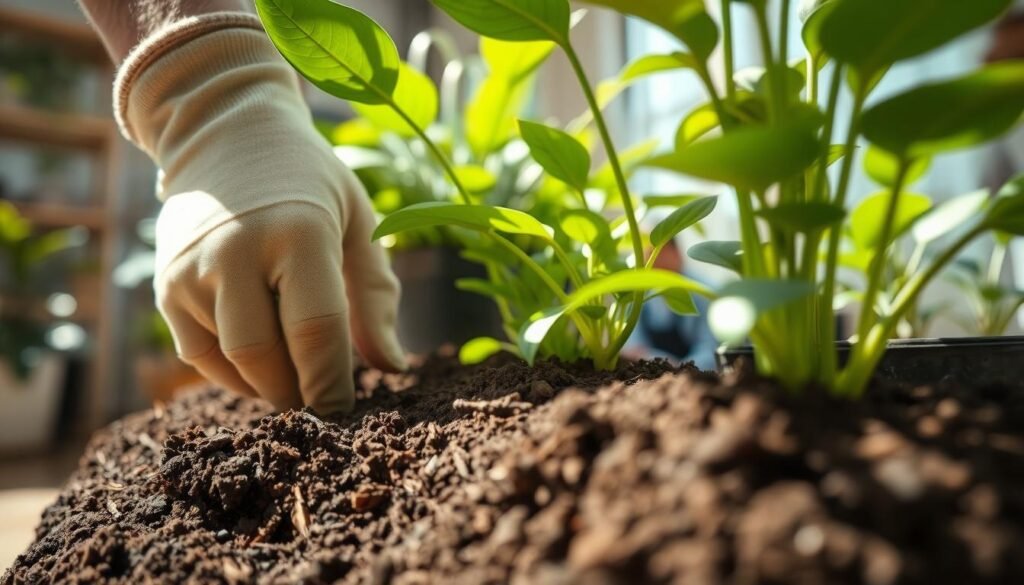
Press a finger into the mix about an inch deep and feel for coolness or dampness. If the soil feels damp or cool, wait to water. If it feels dry, plan to water slowly until drainage.
Check deeper moisture for larger pots
For bigger containers, probe about three inches down or use a moisture meter. This avoids watering when the top layer is dry but the center remains wet.
Spot visual cues
- Reliable: drooping blooms, leaves losing firmness, or potting mix pulling away from the pot edge.
- Less reliable: yellowing leaves can mean too much water, too little, or low light—always confirm by checking soil.
“A quick daily scan takes seconds and prevents both crisping and root trouble.”
Make the fingertip check part of your routine and your plant will thank you. Water when the soil is dry below the top layer, not by the calendar.
How to water indoor flowering plants correctly
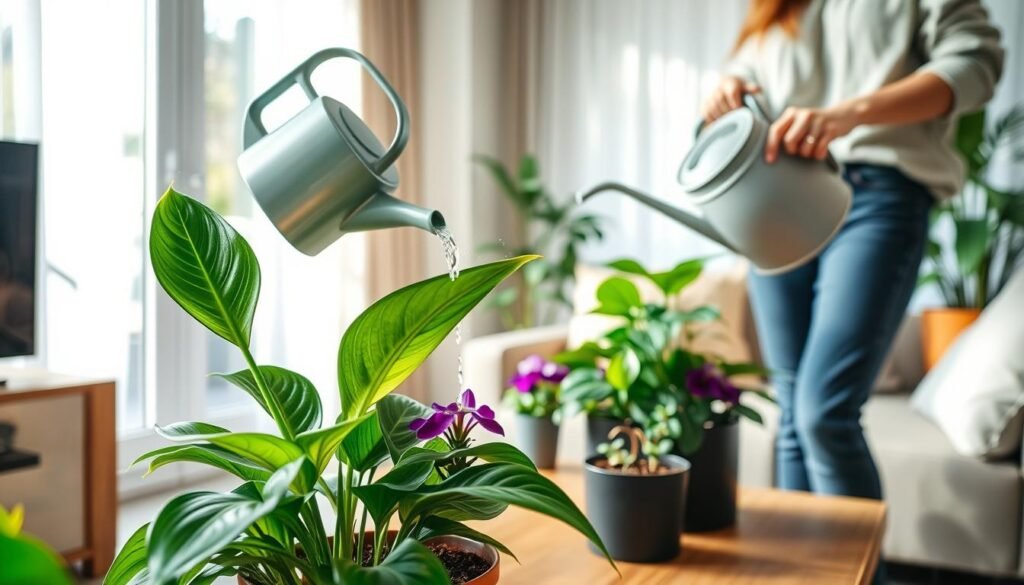
Start by taking the pot to a sink and watering slowly until the soil releases a steady stream. This lets you see proper drainage and prevents water pooling under the container.
Soak-and-drain is the safest method: add water evenly across the surface until a steady flow comes from the drainage holes. That ensures the whole root ball and the potting mix are moistened.
Top watering vs. bottom watering
Top watering flushes salts and works well for most specimens. Pour gently and let water run through.
Bottom watering suits plants that hate wet leaves or risk crown rot. Set the pot in a shallow tray of room-temperature water and let roots drink up for 10–30 minutes.
Preventing standing water, saucer tips, and wraps
Always empty the saucer once drainage stops so roots don’t sit in water. Standing water encourages fungal issues and rot.
Remove decorative foil or punch holes in gift wraps. If you leave wraps on, check and discard any trapped water every time you water.
- Use room-temperature water to avoid shocking foliage.
- Discard collected drainage; it can contain salts and breeding pests.
- Consistency in technique matters more than fixed frequency.
“Water thoroughly until it drains, then discard drainage water to prevent rot.”
| Method | Best for | Key tip |
|---|---|---|
| Soak-and-drain (top) | Most common pots | Water until steady flow appears from holes |
| Bottom watering | Crown-rot‑prone or fuzzy-leaf varieties | Soak tray 10–30 minutes, then remove |
| Saucer management | All potted specimens | Empty saucer after drainage stops |
| Wraps and sleeves | Gift pots and decorative covers | Remove or punch holes; always check for trapped water |
Soil, potting mix, and drainage basics that prevent root problems
Good soil lets roots breathe while holding water the plant can use. The right balance of air and moisture protects roots and supports healthy foliage and blooms.
Why well-draining soil matters for blooms, foliage, and root health
Well-draining soil holds moisture for uptake but leaves pockets of air so roots do not suffocate. Wet, heavy soil starves roots of oxygen and invites rot.
Stressed roots produce fewer blooms and limp foliage. Good drainage keeps the root system active so flowers open and leaves stay firm.
Matching potting mix to plant type
- Orchids: use a chunky, airy orchid mix that drains quickly and lets roots dry between wettings.
- Succulent-like bloomers: choose a cactus or succulent mix for fast drainage and minimal water retention.
- African violets: look for a light, well-draining African violet mix that balances moisture without heaviness.
Container size, drainage holes, and how they change watering time
An oversized pot stays wet longer; a tight pot dries fast. Both alter how often you water and raise the risk of mistakes.
Non-negotiable: drainage holes and an empty saucer after watering. They beat any trick that claims to save time.
“Drainage holes plus an empty saucer prevent standing water and protect roots.”
A practical watering schedule you can start using today
Start your day with a 60-second check that keeps overwatering at bay and fits real home conditions. This short routine beats a fixed calendar and adapts across months and seasons.
Daily check routine that takes under a minute
- Touch: press an inch into the mix for dampness.
- Lift: feel pot weight—light means dry, heavy means still wet.
- Look: scan leaves and blooms for droop or firmness.
- Saucer: check for leftover water and empty it.
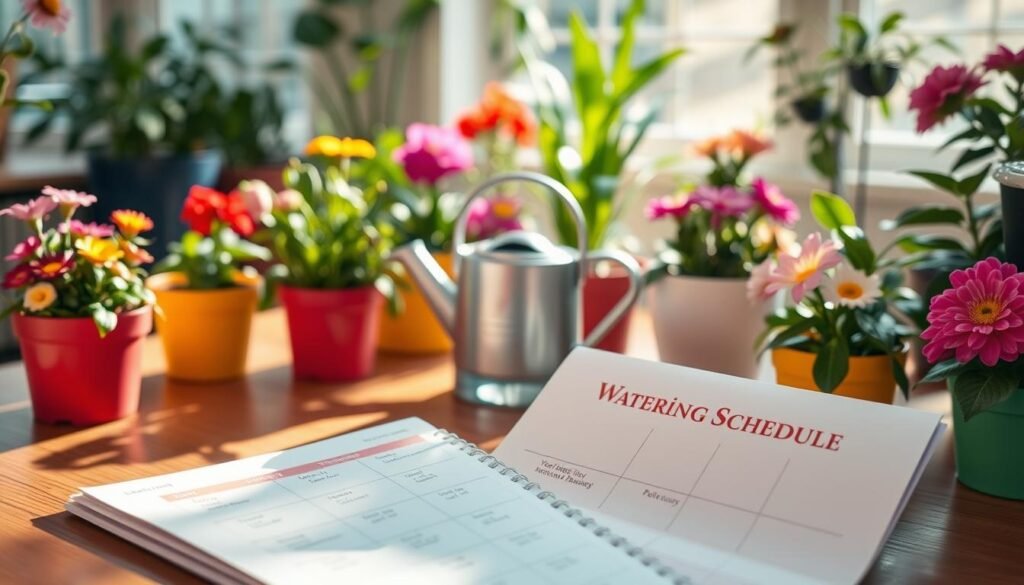
Watering ranges for warmer months versus winter indoors
Expect to water more often in warm, dry summer months and far less in winter when growth slows. Use the daily test to decide; numbers vary by pot size and mix.
Adjusting for bright, low, and indirect light areas
Bright light spots dry fastest; check them first. Low-light areas will need water surprisingly infrequently. For shaded or indirect light corners, trust the soil test over a calendar.
What “keep soil moist” means without making it soggy
Keep soil moist means the mix feels like a wrung-out sponge—damp but not muddy. Never let water pool in the saucer. Batch-check all pots daily and only water those that need it.
“Note each plant’s usual interval by season, then let the soil test overrule the clock.”
Seasonal watering adjustments for indoor flowers
As daylight and temperature shift, your watering rhythm needs a gentle tweak. Seasons change evaporation, root activity, and how quickly soil loses moisture.
Summer growth and bloom periods that increase water needs
Summer brings stronger light and higher heat, which speeds evaporation and plant growth. That means many specimens drink more and need more frequent waterings during an active growth period.
Watch placement: full sun can shorten bloom life even while soil dries fast. If a pot looks stressed, move it to bright indirect light rather than simply increasing water.
Winter slowdowns and the risk of overwatering
Winter light drops and nights cool. Growth slows and soil holds moisture longer. That raises the main risk: overwatering rather than drought.
Adjust by checking daily but expect to water less. Prioritize brighter south or southwest windows for light instead of adding extra water to force blooms.
Managing dormancy and rest periods
Some species enter a natural rest period after bloom. Cyclamen and others need reduced water during dormancy. Gradually cut back so the soil never stays soggy.
Jasmine may require a cool rest to bloom again—offer cooler temps and minimal water rather than warmth and extra moisture.
- Tip: reassess weekly as daylight and HVAC patterns change.
- Tip: let soil tests, not the calendar, set watering during seasonal shifts.
“Reassess weekly — seasonal change is gradual, so small adjustments keep roots healthy.”
For more on shifting schedules across seasons, see this article on adjusting watering schedules through the seasons.
Indoor flowering plants care guide for watering by plant type
Use a plant-type checklist to match water habits to each species. Below are quick, friendly cues to help you water the right amount for common bloomers without guessing.
Orchids
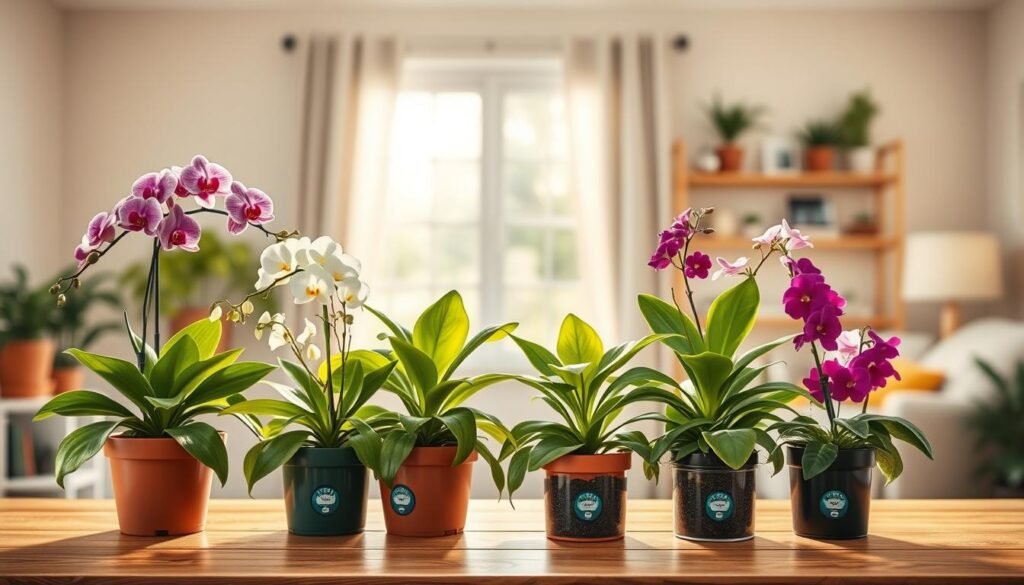
When the potting mix runs dry, water. In warm months that often means twice weekly; in winter, about once weekly. Use an orchid-specific potting mix and water slowly until drainage, then discard runoff to avoid rot.
Kalanchoe and succulent-like bloomers
Let the soil dry fully between waterings. These species prefer a cactus or succulent mix and bright light. Constantly moist soil speeds decline; dry-down cycles keep roots healthy.
African violets
Bottom-water for up to 30 minutes to reduce crown rot risk. Keep the surface evenly moist but avoid splashing leaves. Bright indirect light helps steady moisture needs.
Peace lilies
Water when the top inch of soil feels dry. A slight wilt is a useful cue, but always confirm with a fingertip check before adding water.
Anthuriums
Allow the mix to dry about halfway—not bone dry—between waterings. These like warm, humid conditions and bright, indirect light. Higher humidity lowers how often you must water.
Cyclamen
Keep soil moist without standing water and prefer cool temperatures around 50–65°F. Bottom-watering helps keep leaves dry and prevents rot during their cooler bloom period.
Chrysanthemums
Call them thirsty bloomers: keep the soil consistently moist with good drainage. Cooler indoor temps will extend bloom life, but do not let the potting mix dry out for long.
“Match technique and timing to each species — that single step reduces most watering mistakes.”
Quick plant-by-plant moisture targets for common indoor bloomers
Short, measurable moisture targets turn a vague watering instinct into a reliable routine. Below are three screenshot-ready cues to use with the touch + depth check.
Crown-of-thorns and cactus-mix specimens
Target: water when the top inch of soil is dry.
This rule helps prevent soggy roots while still supporting repeat blooms in bright, direct sun. Use a fast-draining cactus mix for best results.
Jasmine in bright indirect light
Target: water when the top half-inch of soil feels dry.
Jasmine prefers steady moisture but not wetness. Allow a cooler rest period for reliable bloom cycles indoors.
Hydrangea rescue: soak-from-bottom
If blooms sag, place the pot in 2–3 inches of water for about 45 minutes so roots wick moisture through the drainage hole.
After soaking, let the pot fully drain before returning it to light.
- Quick safety note: never leave pots sitting in standing water after a rescue soak.
- Return to the touch + depth tests so these targets stay flexible across seasons.
“Exact depth cues save time and keep roots healthy—measure, then water.”
Special watering methods for specific situations
When top watering risks splash damage, switch to a gentler technique that soaks from below. These methods protect delicate leaves and reduce crown-rot risk while still rehydrating the root zone.
Bottom-watering, step by step
Step 1: Use a pot with drainage holes and place it in a shallow saucer or tray of water.
Step 2: Wait 10–30 minutes, or until the top of the soil feels lightly damp.
Step 3: Remove the pot and let it sit to finish draining. Never let it soak for hours.
Sink or bucket soaking for thorough rehydration
Move the pot to a sink or large bucket. Remove decorative wraps or punch holes in foil first.
Water evenly from above until drainage runs freely. Allow the pot to drip until it stops, then discard the collected water.
- When bottom watering shines: for species that spot on wet leaves, for those prone to crown rot, and when blooms or foliage must stay dry.
- Floor protection: use a sink or bucket to prevent spills on wood or carpet and to confirm proper drainage.
- Don’t overdo it: never leave pots sitting in leftover water for hours; always discard standing water.
| Method | Best for | Timing | Key tip |
|---|---|---|---|
| Bottom-watering | African violets, crown‑sensitive varieties | 10–30 minutes | Stop when top feels lightly damp; allow drainage |
| Sink soak (top & drain) | Thirsty or rescue cases (azalea, hydrangea) | Water until steady drainage | Remove decorative wraps; discard drainage |
| Bucket submerge (rescue) | Severely wilted pots | Soak until bubbles stop or pot rehydrates | Monitor closely; let it finish dripping before returning home |
How to prevent overwatering, root rot, and fungal issues
Preventing water-related problems starts with simple habits that keep the soil oxygenated and the root zone healthy. Small steps stop common mistakes before they damage stems and leaves.
Common mistakes that trap water at the bottom of the pot
Big traps include pots without drainage holes, blocked drainage, decorative cachepots that hide standing water, and foil or plastic wraps that collect runoff. These let water pool where roots sit.
How root rot begins and spreads
Root rot starts when roots sit in oxygen-poor, wet soil. They weaken and fail to feed the plant even while the surface looks normal. This often shows up in cooler months when evaporation is low.
Early warning signs to watch for
- Soil that stays wet days after watering
- Sour or musty smell from the potting mix
- Soft, darkened stems at the base
- Yellowing leaves paired with a damp mix
Note: wilting can mean too much water as well as too little. Damaged roots cannot move water upward, so always check moisture before reacting.
Prevention habits and a quick reset
- Empty saucers after every watering to avoid standing water and pests.
- Water over a sink or bucket to confirm proper drainage and discard runoff.
- Reduce frequency during cool, low-light periods when soil dries slowly.
- If soil stays soggy, stop watering and move the pot to brighter light while you check drainage.
“A quick moisture check beats a schedule—touch the soil, then water.”
How to keep blooms longer with smart watering and maintenance
A focused weekly reset helps flowers last by balancing light, airflow, and moisture. Hot, dry air shortens bloom time more than most mistakes, so combine small trims with simple habits.
Trim spent flowers and yellow leaves
Deadhead by pinching or snipping faded flowers as they wilt. This allows the plant to redirect energy to new buds and longer bloom cycles.
Remove yellowing foliage promptly. It reduces stress and improves airflow around the pot and soil surface.
Rotate for even light and steadier growth
Turn pots a quarter to half turn every week or two so each side gets even light. Even exposure prevents lopsided growth and uneven drying.
Steady growth leads to steadier water use, which makes your schedule more predictable.
Quick weekly plant reset
- Trim spent blooms and yellow leaves.
- Rotate the pot for even light.
- Empty saucers, check moisture, and adjust placement.
“Small, regular maintenance keeps flowers blooming longer.”
| Action | Why it helps | When to do it |
|---|---|---|
| Deadhead spent blooms | Redirects energy to new buds | As flowers fade |
| Remove yellow foliage | Improves airflow, lowers disease risk | Immediately when spotted |
| Rotate pot | Even light, balanced growth | Weekly or biweekly |
| Weekly reset | Harmonizes watering rhythm | Once a week |
Light placement tips that support healthier watering rhythms
Window choice can make or break how often a pot needs water. Proper placement stabilizes moisture use so you water with confidence rather than guesswork.
Why south or southwest windows matter in winter: Bright exposure in winter gives more usable light and warmth. That helps roots keep using water so soil does not stay soggy for days.
Why the brightest south or southwest window can matter in winter
Move thirsty varieties nearer to the brightest window in winter, but keep them off heating vents. Better light shortens drying time and cuts the chance of overwatering.
How too much direct sunlight in summer can shorten bloom life
In summer, harsh direct sun and hot glass can overheat pots and scorch blooms. That shortens flower life even if the pot drinks more.
- Summer strategy: pull sensitive specimens back from hot glass or use a sheer curtain.
- Winter strategy: bring them closer to south/southwest windows for steady light.
- Low-light homes: add LED grow lights on a timer for short winter days.
“Better light often reduces watering mistakes because the plant’s water use becomes consistent.”
| Season | Placement | Watering effect |
|---|---|---|
| Winter | South/southwest window (away from vents) | Soil dries more evenly; fewer surprise soggy pots |
| Summer | Filtered light or moved back from hot glass | Protects blooms; prevents overheating and rapid wilting |
| Low-light home | Supplement with artificial light | Makes water use predictable across short days |
Temperature and humidity targets that reduce watering guesswork
Keeping room temps steady makes watering much more predictable. Aim for about 65°F daytime and 50–55°F at night for many bloom-bearing pots. Stable temperatures limit sudden water loss and slow soil drying just enough to cut frequent watering.
Cooler rooms help blooms last longer
Cooler air slows respiration and flower fade. That means blooms stay fresh and you water less often.
Avoid rapid swings. A steady range prevents shock and keeps roots functioning normally.
Practical humidity strategies
Relative humidity around 50–60% is a good target. Hot, dry air pulls moisture from petals and leaves and shortens bloom life.
- Run a humidifier on dry days.
- Group pots to create a mild humidity pocket.
- Keep specimens away from heater vents and cold drafts.
“Stable temperatures and steady humidity create predictable watering rhythms.”
| Target | Why it helps | Quick action |
|---|---|---|
| 65°F day / 50–55°F night | Slows evaporation; prolongs blooms | Move to cooler room at night; avoid hot glass |
| 50–60% RH | Reduces petal and leaf water loss | Use humidifier or pebble tray; group pots |
| Gentle airflow | Prevents mildew without drying soil | Use fan on low; avoid direct vent drafts |
Quick checkpoint: if you water far more than expected, look for radiator heat, heater vents, or very warm sunny glass near the pot. Fixing those conditions often fixes the watering problem.
When your watering schedule still feels “off”
Small shifts in placement or container size often stop the annoying swing between soggy and bone‑dry. Before changing your routine, walk the pot to a new spot and check how the soil responds over a few days.
If soil stays wet too long, troubleshoot drainage, mix, and pot size
Check drainage holes first and remove any cachepots or foil that trap water. Blocked holes or hidden saucers keep the root zone soaked and invite rot.
Match pot to the root ball: a small plant in a large pot holds excess water. Consider a smaller container or a faster‑draining mix to speed drying time.
If soil dries too fast, troubleshoot light intensity, heat, and airflow
High direct light, heaters, or vents can pull moisture out quickly. Move the plant away from hot glass or drafts before you simply increase how often you water.
Too much air circulation near a pot speeds evaporation. Reducing airflow or offering a slightly richer mix can stabilize moisture.
How to handle newly purchased gift plants versus established ones
Gift plants often arrive from greenhouse conditions that are wetter and brighter than home settings. Treat them gently: bright place, cool nights, and careful watering.
Give it time. Let new specimens adjust for at least a week. Check daily with a fingertip, and avoid large swings like drenching then letting it dry out completely.
“Move first, water second — a few feet makes more difference than a fuller watering can.”
Conclusion
Make a 30‑second moisture check your watering anchor each day. Do the fingertip test first, then water only when the soil below the surface feels dry.
Keep the golden trio in mind: the right light, well‑draining soil, and a soak‑and‑drain technique with the saucer emptied after each session. Those three steps prevent most problems.
Use plant‑type targets as shortcuts—orchids and succulents like more dry time, peace lilies need the top inch checked, and African violets prefer bottom watering—then confirm with touch.
Expect seasonal change: water more during active growth and less in cool, low‑light months. One habit prevents most issues: never let a pot sit in standing water overnight.
Dial in these simple routines and caring for bloomers in your home becomes predictable—and a lot more rewarding.