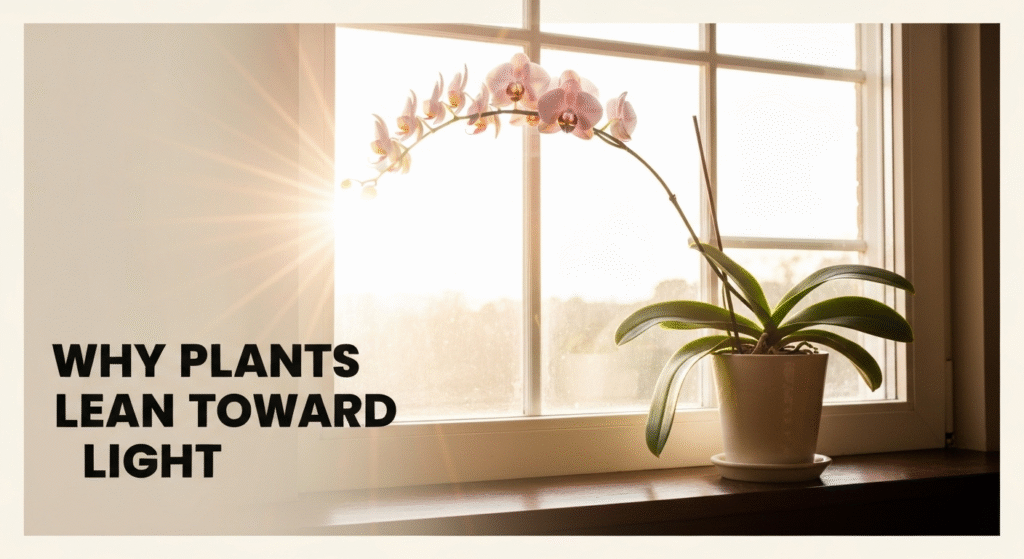

Have you ever noticed your favorite houseplant starting to lean, almost as if it’s craning its neck to get a better look out the window? One side seems lush and full, while the other looks a bit sparse. This isn’t your imagination, and it’s not a sign of a struggling plant. It’s a slow, deliberate dance with the light, a fundamental plant behavior known as phototropism. Understanding this natural tendency is one of the simplest ways to ensure your indoor garden grows strong, balanced, and beautiful.
My name is Kamil Khan, and for years, my passion has been the world of indoor flowers. I’ve spent countless hours not just growing them, but observing their subtle behaviors—the way a new leaf unfurls or how a stem bends almost imperceptibly over a week. This curiosity has driven me to explore the science behind these quiet actions. My goal is to translate that research and hands-on experience into clear, practical knowledge that helps you connect with and better understand the living things you share your home with. It’s about turning simple observations into a deeper appreciation for their resilience.
What is Phototropism? The Science of Leaning Plants

At its core, phototropism is simply a plant’s growth in response to a light source. For the stems and leaves of your houseplants, this is “positive phototropism,” meaning they grow toward the light. This behavior is crucial for survival. Light is the fuel for photosynthesis, the process plants use to create food. By orienting their leaves toward the strongest light source—usually your window—they maximize their ability to absorb energy and thrive. It’s a highly efficient, built-in survival mechanism.
This isn’t just a random lean; it’s a complex biological process controlled by a powerful plant hormone. Let’s break down how it works.
The Role of Auxin: The Plant’s Growth Engine
The key player in this process is a hormone called auxin. Auxin acts as a growth regulator and is produced in the very tips of the plant’s stems. One of its unique properties is that it is sensitive to light. When light shines directly on a plant stem from one side, the auxin molecules move away from the light and accumulate on the shaded side of the stem.
This buildup of auxin on the dark side doesn’t inhibit growth; it actually supercharges it. The high concentration of auxin stimulates the cells on the shaded side to elongate, or grow longer, much faster than the cells on the sunny side. As the cells on one side grow longer than the cells on the other, it forces the stem to bend and curve toward the light source. I’ve seen this happen remarkably fast with some of my own fast-growing plants, like coleus, where a noticeable curve can appear in just a couple of days.
The entire process is a beautifully simple chain of events, all designed to position the plant for optimal light exposure.
| Step | Process | The Result |
| 1. Light Detection | The tip of the plant stem detects light coming from one primary direction (e.g., a window). | The plant identifies its main energy source. |
| 2. Auxin Migration | The light-sensitive auxin hormone moves from the illuminated side to the shaded side of the stem. | A higher concentration of auxin builds up on the dark side. |
| 3. Cell Elongation | The concentrated auxin signals the cells on the shaded side to grow longer and faster. | The cells on the sunny side grow at a normal rate. |
| 4. The Bend | The faster growth on the shaded side physically pushes the stem, causing it to bend toward the light. | The leaves are now better positioned for photosynthesis. |
Positive vs. Negative Phototropism
While stems and leaves grow toward the light (positive phototropism), roots behave in the opposite way. They exhibit negative phototropism, meaning they tend to grow away from light and deeper into the soil. This makes perfect sense from a survival standpoint. A root’s primary jobs are to anchor the plant and absorb water and nutrients from the soil, tasks best performed in the dark, away from the surface. This complementary behavior ensures the entire plant is optimized for its environment, both above and below the soil.
The Importance of Rotation for Even Growth
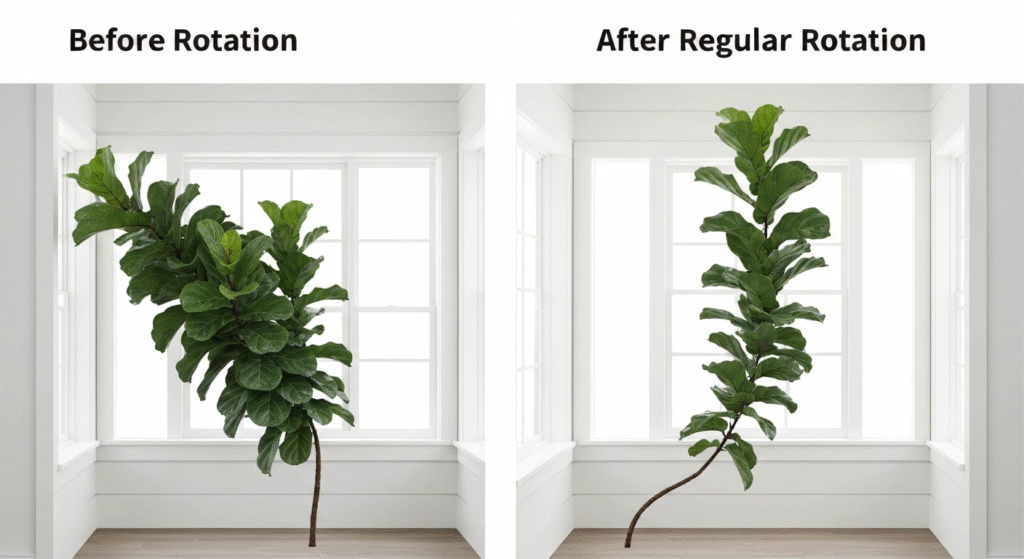
While phototropism is a brilliant survival strategy, it can lead to some aesthetic and structural problems for indoor plants. When a plant constantly leans in one direction, it can become lopsided and unbalanced. The side facing the window will be dense with leaves, while the side facing the room might become sparse, leggy, and even bare. Over time, this can lead to weakened stems that struggle to support the plant’s weight.
This is where you, the plant owner, come in. Regular rotation is the key to encouraging straight, even growth and a full, healthy-looking plant from every angle. By turning your plant periodically, you ensure that all sides receive a fair share of light. This tricks the plant into growing upright, as its internal “which way is the light?” signal is constantly being reset.
How Often Should You Rotate Your Plants?
There is no single, perfect schedule for every plant, but a good rule of thumb is to give your plant a quarter turn every one to two weeks. I’ve found that tying this task to my watering schedule makes it easy to remember. When I check the soil, I give the pot a simple turn.
However, the ideal frequency depends on a few factors:
- Growth Rate: Fast-growing plants like a Pothos or Philodendron will show a lean more quickly and benefit from a weekly rotation. Slower growers, such as a ZZ plant or Snake Plant, might only need a turn once a month.
- Light Intensity: A plant in a very bright, direct light source will lean more aggressively than a plant in a lower-light spot. The stronger the signal, the faster the response.
The “Don’t Rotate” Rule: Exceptions to Consider
While rotation is great for most foliage plants, there’s a crucial exception: some flowering houseplants do not like to be moved once they begin to form buds. For these plants, a sudden change in their orientation to the light can be stressful, causing them to drop their buds before they have a chance to open. This phenomenon is often called “bud blast.”
From my own experience, I’ve learned to be very careful with these specific bloomers. Once I see buds forming on my Christmas Cactus (Schlumbergera) or my Phalaenopsis Orchid, I stop rotating them completely. They’ve already committed their energy to flowering in that specific position, and I don’t want to disrupt the process.
Plants Often Sensitive to Rotation During Budding:
- Christmas Cactus / Thanksgiving Cactus
- Phalaenopsis Orchids
- Some varieties of Hoya
- Gardenia
| Pros of Rotating Houseplants | Cons of Rotating Houseplants |
| Balanced Growth: Encourages straight, upright stems. | Risk of Bud Blast: Can cause some flowering plants to drop their buds. |
| Full Appearance: Ensures leaves grow evenly on all sides. | Requires Consistency: It’s a recurring task that’s easy to forget. |
| Stronger Stems: Prevents weak, stretched stems from lopsided growth. | Not for All Plants: Unnecessary for plants receiving overhead light. |
| Improved Health: Allows all leaves to photosynthesize effectively. | Stressful for Some: Very sensitive plants may not like frequent changes. |
Why Some Flowers Always Face a Certain Direction
Have you ever brought home a potted daffodil or amaryllis and noticed that the flower itself seems to stubbornly face the window, regardless of how you turn the pot? While the stem’s lean is due to phototropism, the flower’s orientation is often about maximizing success. A flower is the plant’s reproductive organ, and its position is critical.
In nature, facing the sun (or the primary light source) makes the flower more visible to pollinators and can even warm the nectar, making it more appealing. While indoor pollinators are rare, this instinct remains. More importantly for an indoor plant, the flower is an energy-intensive part. By facing the light, the plant ensures its most valuable asset gets the direct energy needed to stay vibrant and last as long as possible. The plant is essentially showing off its bloom where it will get the most attention and the most fuel.
This is different from the solar tracking (heliotropism) you see in sunflowers, which move throughout the day. For an indoor flowering plant, the direction is usually a fixed position chosen for the best possible outcome.
How to Observe Phototropism in Action
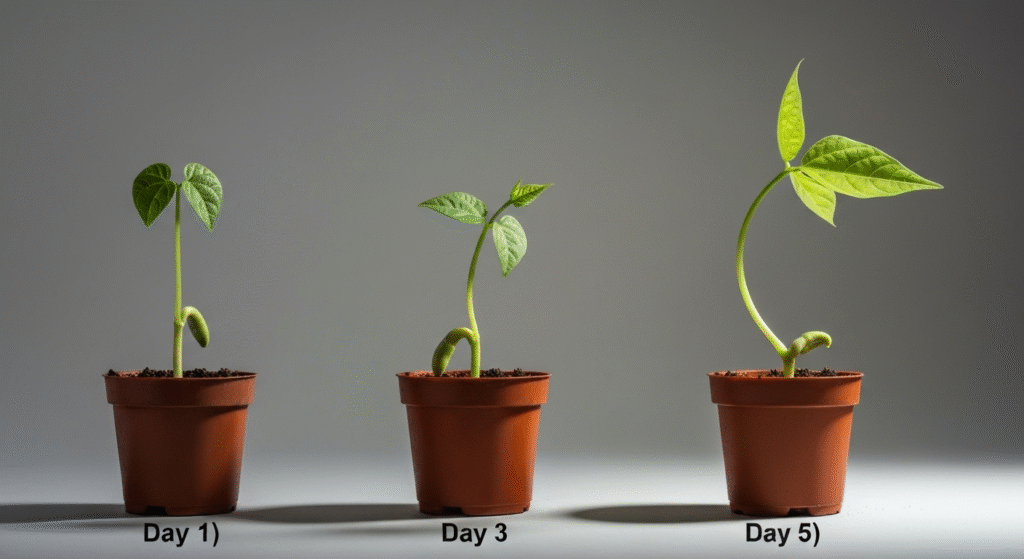
One of the best ways to truly understand phototropism is to see it happen for yourself. This simple activity can give you a new appreciation for how dynamic your plants really are.
A Simple Time-Lapse Experiment
You don’t need fancy equipment to see this work.
- Choose a Subject: Pick a plant that grows relatively quickly. A young bean seedling, a coleus, or even a fast-growing Pothos cutting in water works perfectly.
- Set the Stage: Place the plant a few feet away from a window that provides a strong, single source of light. Make sure other light sources in the room are off.
- Document It: Take a photo of the plant from the exact same angle once a day for a week. To keep the angle consistent, you can place a small piece of tape on the floor to mark where your phone or camera should be.
- Review the Results: When you scroll through the photos at the end of the week, you’ll see a clear time-lapse of the stem bending toward the light. It’s a powerful visual of auxin at work.
Reading the Signs: What Your Plant’s Lean Is Telling You
Your plant’s lean is a form of communication. By observing it, you can better understand its needs, particularly its need for light.
| Observation | What It Likely Means | Recommended Action |
| Severe Leaning: The plant is bent at a sharp angle, and the stems look thin and stretched. | Not Enough Light: The plant is desperately reaching for any available light source. | Move the plant to a much brighter location or supplement its light with a grow lamp. |
| Gentle, Consistent Lean: The plant is healthy but is clearly favoring one side. | Normal Phototropism: The plant is healthy and simply responding naturally to its environment. | This is the perfect candidate for a regular rotation schedule. Start a weekly quarter turn. |
| Lopsided Foliage: One side is full and green, while the side facing the room is sparse. | Lack of Rotation: The plant has been left in one position for too long. | Begin rotating the plant immediately to encourage new growth on the sparse side. Pruning can also help reshape it over time. |
| No Leaning at All: The plant is growing perfectly straight. | Ideal Light Conditions: The plant is likely getting light from directly above (like under a skylight or grow light) or the light is so diffuse that no single source dominates. | No action is needed. Keep up the great work! |
Frequently Asked Questions
Can a plant lean too much?
Yes. If a plant is leaning severely, it’s a strong indicator that it’s not receiving enough light. This extreme stretching, called etiolation, results in weak, spindly stems that may eventually break under their own weight.
Do all indoor plants show phototropism?
Virtually all plants are phototropic, but the effect is much more noticeable in species that grow quickly and have flexible stems. In very slow-growing plants like cacti or snake plants, the change might be so gradual that it’s difficult to see without long-term photo comparisons.
Will rotating my flowering orchid make it lose its flowers?
It certainly can. Once an orchid has developed buds, it’s best to leave it in one spot. The plant has allocated its energy to bloom in that specific orientation, and changing it can cause the plant to stress and drop its unopened buds or existing flowers.
Can I fix a plant that is already badly lopsided?
You can’t straighten the existing bent stems, but you can correct the plant’s future growth. Start by rotating it so the bare side faces the light, which will encourage new leaves to fill in that area. You can also prune back some of the longest, lopsided stems to promote bushier, more balanced growth over time.
Conclusion
The gentle lean of a houseplant toward a sunny window is more than just a charming quirk; it’s a dynamic and essential process. This silent dance, driven by the hormone auxin, is a constant effort by the plant to position itself for survival and growth. By understanding the basics of phototropism, we move from being simple owners to being active partners in our plants’ well-being.
Regularly rotating your plants is one of the easiest and most effective things you can do to cultivate a strong, balanced, and aesthetically pleasing indoor garden. It’s a simple action that responds directly to your plant’s natural instincts. The next time you see one of your green companions reaching for the light, you’ll know exactly what it’s doing—and exactly how to help it thrive.