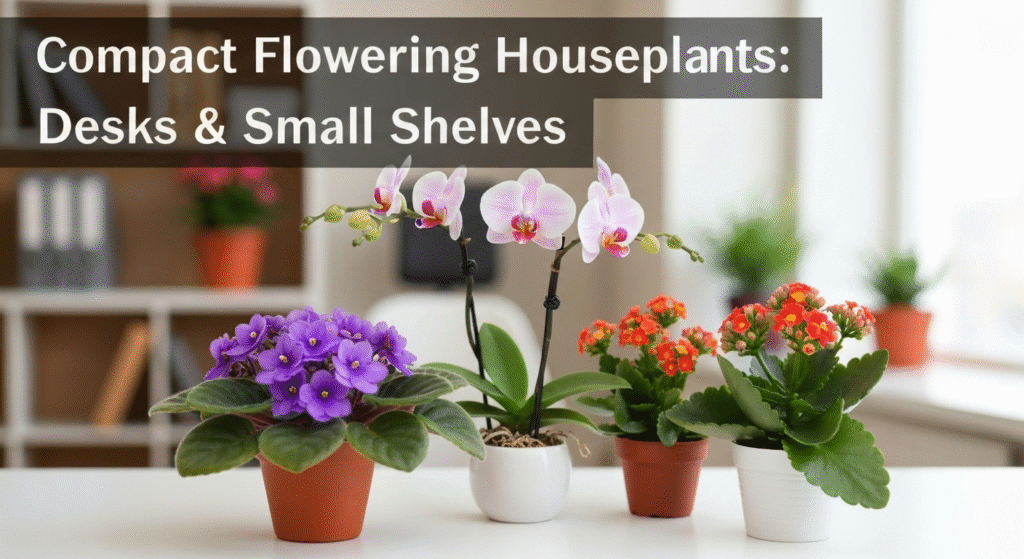

Finding a bit of space for nature in our daily lives can make a huge difference, especially in a small apartment or a compact office. A splash of color from a blooming plant can brighten a mood and personalize a space. The problem is, many plants labeled “small” at the garden center are just babies. They have every intention of growing into something that will quickly overwhelm a desk or a narrow shelf. This is where truly compact flowering houseplants come in—the ones that understand the assignment and stay petite throughout their lives.
My name is Kamil Khan, and for years, I have been exploring the world of indoor flowers, driven by a deep curiosity about how to make them thrive in our homes. My passion isn’t just about growing plants; it’s about understanding their stories, their needs, and how they fit into our living spaces. Through countless experiments in my own home, I’ve learned which plants genuinely stay small and which are just pretending. My goal is to share this hands-on knowledge, cutting through the confusion to help you find the perfect, pint-sized blooming companion for your workspace or cozy corner.
Understanding What “Compact” Really Means
Before we dive into the best plants, let’s clear up one of the biggest points of confusion in the plant world: size. A plant in a 4-inch pot at the store is not necessarily a “small” plant. It’s a young plant. The key is to look for its mature size, which is often listed on the plant tag or can be found with a quick search. A true compact or miniature variety is one that has been bred to remain small, typically staying under 12 inches in both height and spread.
Many popular houseplants have miniature cultivars that are perfect for tight spaces. Ignoring this detail is a common mistake. I once bought a lovely little Calathea, assuming it would stay desk-sized. A year later, it was a two-foot-wide behemoth that had completely taken over my workspace. Learning to check for mature size saved me from making that mistake again.
Here’s a quick comparison to illustrate the point:
| Common “Small” Plant | Typical Starter Size | Eventual Mature Size | True Compact Alternative |
| Peace Lily | 6-8 inches tall | 2-3 feet tall | Miniature Peace Lily (‘Petite’) |
| Fiddle Leaf Fig | 10-12 inches tall | 6-10 feet tall | None (Avoid for desks) |
| Orchid | 8-10 inches tall | 2+ feet tall | Miniature Phalaenopsis Orchid |
| Begonia | 4-6 inches tall | 1-2 feet tall & wide | Certain Rex Begonia varieties |
Top Picks for Truly Compact Flowering Houseplants
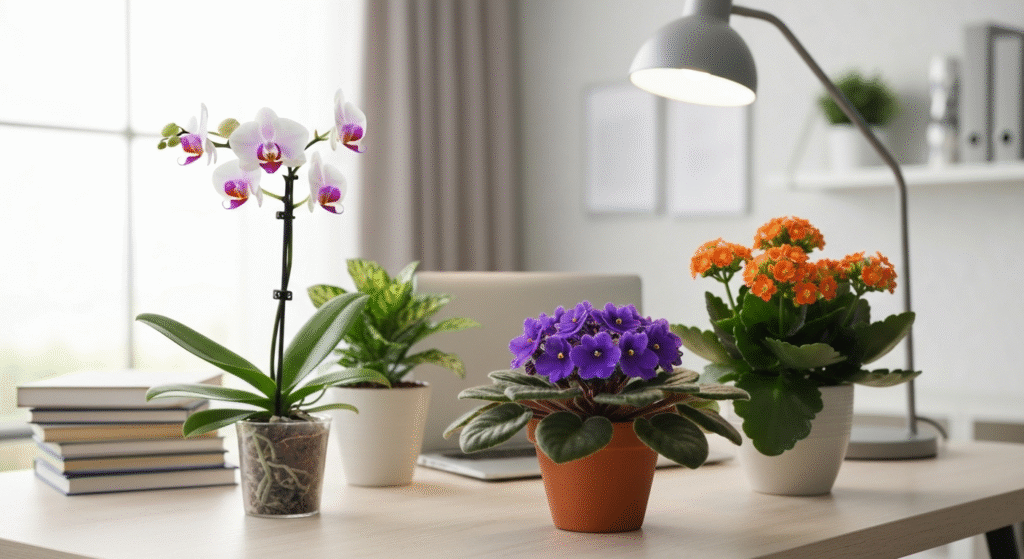
Finding plants that offer beautiful blooms without demanding too much space can be a rewarding search. Over the years, I’ve come to rely on a few champions that consistently perform well on desks, windowsills, and bookshelves.
African Violets (Saintpaulia)
The African violet is the undisputed king of desk-friendly flowering plants, and for good reason. They are bred to be small, they bloom almost continuously with proper care, and they come in a stunning array of colors and petal forms. Most standard varieties stay within a 6 to 9-inch spread, making them a perfect fit for a small pot.
From my experience, their reputation for being fussy is a bit overblown. The secret is consistency. They don’t like wet leaves, so I’ve found bottom watering is the best method. I just set the pot in a saucer of water for about 30 minutes and let it soak up what it needs. They thrive in the same moderate, indirect light found in most offices, making them an ideal workspace companion.
Pros and Cons of African Violets
| Pros | Cons |
| Blooms multiple times a year | Sensitive to overwatering |
| Stays naturally small and compact | Leaves can be damaged by water spots |
| Huge variety of colors available | May need specific, well-draining soil |
| Non-toxic to cats and dogs | Can be prone to pests like mealybugs if stressed |
Miniature Phalaenopsis Orchids
If you want a touch of elegance, nothing beats a miniature orchid. These are not just young versions of the large orchids you see in stores; they are specific varieties that mature at a much smaller size, often under 10 inches tall. Their blooms are just as intricate and beautiful as their larger cousins but are perfectly proportioned for a desk.
What I value most about them is their longevity. A single bloom spike on one of my miniature orchids once lasted for over three months, providing a long-lasting display of color. They need bright, indirect light—an east-facing window is perfect—and a specific watering routine. You should only water them when the potting medium (usually bark) is completely dry. This prevents root rot, which is the most common issue people have with orchids.
Kalanchoe Blossfeldiana (Flaming Katy)
For a burst of cheerful, vibrant color, Kalanchoe is a fantastic choice. It’s a succulent, which means it’s incredibly forgiving if you occasionally forget to water it. The plant produces dense clusters of tiny flowers in bright shades of red, orange, yellow, and pink that can last for weeks.
Kalanchoe loves bright light, so it does best near a window. Because its leaves store water, you need to let the soil dry out completely between waterings. After it finishes blooming, you can trim back the flower stalks. With a period of reduced light (simulating winter’s shorter days), you can encourage it to rebloom the following season. It’s a hardy little plant that offers a lot of reward for minimal effort.
Jewel Orchids (Ludisia discolor)
While most people get Jewel Orchids for their stunning foliage—dark, velvety leaves with electric pink pinstripes—their delicate flower spikes are a beautiful bonus. In late winter or early spring, they send up slender stems with a collection of small, white, orchid-like flowers.
Unlike Phalaenopsis orchids, Jewel Orchids are terrestrial, meaning they grow in soil instead of bark. They are also remarkably low-light tolerant, making them one of the best choices for an office or a shelf that doesn’t get direct sun. I have one on a bookshelf about ten feet from a window, and it thrives. Its creeping growth habit keeps it low and compact, making it ideal for a shallow, wide pot.
Matching Your Plant to Your Space

Choosing the right plant is only half the battle. You also need to make sure the spot you have in mind meets the plant’s needs. For desks and shelves, the two most critical factors are light and physical space.
Assessing Your Light Conditions
Light is a plant’s food. Without the right amount, a flowering plant will fail to produce blooms. Before you buy, take a day to observe the light in your chosen spot.
- Bright, Indirect Light: This is the gold standard for most flowering houseplants. It’s a spot that is bright for most of the day but doesn’t get hit by direct, scorching sun rays. An east-facing window or a spot a few feet back from a south or west-facing window is usually perfect.
- Medium Light: This spot is further from a window or is near a north-facing window. The light is less intense. Some plants, like the Jewel Orchid, are perfectly happy here.
- Low Light: While some foliage plants tolerate low light, it’s very difficult to get a plant to bloom in these conditions. If your desk is in a dark corner, you may need to supplement with a small grow light.
- Direct Sun: This is intense light, usually from a south or west-facing window. It can scorch the leaves of most of the plants we’ve discussed.
Light Requirements for Compact Bloomers
| Plant | Ideal Light Level | Workspace Placement Notes |
| African Violet | Bright, Indirect | Perfect for a desk near an east or north window. |
| Miniature Orchid | Bright, Indirect | Thrives near a window but out of direct sunbeams. |
| Kalanchoe | Bright, Direct/Indirect | Needs one of the brightest spots on your desk. |
| Jewel Orchid | Medium to Low, Indirect | Excellent choice for a shelf away from a window. |
The Shelf Depth and Stability Factor
Beyond light, consider the physical constraints of your space. A narrow bookshelf or a crowded desk requires a plant with a small footprint.
- Pot Size: Most of the plants discussed here will live happily in a 3 to 4-inch diameter pot. This size is stable and fits comfortably on most standard shelves, which are typically 6-10 inches deep.
- Growth Habit: Choose plants that grow in a contained, rosette shape (like African Violets) or have a simple vertical stem (like Miniature Orchids). Avoid plants that are known to vine or spread aggressively.
- Weight: A small ceramic pot filled with damp soil can be surprisingly heavy. Ensure your shelf is sturdy enough to support it without wobbling. I learned this the hard way when a flimsy shelf gave way, resulting in a mess of soil and a broken pot.
Care Essentials for Small Potted Plants

Caring for plants in small containers has its own unique set of challenges. The limited soil volume means they can dry out faster and have access to fewer nutrients.
The Watering Challenge in Miniature Pots
The most common issue I see with small plants is incorrect watering. Because there’s less soil to hold moisture, the pot can go from perfectly moist to bone dry very quickly. However, the lack of drainage in some decorative pots can also lead to waterlogged roots.
The best tool you have is your finger. Before you water, stick your finger about an inch into the soil. If it feels dry, it’s time to water. If it feels moist, wait another day or two and check again. This simple test is far more reliable than watering on a strict schedule.
- Signs of Underwatering: Wilting or drooping leaves, dry and crispy leaf edges.
- Signs of Overwatering: Yellowing lower leaves, mushy stems, a consistently damp or moldy soil surface.
Fertilizing and Repotting
With less soil, your compact plant will use up the available nutrients more quickly. During the growing season (spring and summer), it’s a good idea to feed them with a balanced liquid fertilizer. I recommend diluting it to half the strength recommended on the bottle to avoid burning the sensitive roots in a small pot.
Fortunately, most of these miniature varieties are slow growers and won’t need to be repotted often. Every two years or so, or when you notice the roots are tightly circling the bottom of the pot, you can move it to a container that is just one inch wider. Moving it to a pot that is too large can hold excess moisture and lead to root rot.
Frequently Asked Questions
1. How can I get my desk plant to flower again?
Most plants bloom in response to environmental cues. For many, this involves getting enough light. If your plant looks healthy but isn’t blooming, try moving it to a slightly brighter location. For others, like Kalanchoe, they may need a period of shorter days (less than 12 hours of light) to trigger new buds.
2. Are these small flowering plants safe for pets?
This is a critical question. Of the plants listed, African Violets, Miniature Phalaenopsis Orchids, and Jewel Orchids are non-toxic and generally safe for cats and dogs. However, Kalanchoe is toxic to pets and should be kept out of their reach. Always double-check a plant’s toxicity before bringing it into a home with pets.
3. Do I need a special grow light for my desk plant?
If your workspace has very little natural light, a small LED grow light can be a game-changer. You don’t need a large, industrial setup. Many companies now make small, attractive grow lights that clip onto a desk or have a simple, minimalist base. These can provide the full-spectrum light your plant needs to bloom.
4. What’s the best type of pot for a compact plant?
The best pot is one with a drainage hole. This is non-negotiable for preventing root rot. If you fall in love with a decorative pot that doesn’t have a hole, you can use it as a “cachepot.” Keep the plant in its simple plastic nursery pot (which has holes) and place it inside the decorative one. When you water, you can take the inner pot out, let it drain completely, and then put it back.
Conclusion
Bringing a flowering plant into your personal workspace is more than just decoration; it’s an act of creating a small sanctuary. It doesn’t require a green thumb or a lot of space—it just requires the right plant. By choosing a true miniature variety like an African Violet or a Jewel Orchid, you can enjoy lasting color and life without the worry of it outgrowing its home. These small wonders prove that you don’t need a large garden to experience the joy of watching something grow and bloom. With a little attention to their light and water needs, they will reward you with a beautiful display that makes your small space feel more vibrant and alive.