

Have you ever noticed that the light from an east-facing window feels different? It’s softer, more welcoming. It brings the gentle, direct sun of the morning, followed by a full day of bright, but not harsh, illumination. This unique environment can be a sweet spot for many indoor plants, but it’s especially perfect for a variety of flowering houseplants that might get scorched in a west-facing window or fail to thrive in the dimness of a north-facing one. Understanding this specific type of light is the key to unlocking a home filled with consistent, beautiful blooms.
My name is Kamil Khan, and for years, my fascination with indoor flowers has centered on a simple question: what does a plant truly need to thrive? This curiosity has led me down a path of constant learning and observation, transforming my home into a living laboratory. I’ve spent countless hours moving pots from one window to another, watching how the subtle shift in light can mean the difference between a plant that merely survives and one that bursts with color. Through this hands-on work, I’ve found that matching a plant to its ideal lighting isn’t just a suggestion—it’s the foundation of successful indoor gardening.
What “Bright Indirect Light” from an East Window Really Means

When a plant care tag says “bright, indirect light,” it can feel a bit vague. But for an east-facing window, it has a very specific meaning. This location provides a few hours of direct morning sun, which is much less intense than the hot afternoon sun from a west-facing window. After the sun rises higher in the sky, the direct rays move away, leaving the window illuminated with bright, indirect light for the rest of the day. This combination is a perfect recipe for many flowering plants.
The Daily Light Pattern of an East Window
Let’s break it down. An east-facing window’s light schedule is predictable and gentle, which is why so many plants adapt well to it.
- Sunrise to Mid-Morning (approx. 7 AM – 11 AM): The plant receives direct, but cool, sunlight. This is the energy-intensive period that fuels photosynthesis without the risk of burning delicate leaves and flowers.
- Mid-Morning to Late Afternoon: The direct sun has passed. The area remains brightly lit by the ambient light of the sky, but it’s indirect. This sustained, gentle light is crucial for plants that need brightness but can’t handle constant direct sun.
- Late Afternoon to Evening: The light gradually fades, mimicking the natural end of the day.
This pattern prevents the heat stress that plants in west-facing windows often experience. The intense afternoon sun can scorch leaves and cause flowers to wilt prematurely. An east window gives plants the best of both worlds: a direct boost of energy in the morning and a relaxed, bright afternoon.
Why This Light is Different from Other Directions
Not all windows are created equal. I learned this the hard way when I moved a thriving African Violet from an east window to a south-facing one, thinking “more light is better.” The leaves were scorched within a week. The direction your window faces dramatically changes the intensity and duration of the light.
| Window Direction | Light Characteristics | Best Suited For |
| East | Direct, cool morning sun; bright indirect light for the rest of the day. | Flowering plants that need brightness without intense heat. |
| South | Strong, direct sun for most of the day. | Sun-loving plants, cacti, and many succulents. |
| West | Bright light all day with intense, direct hot sun in the afternoon. | Hardy, sun-loving plants that can tolerate heat. |
| North | Consistent, soft, indirect light all day with no direct sun. | Low-light tolerant plants, ferns, and foliage plants. |
How to Measure Light in Your East-Facing Window Without Gadgets
You don’t need a fancy light meter to figure out if your east window is right for a plant. Over the years, I’ve come to rely on simple, observational methods that are just as effective. These techniques help you understand the light from the plant’s perspective.
The Hand Shadow Test
This is the easiest and quickest way to gauge light intensity. It’s a method I use every time I consider bringing a new plant home.
- Stand between your plant’s intended spot and the window during the brightest part of the day (around mid-morning for an east window).
- Hold your hand up about a foot above where the plant’s leaves would be.
- Look at the shadow your hand casts on the surface.
Here’s how to read the shadow:
- Sharp, well-defined shadow: This indicates direct or very bright light. You’ll see this in the morning hours in an east window.
- Soft, blurry shadow: This means the light is bright but indirect. The shadow is visible, but the edges aren’t crisp. This is the light your east window gets for most of the day and is the target for “bright, indirect” plants.
- Faint, barely visible shadow: This signifies low light. You shouldn’t see this in an east-facing window unless it’s heavily obstructed.
Observing the Light’s Path
Spend a day paying attention to where the sunbeams fall. Note the exact time the direct sun first hits the windowsill and when it moves away. Does it shine directly on the spot for one hour or four? This simple observation tells you a lot. Some plants, like orchids, love a couple of hours of direct morning sun, while others, like some begonias, might prefer to be just outside the edge of that direct beam. Knowing the path of the light allows you to place your plants in the perfect spot to meet their specific needs.
Top Flowering Houseplants That Thrive in East Windows
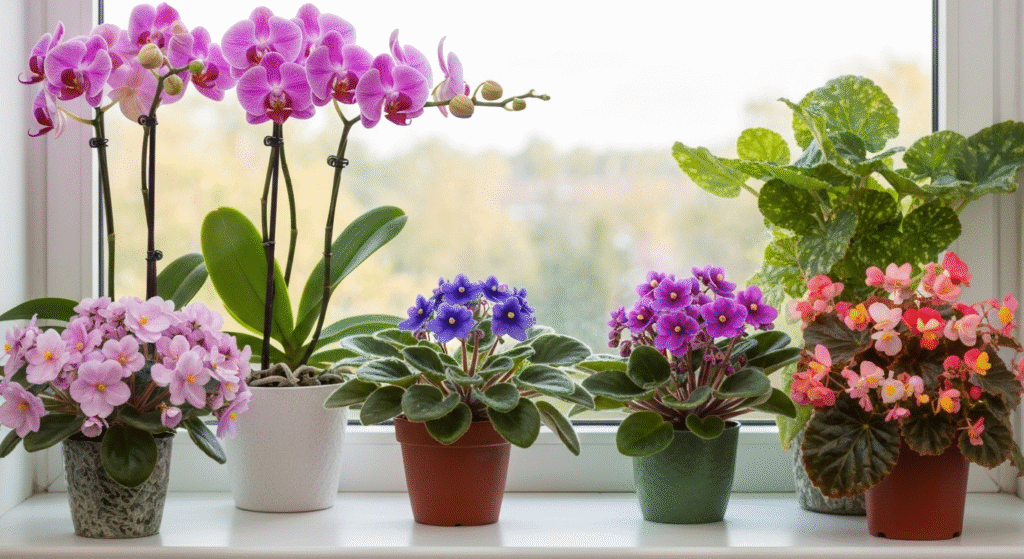
The combination of gentle morning sun and bright ambient light makes east-facing windows a paradise for a select group of flowering plants. These are the ones I’ve had the most consistent success with in my own home, turning a simple windowsill into a year-round floral display.
Phalaenopsis Orchid (Moth Orchid)
The Phalaenopsis is often the first orchid people try, and for good reason. It’s incredibly rewarding and perfectly suited for an east-facing window. In their natural habitat, they grow on trees under the canopy, receiving dappled sunlight—a condition closely mimicked by an east window.
- Why it loves east light: The direct morning sun is not strong enough to scorch its leaves but provides enough energy to encourage the development of flower spikes. The subsequent bright, indirect light is exactly what it needs to maintain its blooms for months.
- Care Tips: Water thoroughly only when the potting medium (usually bark) is completely dry. They prefer to be snug in their pots. My own orchids seem to bloom most reliably when I let the nighttime temperature drop slightly in the fall, which I find happens naturally near a window.
African Violets (Saintpaulia)
African Violets have a reputation for being fussy, but I believe it’s because they are often given the wrong kind of light. They hate direct, hot sun, which quickly burns their fuzzy leaves. However, they need bright light to produce their iconic clusters of purple, pink, or white flowers.
- Why it loves east light: An east window provides the perfect balance. The morning sun gives them the energy to bloom, while the indirect light of the afternoon prevents scorching.
- Care Tips: Water from the bottom by placing the pot in a saucer of water for about 30 minutes. Avoid getting water on the leaves, as it can cause spotting. I’ve found that they bloom best when they are slightly pot-bound and receive a consistent watering schedule.
Begonias
Many types of Begonias, especially the flowering varieties like Rieger or some Angel Wing Begonias, do exceptionally well in east-facing windows. Their flowers are vibrant, and their foliage is often just as stunning.
- Why it loves east light: This light exposure is enough to promote flowering without fading the rich colors of their leaves. Afternoon sun would be far too harsh for most of these tropical beauties.
- Care Tips: They like to stay evenly moist but not waterlogged. Good air circulation is also important to prevent issues like powdery mildew. I’ve had great success with a fibrous begonia that gets about two hours of direct morning sun; it blooms almost non-stop from spring to fall.
Christmas Cactus (Schlumbergera)
Despite its name, the Christmas Cactus isn’t a true cactus from the desert. It’s a tropical plant that grows on trees in the Brazilian rainforests. It needs bright, indirect light, and its blooming cycle is triggered by changes in day length and temperature.
- Why it loves east light: This exposure provides the brightness it needs for healthy growth without the stress of intense heat. It can happily live in an east window all year long.
- Care Tips: To encourage blooms for the holidays, it needs shorter days and cooler temperatures in the fall. I simply leave mine in an east-facing bedroom where it experiences the natural shortening of daylight hours, and it sets buds reliably every year.
Plant Comparison for East-Facing Windows
| Plant | Bloom Colors | Watering Needs | Humidity Preference |
| Phalaenopsis Orchid | White, Pink, Purple, Yellow | Low (allow to dry out completely) | High (50-70%) |
| African Violet | Purple, Pink, White, Blue | Medium (keep soil evenly moist) | High (loves humidity trays) |
| Begonia | Pink, Red, Orange, White | Medium (do not let it dry out) | High (prefers good air circulation) |
| Christmas Cactus | Pink, Red, White, Magenta | Medium (water when top inch is dry) | High (enjoys occasional misting) |
Making Seasonal Adjustments for Your Plants
The light from your east-facing window isn’t the same in December as it is in June. The sun’s path across the sky changes with the seasons, and your plants will notice. Making small adjustments can keep them happy year-round.
Summer Light vs. Winter Light
- In the summer: The sun rises earlier and is higher and more intense. The period of direct sun might last longer and be stronger. You may need to move very sensitive plants a foot or two back from the glass to prevent leaf burn.
- In the winter: The sun is lower in the sky and much weaker. The period of direct light is shorter. During these months, I move my plants right up against the windowpane to ensure they get every bit of available light.
Practical Tips for Seasonal Care
Adjusting your plant’s location is just one part of seasonal care. Your routine for watering and feeding will also need to change.
- Watering: Plants grow more actively in the brighter, warmer months of spring and summer, so they will need more water. In the fall and winter, their growth slows down, and you should reduce your watering frequency to avoid root rot.
- Fertilizing: Most flowering houseplants only need to be fertilized during their active growing season (spring and summer). I stop fertilizing my plants around September and don’t start again until March.
Common Challenges and How to Solve Them
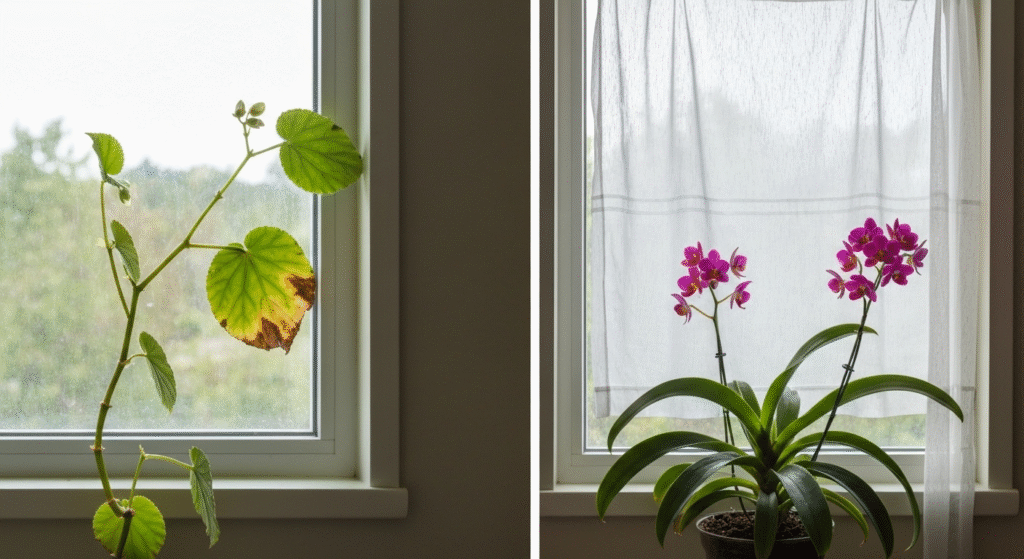
Even in a perfect east-facing window, problems can arise. Here are some common issues I’ve encountered and how to address them.
Problem: Leggy Growth
“Leggy” growth is when a plant’s stems become long and stretched out, with large gaps between the leaves. This is a classic sign that the plant is not getting enough light. While east windows are bright, they can be obstructed by trees, buildings, or even the eaves of your roof. If you see leggy growth, the solution is simple: move the plant to a brighter spot or supplement with a small grow light.
Problem: Sunburn or Scorched Leaves
Yes, even morning sun can sometimes be too much. If you see yellow or brown patches on the leaves that face the window, it could be sunburn. This is more common in the summer. The fix is to either move the plant a little farther from the window or hang a sheer curtain to diffuse the most intense morning rays.
Troubleshooting Guide
| Symptom | Possible Cause | Solution |
| Long, stretched stems | Not enough light intensity. | Move plant closer to the window or supplement with a grow light. |
| Brown or yellow spots on leaves | Sunburn from overly direct sun. | Move plant a foot or two back from the glass or use a sheer curtain. |
| No flowers | Insufficient light, incorrect watering, or lack of fertilizer. | Ensure plant is getting enough morning light; check watering schedule and fertilize during growing season. |
| Wilting despite moist soil | Overwatering leading to root rot. | Allow soil to dry out more between waterings; check for proper drainage. |
Frequently Asked Questions
Can I use a grow light to supplement my east-facing window?
Absolutely. In the winter, when daylight hours are short, a small full-spectrum grow light can provide a great boost. It can help encourage blooming and keep your plants compact and healthy.
Is an east-facing window good for succulents that flower?
Generally, no. Most common succulents and cacti that produce flowers (like Echeveria or Mammillaria) need several hours of intense, direct sun. An east-facing window is usually not bright enough, and you’d have better luck in a south or west-facing window.
How do I know if the morning sun is too direct for my plant?
The leaves will tell you. Look for signs of stress like faded color, crisping edges, or brown/yellow scorch marks. If the plant looks healthy and is growing well, the light is just right.
Do I still need to rotate plants in an east-facing window?
Yes, it’s always a good idea. Even with east light, plants will tend to grow towards their light source. Giving your plant a quarter turn every week or so will encourage even, upright growth instead of a permanent lean.
Conclusion
An east-facing window offers a unique and nurturing environment for a wonderful variety of flowering houseplants. It provides that ideal balance of energy and gentleness—enough sun to spark beautiful blooms without the harsh heat that can cause stress. By understanding the specific patterns of this light and choosing plants that are naturally suited to it, like a graceful Phalaenopsis Orchid or a cheerful African Violet, you can create a stunning and low-maintenance indoor garden. The key, as I’ve learned over the years, is to observe your plants and the light they receive. They will always show you exactly what they need to thrive.


Pingback: Best Potting Soil for Indoor Flowers: What Actually Works