
A flowering houseplant is a beautiful thing. But placing that vibrant orchid or colorful African violet in a standard plastic nursery pot is like framing a masterpiece in cardboard. The container you choose does more than just hold soil; it completes the picture. It can turn a simple plant into a stunning piece of decor that reflects your personal style. Many people want to move beyond the basic pot but aren’t sure where to start or how to do it without harming their plant.
My name is Kamil Khan. For years, I’ve been fascinated by the relationship between a plant and its vessel. It’s a journey that has taken me through countless garden centers, antique shops, and even my own kitchen cupboards in search of the perfect home for my indoor flowers. I’ve learned that the most beautiful container isn’t always the most expensive one, but the one that creates a perfect partnership with the plant it holds. My passion is sharing these discoveries, helping others see that with a little creativity, a container can elevate a flowering plant from something pretty to something truly special.
Why the Right Container Is a Game-Changer
Before we dive into creative ideas, let’s break down why the pot matters so much. It serves two main purposes: function and fashion. Functionally, it needs to provide the right environment for your plant’s roots—stable, with enough room to grow, and most importantly, with excellent drainage. A plant sitting in soggy soil is a recipe for root rot, the number one killer of houseplants.
Aesthetically, the container is a key part of your home decor. Its color, texture, and shape can complement the flowers, contrast with them beautifully, or create a cohesive look with your room’s style. The wrong pot can be distracting, making a gorgeous plant look out of place. The right one makes the plant feel intentional, like a curated piece of living art. It’s the difference between just having a plant and showcasing it.
Unconventional Ideas Beyond the Nursery Pot
The best containers are often hiding in plain sight. Moving beyond the garden aisle opens up a world of possibilities that add personality and charm to your plant displays. I’ve found some of my favorite planters in flea markets and thrift stores, proving that you don’t need to spend a lot to get a unique look.
Vintage Finds and Repurposed Treasures
There’s a special kind of charm that comes with giving an old item a new life. Vintage pieces tell a story and can add a touch of warmth and nostalgia to your home.
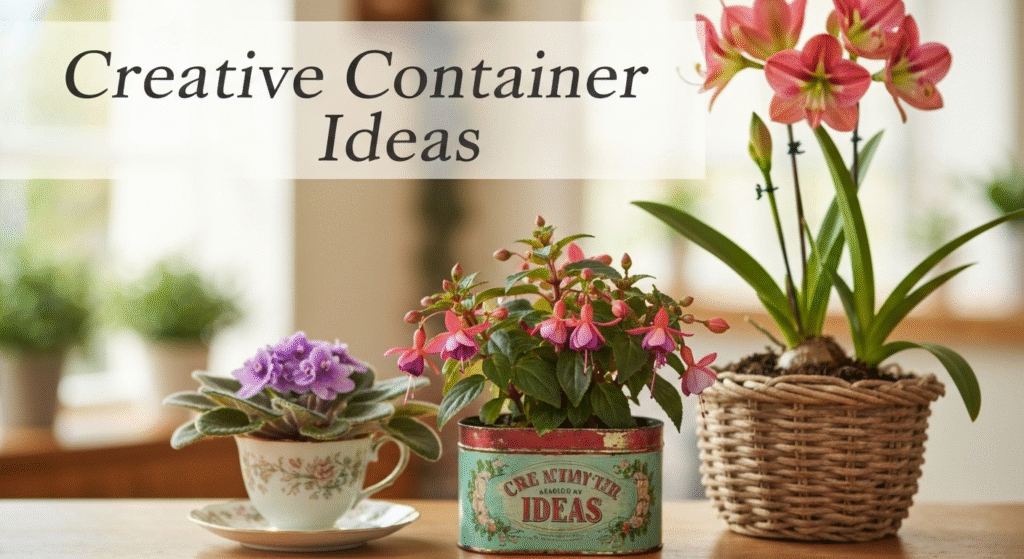
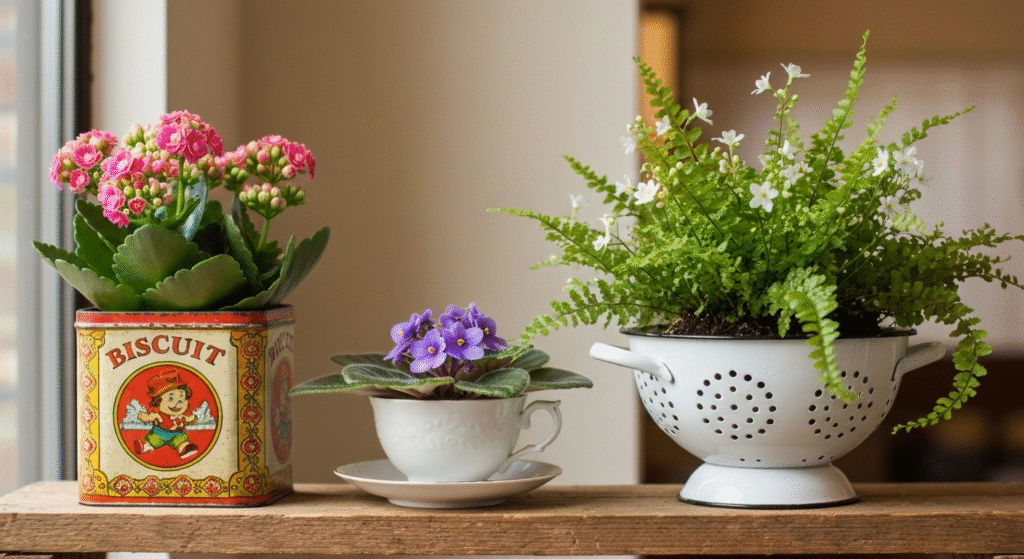
- Vintage Tins: Old tea, coffee, or biscuit tins are fantastic. Their colorful graphics and aged patina create a whimsical look that pairs wonderfully with cheerful flowers like kalanchoe or small begonias. I once found a beautiful old tea tin with a floral pattern that perfectly echoed the pink blooms of the Christmas cactus I planted in it.
- Ceramic Bowls and Teacups: Don’t discard that chipped soup bowl or that single teacup from a set you no longer use. These are perfect for small plants like African violets or cyclamen. A collection of different teacups, each holding a small flowering plant, can make an incredibly charming display on a windowsill.
- Old Colanders: Metal or enamel colanders already have a huge advantage: they come with pre-made drainage holes! Their rustic, farmhouse feel is perfect for a kitchen herb garden or a display of geraniums.
The key with any of these repurposed items is to address drainage. If an item doesn’t have holes, you have two simple options, which we’ll cover in detail shortly: either drill them yourself or use the item as a decorative cachepot.
Natural and Rustic Elements
Bringing natural textures indoors creates a calming, earthy atmosphere. These materials provide a beautiful, organic backdrop that allows the vibrant colors of flowering plants to truly pop.
- Woven Baskets: A simple basket can transform a plant, giving it a relaxed, bohemian feel. They are lightweight and come in countless shapes and sizes. I love using them for larger plants like peace lilies, as the soft texture of the basket contrasts beautifully with the plant’s glossy leaves and elegant white flowers. To use a basket, you must protect it from water. Simply place a plastic saucer in the bottom or keep the plant in its original plastic pot as a liner.
- Wooden Boxes and Crates: Small wooden crates or boxes add a rustic, farm-to-table vibe. You can leave the wood raw, stain it, or paint it to match your decor. They are sturdy and provide a handsome frame for a cluster of flowering plants. A few years ago, I planted three different colors of primrose in a small wine crate, and the result was a stunning, rustic centerpiece for my dining table.
- Terracotta Customization: Don’t underestimate the classic terracotta pot. It’s breathable, which is great for roots, but you can also give it a unique look. Try painting it, or for an aged, mossy look, mix yogurt or buttermilk with water and brush it onto the outside of the pot. Leave it in a shady spot, and in a few weeks, it will develop a beautiful, antique patina.
The Golden Rule: Getting Drainage Right
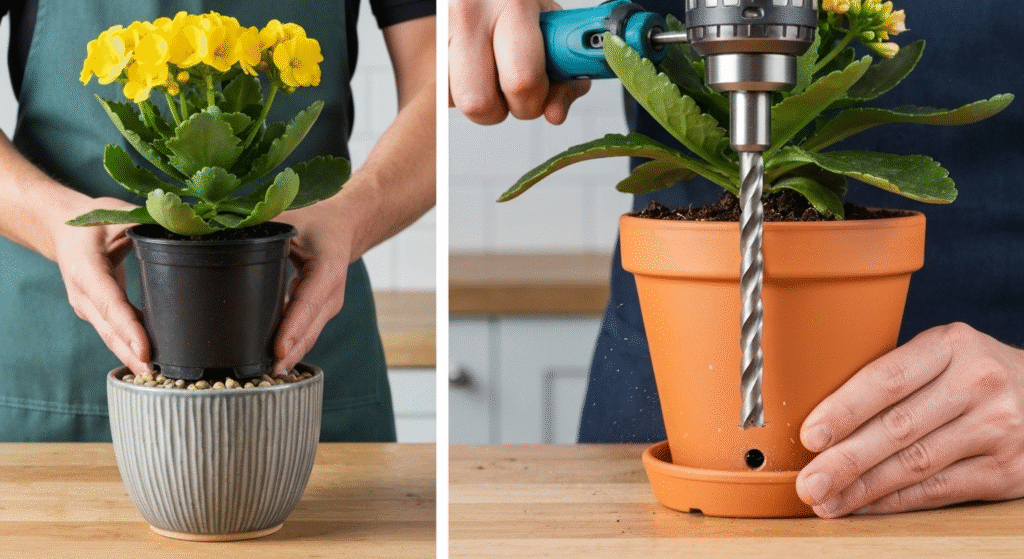
This is the most important part. No matter how beautiful a container is, it’s a death trap for your plant if water can’t escape. Roots need oxygen as much as they need water, and sitting in a puddle will suffocate them. Here are the two most reliable methods for ensuring your plant stays healthy in any container.
The Cachepot Method: Beauty Without the Drill
A cachepot (pronounced “cash-poe”) is simply a decorative outer container that hides the less attractive nursery pot inside. This is my go-to method for any container I don’t want to drill, like a valuable ceramic bowl or a woven basket.
Here’s how it works:
- Choose a decorative container that is slightly larger and taller than the plastic pot your plant is in.
- Place a few pebbles or a small plastic riser in the bottom of the cachepot. This creates a small gap to ensure the inner pot never sits in water.
- Simply slide the plant, still in its nursery pot, into the cachepot.
- When it’s time to water, remove the inner pot, take it to the sink, water it thoroughly, and let all the excess water drain out before placing it back in the cachepot.
| Pros of the Cachepot Method | Cons of the Cachepot Method |
| Protects furniture from water damage. | Requires an extra step during watering. |
| Allows you to use any container without drilling. | Can create a humid pocket if water accumulates. |
| Easy to switch out decorative pots seasonally. | The inner plastic pot may be visible from certain angles. |
| Prevents water from damaging delicate containers. |
How to Add Drainage Holes Like a Pro
For those who prefer to plant directly into their container, drilling a drainage hole is essential. It might sound intimidating, but with the right tool, it’s surprisingly easy. The tool you need depends on the material of the pot.
- For Ceramic, Glass, or Terracotta: You need a diamond-tipped drill bit. These are designed to grind through hard, brittle materials without cracking them. Start with a small bit and apply slow, steady pressure. It’s helpful to place a piece of masking tape on the spot you want to drill to prevent the bit from slipping. A little water on the surface can help reduce friction and dust.
- For Metal Tins or Wood Boxes: A standard high-speed steel drill bit will work perfectly. Drilling through these materials is much faster and easier. For metal, a center punch can create a small indent to guide the drill bit.
Once you have a hole (or a few, for larger containers), you can plant directly. Just remember to add a piece of screen or a coffee filter over the hole to prevent soil from washing out.
Matching the Container to the Plant’s Style
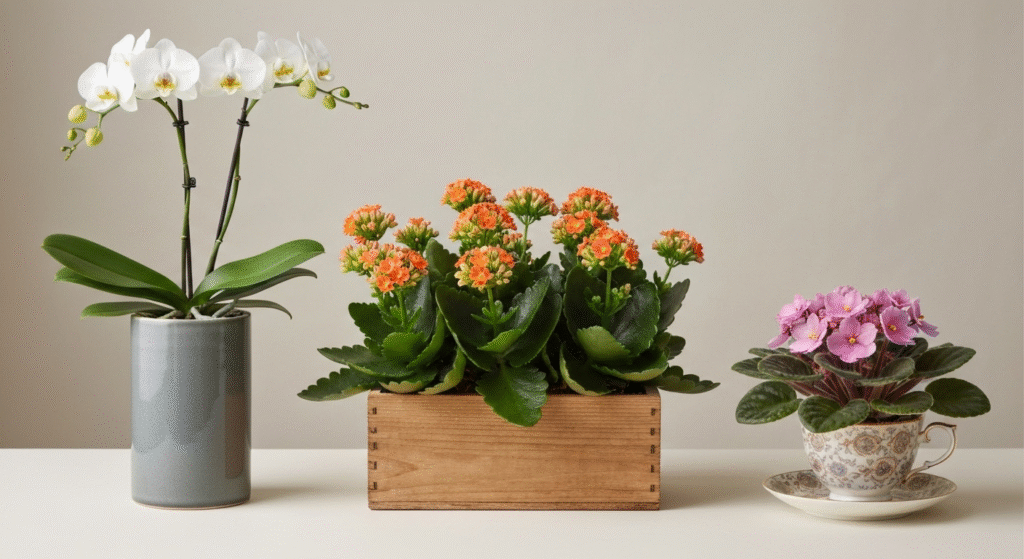
The final step in creating a perfect pairing is to consider the personality of the plant itself. A well-chosen container should complement the plant’s shape, size, and style, creating a harmonious and balanced look.
A Guide to Perfect Plant Pairings
Thinking about the plant’s natural form can guide you to the perfect container. A tall, dramatic plant needs a different pot than a low-growing, delicate one.
- For Delicate Flowers (e.g., African Violets, Begonias): These plants have fine leaves and intricate flowers that can be overwhelmed by a bulky pot. They shine in smaller, more detailed containers like vintage teacups, decorative ceramic bowls, or small, painted terracotta pots. The container should feel as delicate as the plant.
- For Tall, Sculptural Flowers (e.g., Orchids, Amaryllis): These plants make a strong vertical statement. They need a container with enough visual and physical weight to ground them. Simple, elegant ceramic cylinders in a solid color provide a clean backdrop that allows the exotic blooms of an orchid to take center stage. For a tall amaryllis stalk, a heavy pot is crucial to prevent it from tipping over once it blooms.
- For Trailing or Cascading Flowers (e.g., Christmas Cactus, String of Pearls): These plants are designed to spill over the sides of their container. The best way to show them off is in a hanging basket, a pot on a tall stand, or simply placed on the edge of a shelf. This allows their flowering stems to cascade freely, creating a beautiful waterfall of color.
| Plant Style | Recommended Container Type | Why It’s a Great Match |
| Elegant & Upright (Orchid, Peace Lily) | Tall, minimalist ceramic cylinder | Emphasizes the plant’s height and form without distraction. |
| Lush & Full (Kalanchoe, Cyclamen) | Wider bowl-shaped pot or a rustic wooden box | Accommodates the bushy growth and creates a full look. |
| Dainty & Small (African Violet) | Small teacup, decorative cachepot | The scale of the container matches the delicate nature of the plant. |
| Cascading & Trailing (Christmas Cactus) | Hanging basket, pot on a stand | Allows the trailing stems and flowers to be the main feature. |
Containers to Avoid: When Good Pots Go Bad
Not every container is a good candidate. Some can actively compete with your plant or create an unbalanced look. Based on my own trials and errors, here are a few things to watch out for.
- Overly Busy Patterns: If a container has a very loud, multi-colored pattern, it can visually clash with the flowers. The goal is to make the plant the star of the show. If you love a patterned pot, choose one with a simple color palette that picks up on one of the colors in the flower or foliage.
- Incorrect Proportions: A common mistake is putting a small plant in a massive pot. It looks lost and out of scale. Conversely, a large, top-heavy plant in a tiny pot is unstable and looks awkward. A good rule of thumb is to choose a pot that is 1-2 inches wider in diameter than the plant’s root ball.
- Problematic Materials: Be cautious with certain materials. Untreated metal containers can rust from the inside out. Very thin plastic pots can become brittle and crack in the sun. And while beautiful, containers made of highly porous, unglazed materials can wick moisture away from the soil very quickly, meaning you’ll have to water far more often.
Frequently Asked Questions
Can I just put rocks in the bottom of a pot for drainage?
This is a common myth, but it actually harms drainage. Instead of letting water escape, a layer of rocks creates a zone of stagnant, waterlogged soil at the bottom of the pot, which can lead directly to root rot. A drainage hole is always the best solution.
How do I know when it’s time to choose a bigger container?
It’s time to repot when the plant becomes “root-bound.” You can check this by gently sliding the plant out of its pot. If you see a dense mat of roots circling the bottom, it’s time for a new home. Choose a new pot that is just 1-2 inches larger in diameter.
Can I use a glass container for my flowering plant?
Glass containers can be tricky. They don’t have drainage, and the clear sides can encourage algae to grow on the soil when exposed to light. They are best used as cachepots or for specific plants like forcing paperwhite bulbs in water and stones.
Do I need a saucer under my pot?
Absolutely, especially if the pot has a drainage hole and is sitting on furniture. A saucer catches the excess water that drains out, protecting your surfaces from stains and damage. Choose one that complements the style of your pot.
Conclusion
Choosing a container for your flowering houseplant is an opportunity to be creative and express your personal style. It’s about looking beyond the functional and seeing the potential for beauty in everyday objects. Whether you opt for a rustic wooden box, a charming vintage tin, or a sleek ceramic pot, the right container can transform your plant into a true centerpiece.
The most important lesson I’ve learned is to always put the plant’s health first. As long as you ensure proper drainage—either with a hole or by using the cachepot method—you can safely experiment with almost any vessel you can imagine. So the next time you’re at a thrift store or cleaning out a cupboard, keep your eyes open. The perfect home for your next flowering plant might be waiting right there.