
Surprising fact: more than half of DIY attempts to root tropical stems in water end in rot or collapse, even for experienced plant parents.
Set expectations: you can expand your houseplant collection at home, but the “stick a cutting in water” trick that works for many plants often disappoints with this species.
This intro explains why cuttings fail, which methods fit the plant’s biology, and a dependable step-by-step division approach that gives each new plant real roots. The key point up front: division is the most dependable way to grow new plants because each division already has an established root system.
We’ll cover common failure causes—rot in water or soil, rootless shoots collapsing, and stress from low light or humidity—and give clear decision points like, “Does this shoot already have roots?”
If you want to expand a plant collection, free up an overgrown pot, or make giftable plants, this guide is for you. Friendly, practical, and honest: this plant can be picky, but the right methods make success much more likely.
Key Takeaways
- Division is the most reliable method to produce healthy new plants.
- Simple water rooting often fails due to rot or weak, rootless shoots.
- Watch for established roots before separating shoots.
- Low light and low humidity increase stress and failure risk.
- This guide helps hobbyists expand a home collection or split crowded pots.
Why Calathea Cuttings Fail So Often
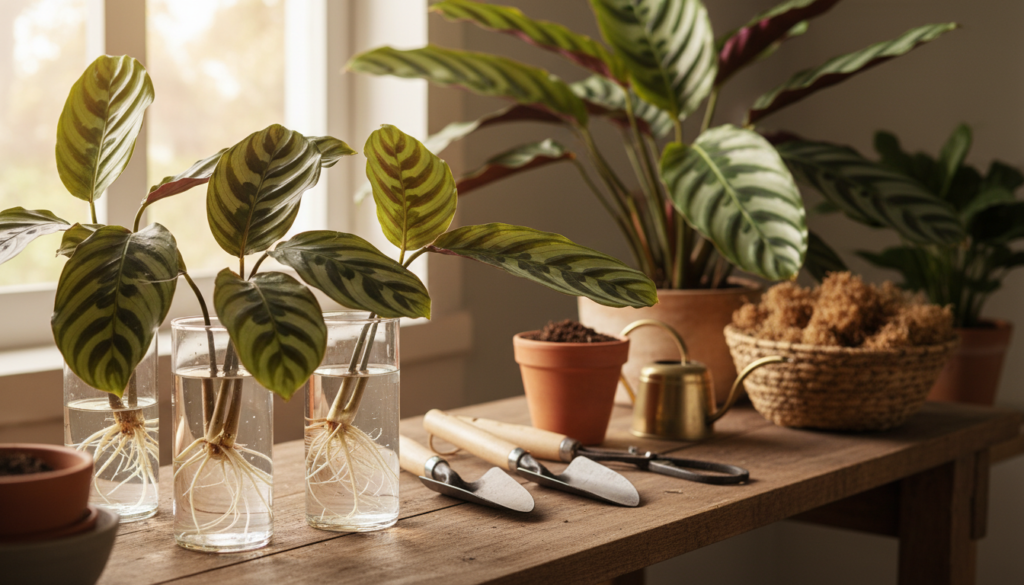
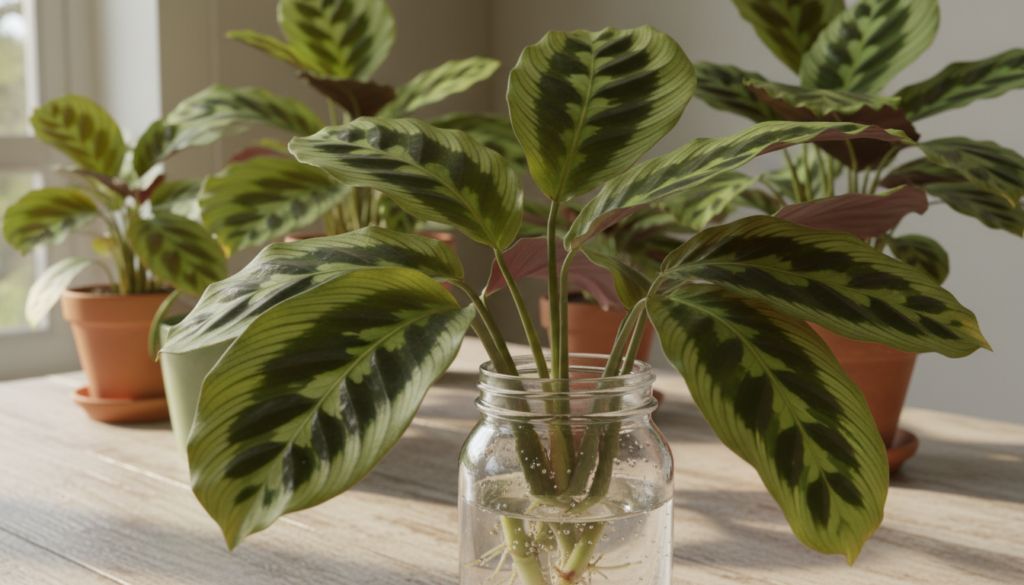
A neat stem in a glass of water looks hopeful, yet without an established root system most shoots will fail to thrive.
True divisions are sections with roots and stem clusters. A simple cutting is often just a leaf and a stem. That piece rarely builds a reliable root system like a division does.
What goes wrong
Without existing roots a cutting cannot take up steady moisture. Leaves curl, yellow, or collapse even if the water level seems fine.
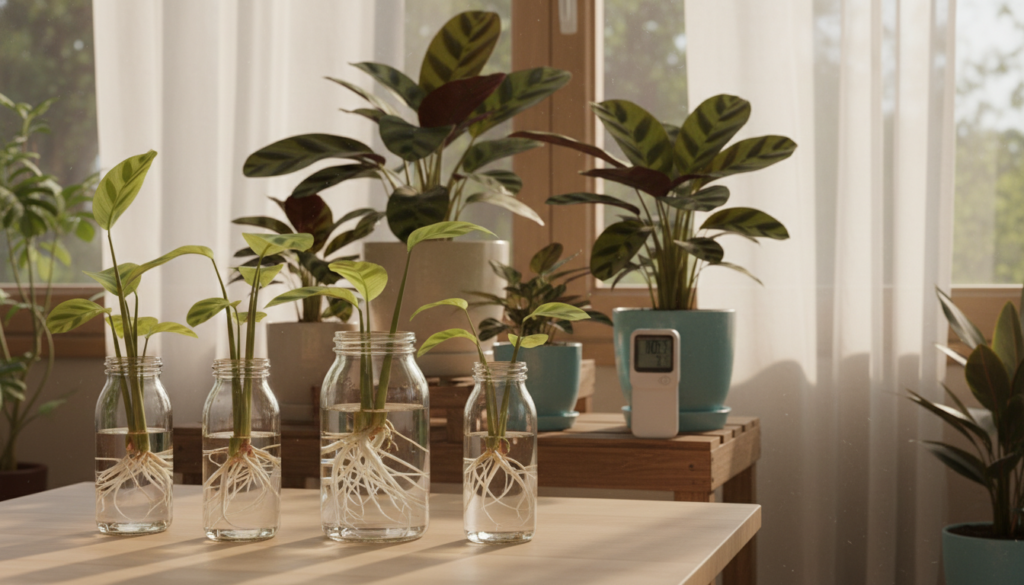
Water rooting can work for some varieties, but results vary. Treat water methods as experimental rather than guaranteed.
Common rot triggers
- In water: stagnant liquid, submerged leaf bases, dirty jars, and rare water changes cause mushy stems and odor.
- In soil: overwet potting soil, a pot without drainage, compacted mix, or planting too deep keep the base soggy.
- Tools: a dull or dirty knife spreads disease and damages tissue, raising failure odds.
Bad conditions — low humidity, cold drafts, or harsh sun — stress cuttings and reduce rooting chances. If you want a repeatable method, start with divisions that already have roots. For more on avoiding rot in containers and soil, see root rot prevention.
Calathea Propagation by Division: The Method That Actually Works
Splitting a crowded pot is the fastest way to create new, resilient houseplants with far less risk than water methods. Aim for early spring through early summer in the United States so divisions enter active growth and establish roots fast.
Readiness checklist: choose a healthy mother plant with multiple stem clusters or a rootbound pot. Gather clean pots with drainage, fresh potting soil, a sharp sterile knife, disinfectant, and a watering can with room-temperature water.
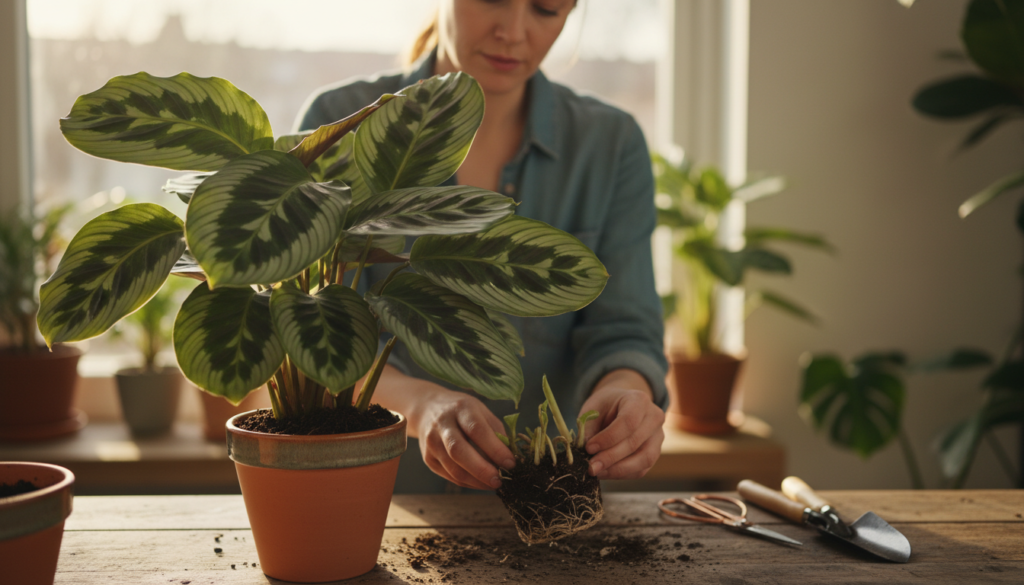
- Water the day before so the root ball holds together and slips free.
- Tip the plant out gently, support the base, and brush soil away to reveal natural clumps.
- Tease roots apart with fingers; only use a clean knife if roots are tightly fused.
- Trim damaged roots, then pot using the mound method: fill pot one-third, make a small mound, drape roots, backfill and firm gently.
- Water until it drains, avoid pooling, and optionally cover lightly with clear plastic until new growth appears.
“Division reduces shock because each section already has roots — it’s the single most dependable step to grow new plants at home.”
| Step | Why it matters | Tools | Timing |
|---|---|---|---|
| Prep (water day before) | Prevents root breakage and eases removal | Watering can | 1 day before |
| Find natural divisions | Ensures each piece has roots | Hands, brush | Spring–early summer |
| Use sterile cuts if needed | Reduces disease risk | Sharp knife, alcohol | Only when fused |
| Pot & water | Settles soil and prevents air pockets | Pots, potting soil | Immediately after division |
Aftercare for New Plants: Light, Water, and Conditions That Support Rooting
What you do in the weeks after splitting a pot matters more than the splitting itself. The goal is simple: reduce stress while roots re-establish and the plant balances water uptake.
Light guidance
Place new plants in bright, indirect light near an east or filtered south window. This supports growth without scorching leaves or drying the pot too fast.
Watering rhythm
Keep soil lightly moist, not soggy. Use the finger test and water when the top inch feels dry. Water slowly until a little runoff appears, then empty the saucer.
Humidity and temperature
Aim for warm, stable indoor conditions and higher humidity. Use a humidifier, group plants, or a temporary clear cover if home air is dry.
Early warning signs
Yellowing leaves often mean overwatering or root stress. Limp petioles can signal dehydration or damaged roots. A sour smell usually points to rot. If symptoms appear, adjust watering, move to better light, and check the roots.
Stability first: avoid fertilizing right after division and limit moving the pot for a few weeks.
| Aftercare Step | What to do | Why it matters | Quick fix |
|---|---|---|---|
| Light | Bright, indirect (east or filtered south) | Supports photosynthesis without stress | Move away from direct sun |
| Watering | Finger test; water when top inch dries | Prevents rot and dehydration | Water slowly, empty saucer |
| Humidity & Temp | Keep warm; raise humidity with humidifier/grouping | Mimics rainforest conditions for root growth | Cover briefly or use pebble tray |
| Monitoring | Watch leaves and smell; inspect roots if needed | Early detection prevents failure | Adjust water, soil, or pot promptly |
Conclusion
Division gives you baby plants with real roots, not hopeful stems that often wither.
When you want to propagate calathea, divide healthy stem clusters in spring for the smoothest recovery. This one clear step improves success because each new plant already has a root system.
High-level steps: prep the potting soil and water the parent the day before, separate natural clumps, use a sterile cut only if needed, pot into well-draining pots, and keep light and humidity steady.
Success looks like stable leaves, no ongoing yellowing, and new growth after a few weeks. If you try propagating calathea in water, treat it as variety-dependent and experimental rather than the go-to method.
With proper timing, clean tools, and consistent care, you can turn one mature plant into several healthy new plants without guesswork.