best soil mix for flowering houseplants

Best Soil Mix for Flowering Houseplants: Simple Recipes for Stronger Blooms

What this guide means at home: a practical medium that helps buds open without suffocating roots. In typical American homes with air conditioning or heating, lighter potting blends usually keep moisture and airflow balanced. That balance supports repeat blooms and steady growth.

We share simple, repeatable DIY recipes measured in parts, plus easy tweaks based on your watering habits and plant type. Expect mixes that favor drainage, root space, nutrients, and airflow so roots stay healthy and plants reward you with more blooms.

Key building blocks appear throughout: coco coir as a peat substitute, perlite or pumice, bark or orchid bark, worm castings, and a slow-release fertilizer. These ingredients help form a forgiving system that works under low-to-moderate humidity and typical containers.

Your win: steadier growth, stronger blooms, and fewer root issues because the medium manages water and air at the same time. Recipes aim to be easy to use and forgiving, while you still pay attention to light and timely feeding.

Table of Contents

Key Takeaways

  • Light, airy mixes often suit indoor flowering houseplants better than heavy, compacted soil.
  • Recipes use measurable “parts” and let you tailor mixes to watering habits.
  • Main components: coco coir, perlite/pumice, bark, worm castings, and slow-release feed.
  • Good structure plus consistent light and water equals stronger blooms.
  • Guidance fits common indoor conditions and typical pots used in U.S. homes.

What “Best” Means for Flowering Houseplants: Drainage, Air, and Nutrients

A flowering plant’s success often comes down to how well its container lets water pass and roots breathe.
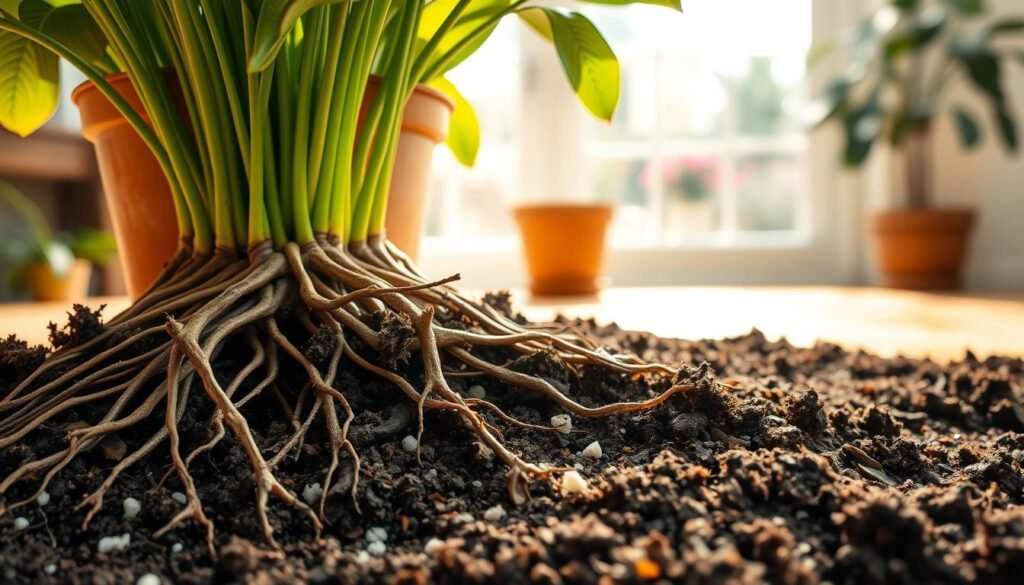
A close-up view of a healthy houseplant's roots in well-draining soil, showcasing a blend of perlite, peat moss, and coconut coir to highlight drainage properties. The foreground features the intricate root system splayed out in rich, dark brown soil, with small white perlite granules visible. In the middle ground, the plant itself is vibrant and lush, with bright green leaves, standing tall in a terracotta pot. The background is softly blurred, depicting a bright, sunlit room with a hint of window greenery for context. The lighting is warm and inviting, resembling a sunny afternoon, evoking an atmosphere of growth and vitality. The composition should emphasize the importance of drainage and air in nurturing flowering houseplants, creating a harmonious blend of nature and care.

Why heavy, poorly draining soil causes problems

Dense, heavy soil can form a near-solid wet mass in pots. That trapped water squeezes out air and stresses roots.

Root rot follows when oxygen is scarce; plants stop investing energy in blooms and focus on survival.

What a high-performing indoor potting medium should provide

Aim for four things: fast enough drainage, roomy pore space for root growth, steady nutrients, and airflow through the root zone.

“When roots get oxygen, plants use energy to flower instead of to recover.”

Balancing moisture retention vs. drainage

Particle size creates air channels. Perlite, pumice, or bark pieces keep channels open longer than fine material alone.

Frequent waterers benefit from airier media. Forgetful plant parents need more moisture-holding material. Also note: peat can go hydrophobic when dry and repel water, while coco re-wets more easily.

  • Rule of thumb: choose a medium that dries at the same pace your watering habits and the plant’s needs require.
  • Strong bloom cycles want steady moisture (not soggy soil) plus regular nutrient top-ups.

Potting Soil vs. Potting Mix: Choosing the Right Base for Indoor Plants

Start by checking labels: does the package list potting soil or mostly soilless ingredients like coconut coir and perlite? That quick check tells you whether the product is heavy or light in texture.
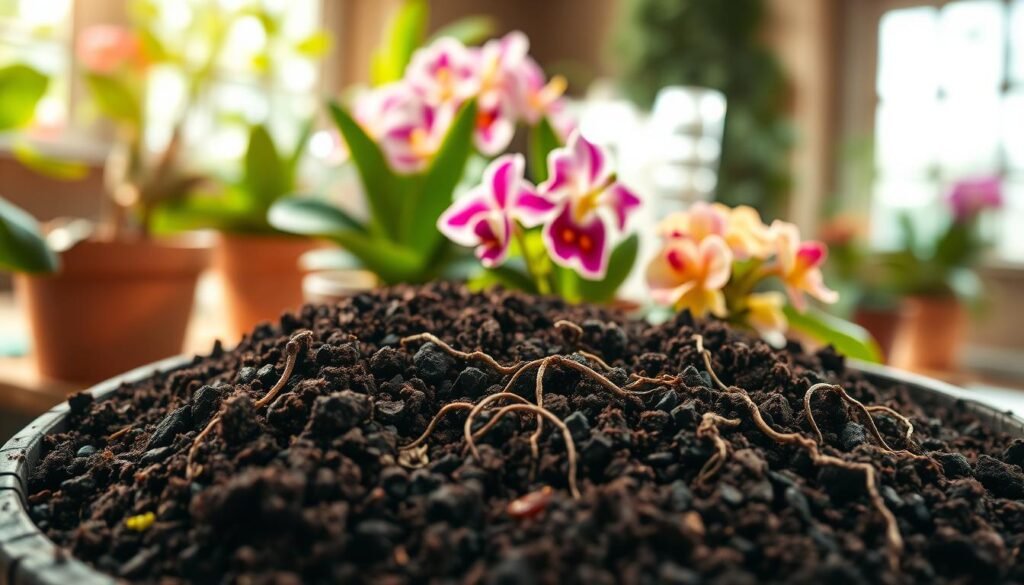
A rich, dark potting mix fills a rustic wooden pot, showcasing a blend of organic materials like peat moss, perlite, and compost. The foreground features glistening earth with small, healthy roots gently intertwined, emphasizing the nurturing aspect of soil. In the middle ground, a variety of vibrant flowering houseplants such as orchids and geraniums are positioned artistically, their colorful petals contrasting beautifully against the rich brown soil. In the background, softly blurred greenery and natural light streaming through a window create a serene indoor gardening atmosphere. The lighting is warm and inviting, enhancing textures and colors, with a shallow depth of field to keep the focus on the potting mix and plants. The overall mood conveys a sense of growth and vitality, perfect for nurturing indoor blooms.

How they differ and why lighter blends suit indoor plants

True potting soil often contains garden loam, sand, and compost. That makes it denser and slower to drain.

By contrast, a potting mix usually relies on coir, perlite, or bark. Those components keep air in the root zone and cut down on overwatering risk in indoor settings.

When an all-purpose indoor product is enough — and when to tweak

An all-purpose indoor potting mix can be the right soil for many common flowering and leafy indoor plants in small-to-medium pots with drainage holes.

Customize when a plant is prone to rot, lives in low light or cold rooms, sits in an oversized pot, or is a specialty type like orchids or succulents.

  • Start simple: buy a reliable base, then add one amendment at a time (perlite, bark, or worm castings).
  • Read labels: look for coir, perlite/pumice, bark, and slow-release fertilizer as positives.
Feature Potting Soil Potting Mix
Typical components Loam, sand, compost Coir, perlite, bark
Drainage Slower Faster
Best use Outdoor pots, garden beds Indoor plants, containers

Next: small upgrades like perlite, pumice, or castings can boost bloom performance without a full rebuild of your potting media.

Ingredients That Upgrade Potting Mixes for More Flowers

A few targeted ingredients change how water, air, and nutrients behave around roots.
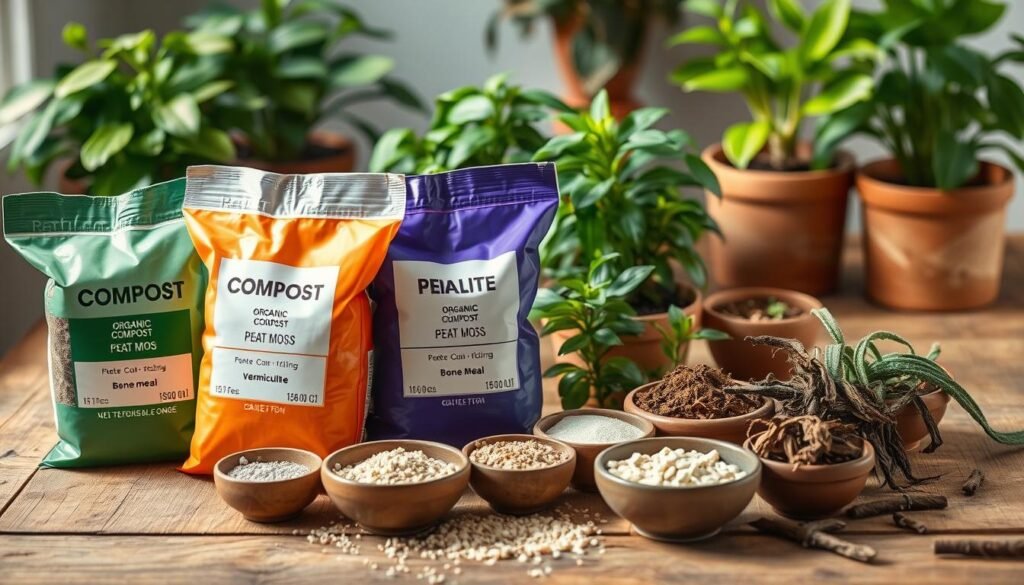
A picturesque display of essential ingredients for upgrading potting mixes, arranged artfully on a rustic wooden table. In the foreground, vibrant bags of organic compost, perlite, and peat moss are neatly labeled and open, revealing their textured contents. Next to them, small bowls filled with vermiculite, bone meal, and dried seaweed are artistically scattered, showcasing their natural colors and textures. In the background, a soft-focus of green houseplants in various pots adds a calming, natural ambiance. Soft, warm lighting bathes the scene, enhancing the earthy tones while casting gentle shadows. The mood is nurturing and inviting, capturing the essence of gardening and the promise of vibrant blooms. Shot from a slightly elevated angle to encompass the entire arrangement harmoniously.

Drainage and aeration boosters

Perlite and pumice open channels so roots get air and water drains fast. Perlite is lightweight but dusty; pumice is chunkier and holds shape longer.

Coarse sand adds weight and can also improve drainage when used sparingly.

Moisture-holding foundations

Coco coir is a practical peat alternative. It rewets easily and holds steady moisture without becoming hydrophobic like peat moss.

Chunky structure for root airflow

Bark chips, coco chips, and orchid bark keep mixes open so fine particles don’t compact around roots over time.

Natural nutrition and biology

Worm castings supply gentle nutrients and improve structure. Mycorrhizae boost root uptake and can cut fungus gnat issues.

Slow-release fertilizer gives steady feeding in containers, but top dressings and occasional liquid feed still help.

Optional amendments

Clay pebbles help large pots avoid a wet center. Charcoal aids drainage in terrariums. Vermiculite adds extra moisture retention for ferns and similar plants.

Best soil mix for flowering houseplants: Easy DIY Recipes for Stronger Blooms

Use three easy recipes that keep roots airy, fed, and ready to bloom.

Balanced bloom-friendly houseplant recipe

Base: 3 parts quality potting mix, 1 part perlite or pumice, 1 part chunky bark, 1/2 part worm castings.

This blend suits many common indoor plants. It holds enough moisture, drains well, and gives slow-release nutrients.

Moisture-smart recipe for African violets and similar bloomers

Combine 2 parts potting mix, 1 part coco coir, 1 part perlite, and a splash (1/4 part) vermiculite.

This keeps the root zone evenly damp but not waterlogged—ideal for species that hate soggy roots.

Fast-draining recipe for flowering cactus and succulents

Use 2 parts perlite/pumice, 1 part coarse sand, 1 part aged bark, and a light dusting of worm castings as a top dressing.

High mineral content speeds drying and reduces rot risk while still supplying gentle nutrients.

Scaling, texture checks, and long-term care

Parts explained: a “part” can be any container—cup, scoop, or bucket—so long as ratios stay the same.

Texture checkpoint: finished medium should feel light and springy and look visibly chunky. If too fine, add more bark or perlite.

“Repot and refresh every 1–2 years; add fresh bark and a top-dress of worm castings to restore airflow.”

Fertilizer note: even if a potting mix contains feed, reapply a balanced fertilizer every 3–6 months depending on growth and product directions.

Recipe Key components When to use
Balanced houseplant Potting mix, perlite/pumice, bark, worm castings General indoor plants in medium pots
Moisture-smart (AV) Potting mix, coco coir, perlite, vermiculite African violets and moisture-sensitive bloomers
Fast-drain Perlite/pumice, coarse sand, bark, top-dress castings Cactus, succulents, and quick-drying needs

Tailoring the Mix to Plant Type, Pot, and Your Watering Style

Your plant’s habits and pot size should guide how airy or moisture-retentive the growing medium must be.
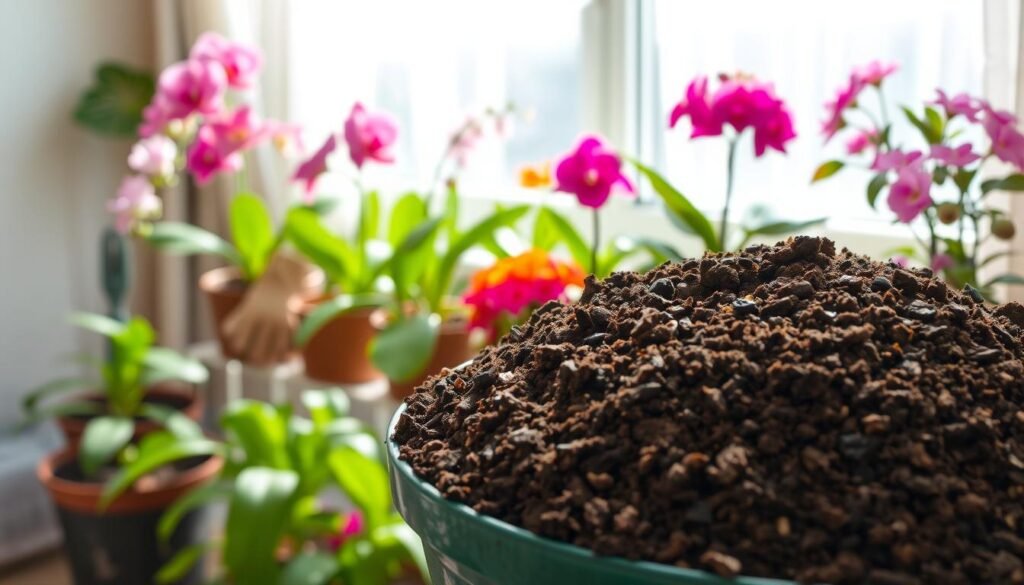
A vibrant and inviting scene showcasing a tailored soil mix for flowering houseplants. In the foreground, a large pot filled with rich, well-layered soil — dark, earthy tones mixed with lighter organic components like perlite and coconut coir, creating a visually appealing texture. In the middle, a variety of flowering houseplants, such as bright orchids and colorful geraniums, thriving in their pots, surrounded by gardening tools like a trowel and gloves. In the background, a sunlit window with sheer curtains casts soft, natural light over the scene, enhancing the lush greenery. The atmosphere is lively and nurturing, evoking a sense of care and meticulousness in plant care, reflecting a harmonious blend of nature and cultivation.

Tropical and tropical-flowering plants

Give tropical types a sandier, mineral-rich base to speed drainage and keep roots active.

Add small amounts of crushed lava rock, coarse sand, or coconut husks to increase air channels. This helps roots spread without staying soggy.

Orchids and epiphytes

Orchid bark or chunky cassava bark beats traditional potting soil because it maximizes airflow around aerial roots.

Use bark, charcoal, and orchid bark blends so the medium mimics natural epiphytic conditions and avoids long wet periods.

Container and environment factors

Drainage holes, pot material, and size change dry-down time. Oversized pots can trap a wet core and invite root rot.

For large containers, layer clay pebbles or chunky bark near the base to hold structure and prevent a constantly wet mass.

Signs your current medium needs adjusting

  • Surface compaction and slow water entry
  • Water runs straight through—hydrophobic patches
  • Fungus gnat flare-ups or slow growth despite light

“Fix surface compaction by top-dressing with bark or by switching to a gentler watering technique before repotting.”

Issue Quick fix When to repot
Compacted surface Top-dress with chunky bark and aerate gently Next season or when roots crowd pot
Hydrophobic patches Soak slowly, add coco coir or vermiculite If water still drains too fast
Constant wet core Add clay pebbles or reduce pot size Repot immediately if roots smell rotten

Conclusion

A light, airy potting foundation makes watering easier and helps plants use nutrients well.

Focus on three things: drainage, airflow, and steady nutrients. Start with a quality potting soil or potting mix base, then add perlite/pumice, bark chips, or coco coir to tune structure. These simple ingredients keep roots healthy and reduce common overwatering issues like root rot.

Think of the growing medium as an engineering step: better structure makes it harder to overwater and simpler to keep moisture consistent. Keep a light maintenance routine—refresh the top layer, add worm castings, and reapply fertilizer every 3–6 months—to support repeat blooms.

If a plant won’t bloom, try a small tweak—more air, faster drainage, or fresh nutrients—before starting over. Use the recipes here as templates and adjust ratios to fit your home and each plant’s needs.

FAQ

What does “best” mean when choosing a potting medium for flowering indoor plants?

“Best” means a balance of fast drainage, good aeration around roots, and steady nutrient availability. A high-performing medium moves excess water away so roots get air, holds enough moisture for the plant’s needs, and includes or accepts regular feeding through fertilizer or organic amendments like worm castings.

How does heavy, poorly draining potting soil cause root rot and weak blooms?

When a substrate stays waterlogged, roots suffocate and beneficial microbes decline. That invites root rot fungi and stops flowers from forming. Lighter components such as perlite, pumice, or bark improve air pockets and prevent the wet, compacted conditions that lead to decay.

What should a high-performing indoor potting medium provide?

It should provide quick water flow through the mix, consistent aeration around the root mass, ample room for roots to grow, and a way to supply nutrients—either built in (slow-release fertilizer) or via regular feeding. The right texture keeps plants healthy and encourages stronger flowering.

How do I match moisture retention versus drainage to my plant’s water habits?

If you tend to water frequently or your plant prefers damp conditions, choose a mix with more coco coir or vermiculite for moisture. If you water less often or the species hates soggy roots, use more coarse sand, pumice, or orchid bark to speed drainage. Match the substrate to both plant type and your routine.

What’s the difference between potting soil and potting mix for indoor plants?

Potting soil often contains heavier garden soil and can compact. Potting mix is lighter and made from components like coir, peat, perlite, and bark. For most indoor flowering plants, lighter mixes give better root oxygenation and reduce rot risk.

When is an all-purpose indoor potting soil adequate, and when should I customize it?

Use an all-purpose mix for common houseplants with average water needs. Customize when species have special needs—African violets, orchids, and succulents all prefer specific textures or bark-based media to avoid soggy conditions and promote blooms.

Which drainage and aeration boosters work best: pumice, perlite, or coarse sand?

Perlite and pumice are lightweight and boost aeration without adding much weight. Pumice holds a bit more moisture than perlite and lasts longer. Coarse sand increases density and drainage but can compact over time. Choose based on desired weight and longevity.

Is coco coir a good alternative to peat moss for holding moisture?

Yes. Coco coir holds moisture while improving aeration and is more sustainable than peat. It also resists compaction and can be blended with coarse materials to balance moisture and drainage for flowering plants.

When should I use chunky components like bark chips or orchid bark?

Use chunky pieces for plants that need excellent airflow around roots—orchids, epiphytes, and some tropical bloomers. Bark chips keep big air pockets and prevent the potting medium from becoming a dense, wet mass.

What natural nutrition and biology should I add to support blooms?

Add small amounts of worm castings or a slow-release fertilizer to provide steady nutrients. Beneficial mycorrhizal inoculants can improve root nutrient uptake. Apply these sparingly and reapply or topdress every few months during the growing season.

Are clay pebbles, charcoal, or vermiculite useful in mixes?

They can be. Clay pebbles help drainage in bottom layers or semi-hydro setups. Horticultural charcoal reduces odors and toxins in some cases. Vermiculite increases moisture retention—use it when you need more water-holding capacity without compaction.

What is a balanced recipe that suits most flowering indoor plants?

A typical blend uses equal parts coco coir (or peat alternative), quality potting mix, and a drainage ingredient like perlite or pumice. Add a small portion of worm castings and a slow-release fertilizer to support blooms. Adjust proportions to match the plant’s needs.

How should I adjust a mix for African violets and other plants that dislike soggy roots?

Use a lighter, airy medium: more perlite or vermiculite, fine-grade coconut coir, and a little worm castings for nutrition. Keep the particle size fine but well-draining and avoid heavy garden soils that retain too much water.

What recipe works for flowering cacti and succulents?

Use a fast-draining blend with a large share of pumice, coarse sand, or grit plus a small portion of organic matter like coco coir. The goal is minimal moisture retention while still supplying occasional nutrients for blooms.

How do I scale recipes using “parts” while keeping texture consistent?

Use the same container to measure parts—one cup equals one part. Keep particle sizes and ingredient proportions steady when multiplying. Test a small batch before large-scale mixing to confirm drainage and moisture behavior.

When should I refresh nutrients in potted bloomers?

Topdress with worm castings or apply a balanced liquid fertilizer every 6–12 weeks during active growth. For slow-release pellets, follow the product schedule—typically every 3–6 months depending on label instructions.

How do I tailor mixes for tropical-flowering houseplants?

Add chunkier aeration components—coarse perlite, pumice, or small bark—to encourage root spread. Include modest organic matter for steady nutrients and choose a water-retentive but airy base like coco coir to match tropical humidity and watering habits.

When should I use a bark-based mix for orchids and epiphytes?

Use bark-based media when plants naturally grow on trees and need open airflow around roots. Bark keeps roots exposed to air and drains rapidly, which is ideal for many orchids and epiphytic bloomers.

How do pot size and drainage holes affect my choice of medium?

Larger pots hold more moisture and can mask poor drainage; choose a freer-draining mix in big containers. Always use pots with drainage holes and consider a bottom layer of chunky material to prevent the soil from staying waterlogged.

What signs show my current potting mix needs changing?

Signs include compacted, hard layers, soil that repels water (hydrophobic), persistent fungus gnat problems, slow growth, or repeated root rot. If roots circle densely or the mix breaks down into fine, soggy material, repot into a fresh, airier blend.

How can I prevent root rot while keeping plants well fed?

Improve drainage and aeration, avoid overwatering, and use a balanced feeding plan. Use a light, coarse amendment and limit heavy, moisture-retaining components near the pot base. Regularly check roots when repotting and remove any rotten tissue.

Can I reuse potting mix, and how should I refresh it?

Reuse only after sterilizing and refreshing structure and nutrients. Remove decomposed material, add fresh coir or compost, mix in pumice or perlite, and topdress with castings or slow-release fertilizer. Reused mix often needs extra aeration and feeding.

Comments

No comments yet. Why don’t you start the discussion?

Leave a Reply

Your email address will not be published. Required fields are marked *