
There’s no single “how often” answer. Frequency depends on species, light, pot size and material, soil mix, temperature, humidity, root ball size, and season. Beginners often water too often and cause root rot by cutting off oxygen.
This guide shows how to build a flexible plan that fits your home in the United States. You’ll learn why two identical pots can need different care and how to judge needs without copying a generic routine.
We’ll cover common house plants by type — peace lilies, orchids, bromeliads, drought-tolerant bloomers, and moisture-loving varieties — and give a simple process: check soil, read plant signals, adjust for light/pot/season, then track results.
Practical tests and cues matter: finger test, moisture meter for deep pots, droop, leaf changes, and soil pull-away. You’ll also get clear tips on top vs bottom water methods, water quality and temperature, and tidy setups to make care easy.
Key Takeaways
- There’s no one-size-fits-all schedule; tailor care to species and home conditions.
- Use simple tests (finger test, moisture meter) and observe plant signals first.
- Adjust for light, pot, soil, and season rather than following a fixed interval.
- Learn both top and bottom methods and note water temperature and quality.
- Track results to avoid overwatering and encourage healthy growth and blooms.
Why indoor flowering plants need water and what “enough” really means
Water is the quiet engine behind every bloom and every new leaf. About 80–95% of a living plant is water, and that moisture powers photosynthesis and moves nutrients from the soil into stems and leaves.
How water fuels growth and moves nutrients
Through transpiration, moisture travels from roots up to shoots. This flow pulls dissolved minerals along and keeps cells turgid so leaves stay firm and buds can open.
What happens when soil stays too wet
When mix stays saturated, roots lose access to oxygen. That stresses tissues and invites root rot and fungus gnats. Too much water kills more often than you think.
What happens when soil dries out too far
If the mix dries, fine roots collapse, leaves droop, and growth stalls. A plant may perk up after a soak, but repeated drying damages new root tips and slows flowering.
| Problem | Signs | Quick fix |
|---|---|---|
| Overly wet mix | Yellowing leaves, musty soil, gnats | Improve drainage, let soil dry to finger depth |
| Too dry mix | Drooping, brown leaf edges, slow growth | Deep soak, then maintain even moisture |
| Confusing wilt | Soft or limp leaves in both cases | Check soil feel and weight before acting |
Consistent moisture at the roots with good air balance is what “enough” means. Use simple checks — soil touch and plant feel — to guide better plant care.
Stop guessing: how to tell when your plant needs watering
Before you water, confirm the need with quick checks. These steps prevent overdoing it and keep roots healthy.
Do the finger test to check below the soil surface
Push a finger 1–2 inches into the mix, not just the top soil. If it feels cool and damp, wait. If it feels dry to the touch where roots sit, it’s time to water.
When a moisture meter helps, especially for larger plants and deep pots
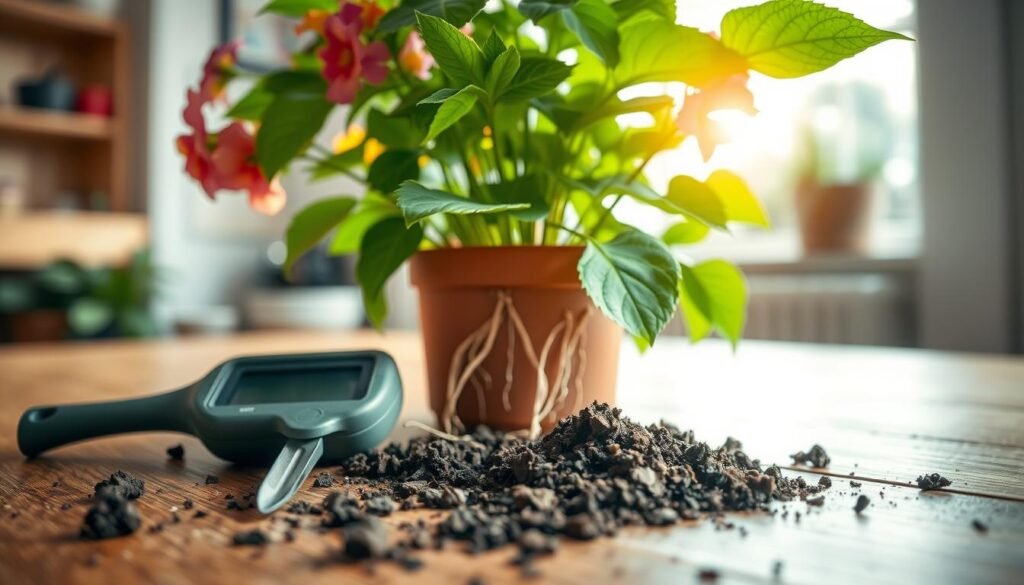
For larger plants and deep pots, the finger test can miss the root zone. A meter reads moisture at depth and takes the guesswork out of care. Insert it near the root ball and read the level before treating the plant.
Reading plant signals without confusing wilting causes
Wilting plus dry mix usually means thirst. Wilting plus soggy mix points to overwatering stress. Look for pale, yellow leaves and soft soil for too much water, or wrinkled leaves and pull-away soil for too little.
Simple rule: if soil is damp below the surface, wait; if roots sit in dry mix, water thoroughly. Treat your calendar as a starting point—water by need, not by date.
Key factors that change watering frequency in your home
Your home’s light, pot material, and air can make identical species call for very different care. Small shifts in placement or temperature change how fast the soil loses moisture.
Light exposure and placement
More light raises photosynthesis and evaporation, so plants in bright windows need water more often. In low light, growth slows and the mix dries slower—even if the top looks fine.
Pot size, drainage, and material
Smaller pots dry faster than large ones. Always use pots with drainage holes to prevent water pooling and root rot. Terra cotta and unglazed clay breathe, so they speed soil drying compared with plastic or glazed ceramic.
Soil mix, top-dress, and texture
Chunky mixes with bark or lava rock drain and dry faster than heavy potting soil. Top-dressing with moss or rocks slows surface evaporation and can hide how wet the root zone really is.
Temperature, humidity, season, and roots
Warm rooms and vents dry soil faster; higher humidity slows it. Over the year, seasonal light and heat shifts change needs. A tight root ball size in a pot can wick moisture quickly, so potbound plants often need water more often.
Indoor flowering plants watering schedule: how to build yours
Start by grouping your collection into care types so you can water by need, not by habit. This makes plant care simple and cuts down on mistakes.
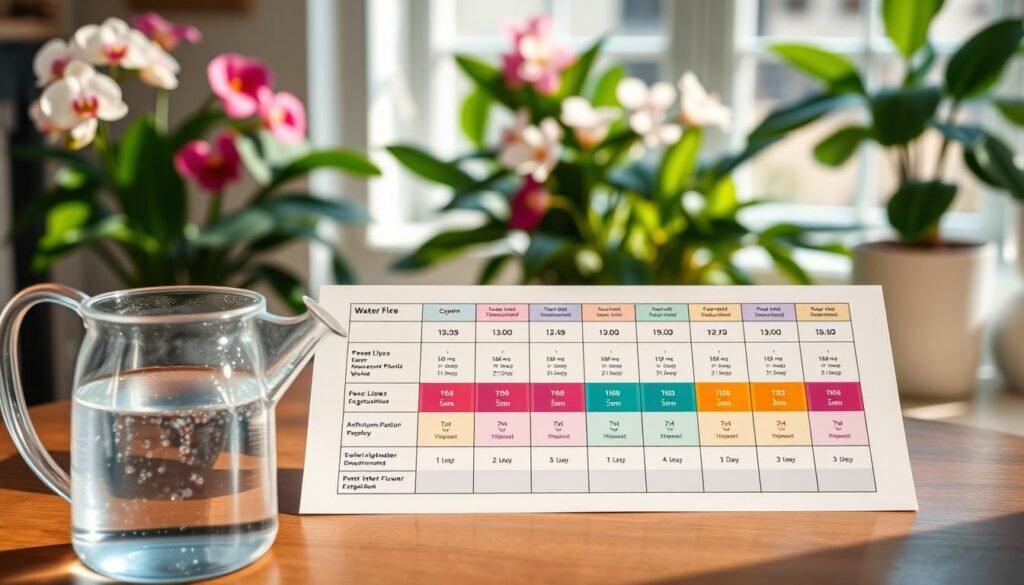
Group by type and moisture need
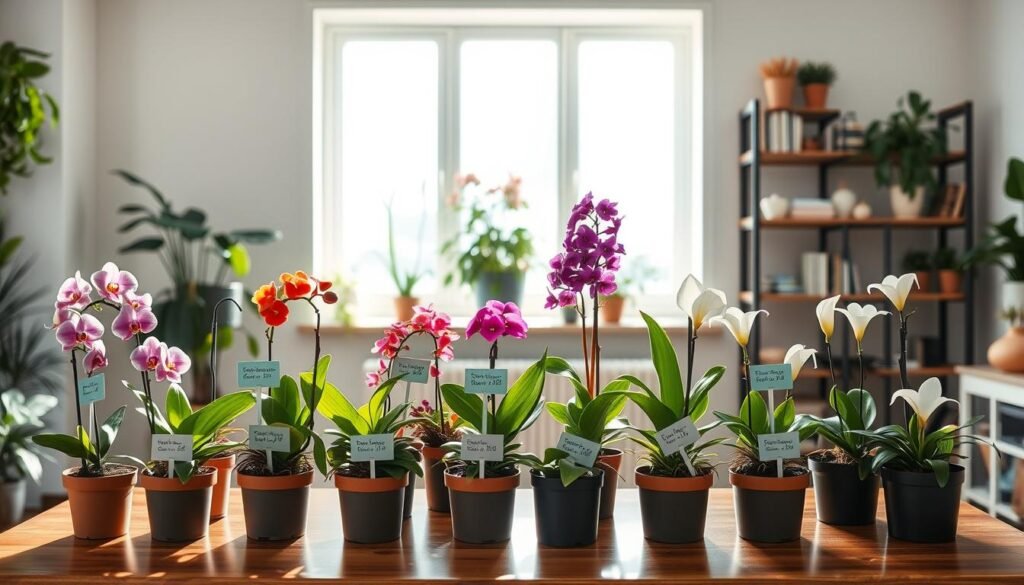
Sort items into three groups: drought-tolerant, moderate, and consistently moist. Label pots with one-word tags so housemates know how to help.
Pick a starting frequency, then let soil feels guide you
Choose an initial interval based on type and light in the room. After the first water, use the finger or meter check to adjust timing.
Track and set flexible reminders
Write dates, how much you applied, whether water drained, and quick notes about leaf or bud changes. Use a calendar, notebook, or app.
Practical routine:
- Group by type.
- Assign a starting frequency.
- Check soil feels before each session.
- Record results and adjust time between waters.
| Group | Starting frequency | What to record |
|---|---|---|
| Drought-tolerant | Every 2–4 weeks | Date, soak depth, drainage, leaf plumpness |
| Moderate | Every 1–2 weeks | Date, surface and root-zone feel, any yellowing |
| Consistently moist | Every 3–7 days (check first) | Date, moisture meter reading, new buds or droop |
Tip: Set “check moisture” reminders instead of rigid water dates. That way you make sure each pot gets the right care by time, not habit.
Flowering houseplants: how often to water by plant type
Start with type-based intervals, then check the soil to fine-tune timing. This shortcut gives a helpful baseline before you use tests like the finger check or a moisture meter.
Peace lily rhythm and how to avoid bone-dry droop
Peace lilies in many homes do well with about one soak per week. They show a dramatic droop when the mix goes bone dry, yet they often recover after a good soak.
Technique: water evenly around the pot so the whole root ball rehydrates, then let excess drain. Avoid letting roots sit in standing water or letting the mix stay completely dry repeatedly.
Orchid cadence by variety
Orchid media (bark or mix) dries much faster than standard soil, so timing depends on type.
Phalaenopsis commonly needs water every 4–5 days in typical home light. Drought-tolerant orchids such as cattleyas, oncidiums, and dendrobiums often go about a week between soaks. Always adjust for light, temperature, and pot size.
Bromeliads and a different approach
Bromeliads are not watered like typical pots. Many species take water into a central cup while the potting mix stays fairly open and airy.
Care tip: keep the cup partly filled, flush it occasionally to avoid stagnation, and ensure good airflow so leaves and roots stay healthy.
Quick troubleshooting signals:
- Limp leaves + dry medium = too little water.
- Blackened or mushy areas + persistent wetness = too much water.
- Slow growth or faded blooms = adjust light, pot, or moisture levels.
Succulents and drought-tolerant bloomers that prefer dry soil
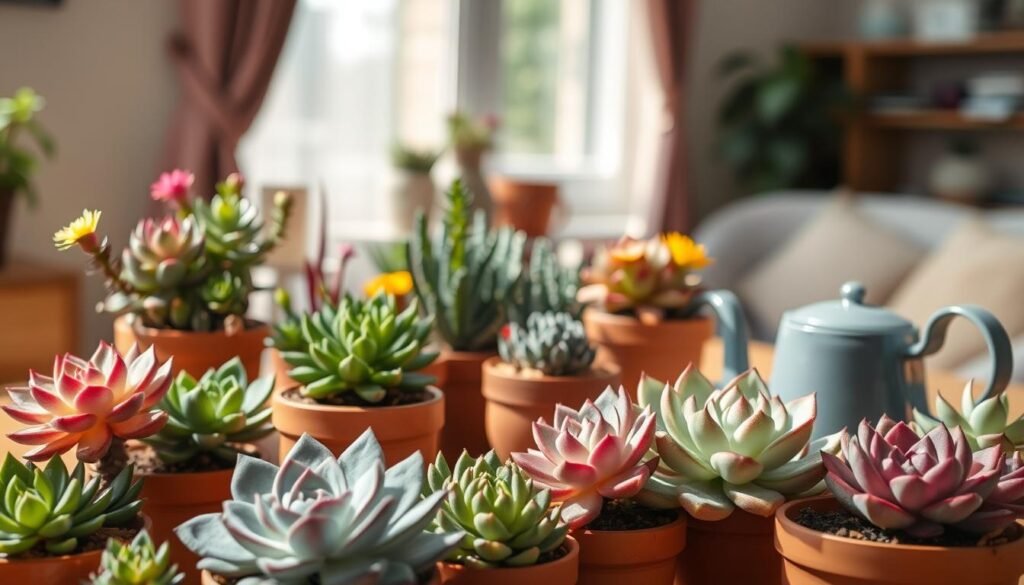
Many drought-tolerant bloomers thrive by drying out completely between soaks rather than following a calendar.
What this group means: these are species that store moisture in leaves or stems and do best with a true dry-down between waterings. They tolerate being without water longer than most house collections.
When to water and why “soil dry” matters more than time
Core rule: check the root zone—not the top—before you add water. A 10-day gap in one room can be too soon in another.
What deep watering looks like without letting plants sit in water
Deep watering means soaking the mix evenly until excess runs from the drainage hole. Let the pot drain fully and empty any saucer so the plant does not sit waterlogged.
- Start range: often every 2–3 weeks, then adjust for pot size, light, and soil mix.
- Use a fast-draining medium and a pot with holes to prevent rot.
- Signs: shriveling means it’s time to water; mushy tissue plus wet soil is a stop-and-dry warning.
Moisture-loving indoor plants that bloom or grow best with consistent moisture
Plants that prefer consistent moisture need the root zone kept damp but not waterlogged. Consistent moisture means avoiding full dry-outs that stress roots and stall growth.
Boston fern-style care
Boston ferns dislike bone-dry soil. Check the mix often and water before it dries completely. Mist or use a pebble tray to raise humidity when indoor air is dry.
Tropical house care versus succulents
Tropical species grow faster and have thinner leaves, so they transpire more and need water more often than succulents. Higher humidity slows soil drying and keeps leaves healthy.
- Practical routine: check soil on set days, then water only those that need it.
- Limp leaves + dry mix = thirsty; yellowing leaves + wet mix = too much water.
- Browning tips often point to low humidity rather than overwatering.
Stable moisture and steady humidity support bloom cycles and reduce stress-related leaf drop, helping life and growth indoors.
How to water correctly to protect roots, pots, and your floors
How you apply water matters as much as how often—do it to protect roots, pots, and floors. Good technique keeps the root zone healthy and prevents stains or mineral marks on surfaces.
Top watering technique: soak evenly and let excess drain
Tip: Pour slowly around the full soil surface so the entire root mass wets evenly. Stop when water runs from the drainage hole and let the pot drain fully; never leave the pot sitting in drained water.
Bottom watering for even moisture
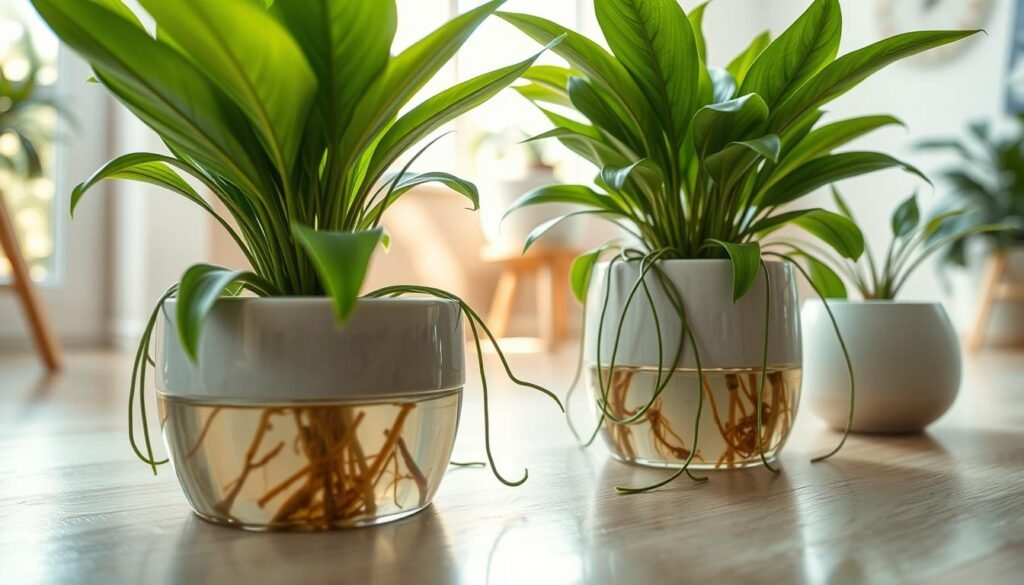
Use bottom soaking when the mix repels water or you want an even take-up. Set the pot in a basin with a couple inches of water for 5–10 minutes (longer for larger pots). Remove and allow full drainage before returning to its spot.
Water temperature, quality, and surface protection
Use room-temperature water to avoid shock. Hard tap water can leave brown tips or spots on sensitive leaves, so consider filtered water if you see buildup.
Mess-free setup: use saucers, drip pans, and cork or felt mats to protect furniture and floors. Avoid “hit-and-run” splash watering that wets only the top and weakens roots.
Seasonal adjustments and the “winter slowdown” for indoor plants
As daylight shortens and temperatures fall, your collection naturally slows growth and uses less moisture. Root activity drops, so the mix stays damp longer.
Why you should water less in winter
Less light and slower growth mean lower water uptake. That increases the risk of root rot if you keep summer habits. Treat the season as a rest period, not a cue to keep the same pace.
How to change intervals without rigid dates
Keep your regular check day, then only add water when the soil needs it. Use the finger test or a meter to confirm dry-down at the root zone instead of following fixed days.
When to reset in spring and summer
Watch for faster dry-down, new leaves or buds, and brighter light. Those signs mean increase frequency gradually, not instantly.
- Winter red flags: persistently wet mix, yellowing, soft stems, fungus gnats.
- Spring signals: quicker soil drying, active growth, and earlier thirst.
- Note system tip: mark months (e.g., “Dec: dry-down longer”) to track changes year to year.
Conclusion
Finish strong: build a simple watering schedule around soil checks, plant signals, and the specifics of your home instead of following fixed dates.
Golden rule: confirm moisture below the surface before you add more water. Aim for a full soak with good drainage rather than light, frequent sips.
Different house plants need different care — from succulents and orchids to peace lilies and moisture-loving tropicals — so adjust by type and room conditions.
Watch for the biggest risk: overwatering that suffocates roots and causes rot, especially when light falls in winter.
Log each session and note leaves, growth, and soil feel. Once you water by signals instead of autopilot, plant care gets easier and blooms tend to last longer.